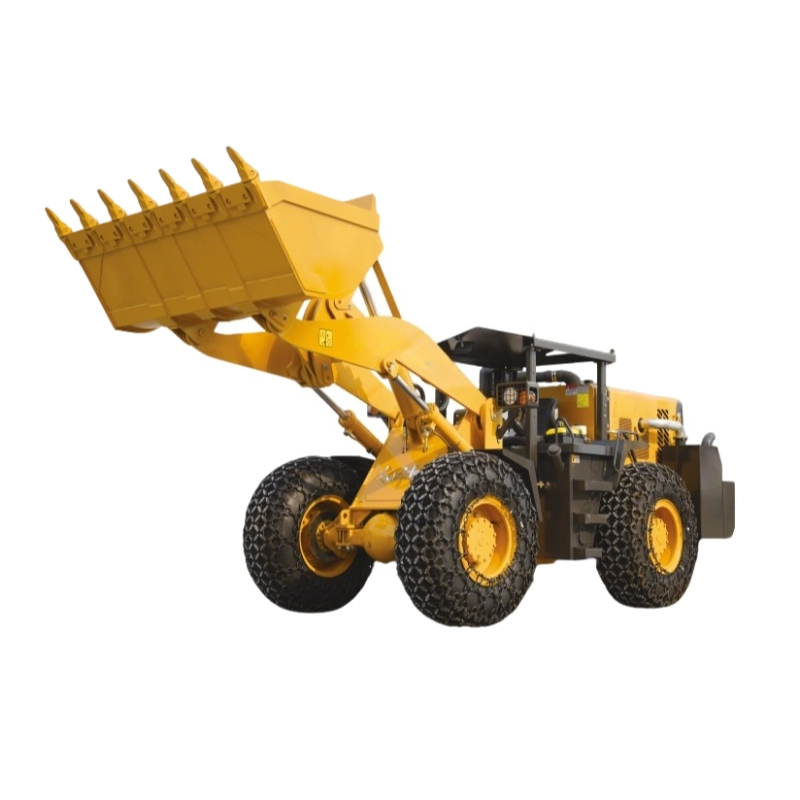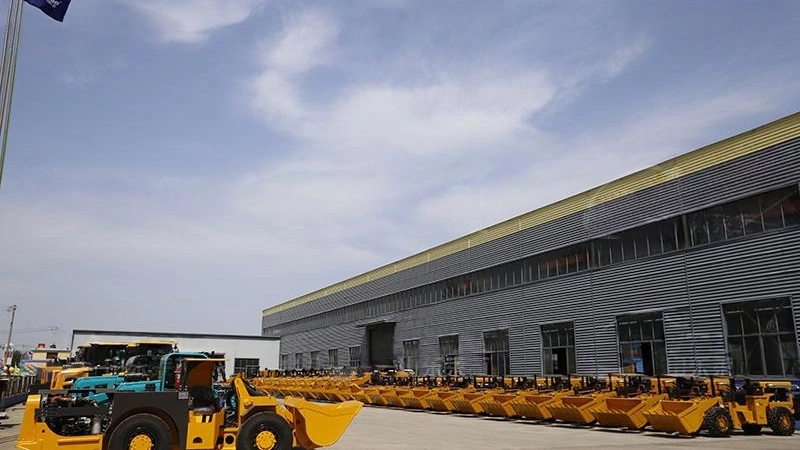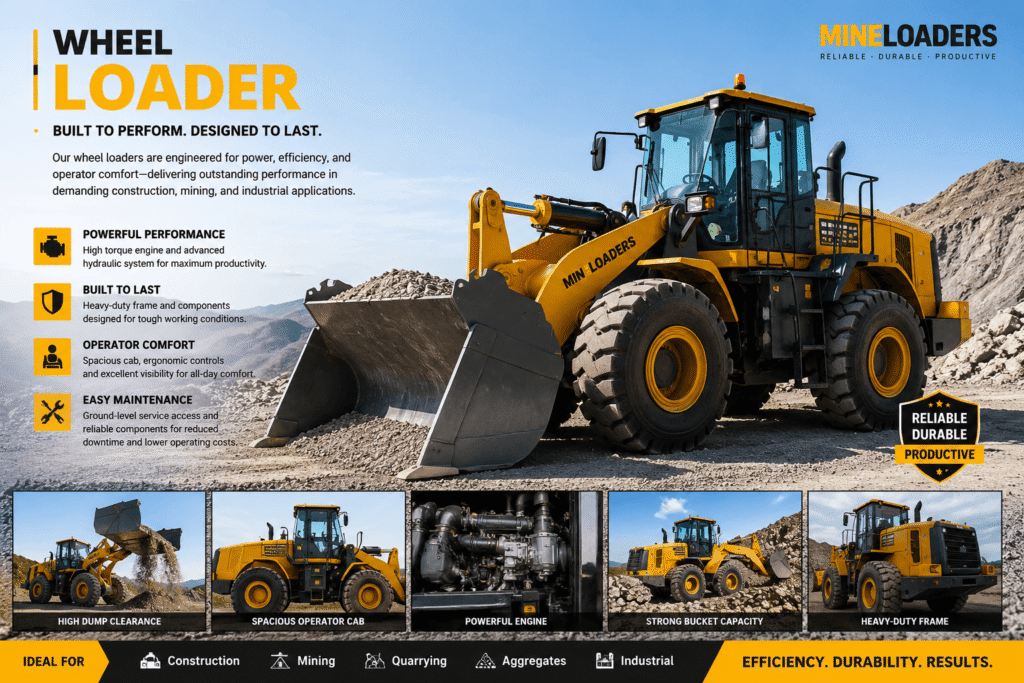
For procurement teams and engineering managers preparing to import a wheel loader from China, the main challenge is not simply finding a competitive machine price. Buyers need to match the loader to the application, verify the supplier, confirm technical specifications, plan transportation, and establish clear inspection and acceptance requirements before shipment.
This guide provides a practical checklist for buyers preparing an RFQ or comparing Chinese wheel loader suppliers.
1. Define the Wheel Loader Application
Before requesting quotations, document how and where the machine will be used. Key factors include:
- Material type and density
- Required bucket capacity
- Rated operating load
- Loading and dumping height
- Working hours per day
- Ground conditions and slopes
- Required travel distance and speed
- Available maintenance resources
- Operator experience
- Required attachments
These details help suppliers recommend a configuration based on actual operating conditions rather than a generic catalogue specification.
For example, the current wheel loader product range includes models such as the ZL20E, ZL20EFB, ZL20EZ, ZL30E, ZL40E and ZL50E. This gives buyers different machine classes to compare before requesting a project-specific quotation.
For heavier-duty applications, buyers should pay particular attention to operating weight, bucket configuration, axle design, engine output, braking system and frame construction rather than comparing engine horsepower alone.
2. Verify the China Wheel Loader Supplier
Supplier verification should happen before discussing payment or shipment.
Request evidence of:
- Company registration and manufacturing location
- Export experience and recent overseas references
- Product documentation and technical drawings
- Quality-control procedures
- Factory inspection or third-party inspection records
- Warranty terms and spare-parts support
- Available operator and maintenance training
Do not rely only on product photos or marketplace listings. Ask the supplier to confirm the exact machine configuration, manufacturer, engine model and optional equipment in writing.
3. Check Technical Specifications and Site Fit
A supplier datasheet is only a starting point. The RFQ should require the supplier to provide the specifications that affect loading performance, transport and site compatibility.
| Item | What to Confirm |
|---|---|
| Bucket | Capacity, material and attachment type |
| Rated load | Rated operating load and application assumptions |
| Dimensions | Overall length, width and height |
| Operating weight | Shipping and working configuration |
| Engine | Manufacturer, model, rated power and emissions specification |
| Hydraulic system | Pump, pressure and attachment compatibility |
| Axles and brakes | Configuration and service requirements |
| Tyres | Size, tread and duty rating |
| Loading performance | Dump height, reach and breakout performance |
| Transport | Lifting points and transport dimensions |
As an example, the ZL30E listed by the supplier has a 1.8 m³ bucket, a 3,500 kg rated load and an operating weight of about 11,000 kg. Its listed transport dimensions are approximately 6,700 mm long, 2,400 mm wide and 2,600 mm high in the wide configuration. These figures illustrate why buyers should request OEM-confirmed dimensions rather than estimating shipping requirements from photographs.
For buyers comparing different capacity classes, the supplier’s wheel loader range can be used as a starting point before narrowing the RFQ to a specific model.
4. Confirm Import, Emissions and Safety Requirements
Before placing an order, identify the regulations that apply in the destination country.
Depending on the market and application, this may include:
- Engine emissions requirements
- Product or conformity documentation
- Road-registration requirements
- Workplace equipment rules
- Lighting and warning systems
- Braking and operator-protection requirements
- Site-specific mining or construction safety rules
For mining and powered-haulage applications, safety requirements should be reviewed against the rules and guidance applicable to the actual site. MSHA, for example, identifies loaders and other mobile equipment as powered-haulage equipment and provides guidance addressing hazards such as unsafe operation, maintenance, visibility and operator training.
The CDC/NIOSH Mining Program is another useful reference for mining safety and equipment-related risk considerations.
Do not assume that a machine designed for one market automatically satisfies the regulatory requirements of another.
5. Choose Shipping and Incoterms Before Comparing Prices
Wheel loaders can require different transport solutions depending on their dimensions, weight and destination.
Common options include:
- Containerized shipping
- Flat-rack containers
- Ro-Ro shipping
- Breakbulk or other project cargo arrangements
The quotation should clearly state the Incoterm, port of loading, inland transport scope, insurance responsibility and destination charges.
| Decision Factor | Typical Options | Buyer Consideration |
|---|---|---|
| Delivery term | EXW, FOB, CIF, DAP, DDP | Clarify cost, risk and responsibility |
| Transport | Container, Ro-Ro, flat rack, breakbulk | Depends on machine dimensions and port handling |
| Insurance | Buyer or seller arranged | Confirm coverage and exclusions |
| Inspection | Factory, third party, arrival inspection | Define acceptance criteria |
| Inland delivery | Supplier or buyer arranged | Confirm unloading and lifting capability |
ICC explains that Incoterms® rules define important responsibilities, costs and risks between buyers and sellers in international trade. Use the specific Incoterm and named place in the contract rather than relying on informal descriptions such as “shipping included.”
6. Build a Clear Wheel Loader RFQ
A good RFQ makes supplier quotations easier to compare.
Ask every supplier to return:
- Exact model and configuration
- Technical datasheet
- Engine and emissions information
- Machine and transport dimensions
- Operating weight
- Bucket capacity and rated load
- Optional attachments and prices
- Warranty coverage
- Recommended spare-parts list
- Production lead time
- Inspection arrangements
- Shipping term and estimated logistics cost
- Manuals and training scope
Also ask suppliers to identify any assumptions behind their recommended configuration. This prevents two suppliers from quoting machines that appear similar but have materially different equipment or operating limits.
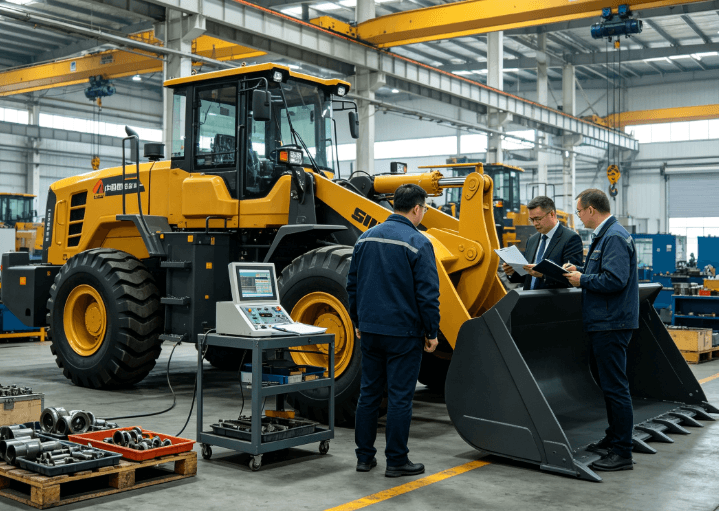
7. Arrange Inspection Before Shipment
For an international purchase, pre-shipment inspection can reduce the risk of discovering configuration or workmanship problems after the machine reaches the destination.
Depending on the project, buyers can use:
- Factory witness testing
- Third-party pre-shipment inspection
- Document review
- On-arrival acceptance testing
The RFQ should define measurable pass/fail requirements where practical. Check the machine model, engine, bucket, dimensions, controls, warning systems, tyres, attachments and supplied documentation against the approved quotation.
8. Confirm Warranty, Spare Parts and Service
Purchase price should not be evaluated separately from after-sales support.
Before signing the contract, confirm:
- Warranty period and exclusions
- Response process for warranty claims
- Spare-parts availability
- Typical parts lead times
- Service or technical support options
- Maintenance manuals
- Operator training
- Recommended initial spare-parts kit
If the machine will operate in a remote mine or quarry, parts availability can have a greater effect on total operating cost than a small difference in the initial purchase price.
.png)
FAQ
How long does it take to import a wheel loader from China?
The total timeline depends on machine production, factory inspection, port handling, ocean freight, customs clearance and inland delivery. Ask the supplier to state production and shipping lead times separately in the RFQ and contract.
What documents should I request from a Chinese wheel loader supplier?
At minimum, request the commercial invoice, packing or shipping information, technical datasheet, engine and emissions documentation where applicable, warranty terms, manuals and any destination-specific conformity documents required for your market.
Should I inspect a wheel loader before shipment?
For higher-value equipment, factory inspection or an independent pre-shipment inspection can be worthwhile. The inspection scope should be agreed before production is completed and should reference the approved quotation and technical specification.
Can the wheel loader be customized?
Depending on the model, suppliers may offer different buckets, tyres, protective equipment, hydraulic attachments or other configurations. Any modification affecting structural, hydraulic or safety systems should be confirmed and approved by the manufacturer before purchase.
Final Checklist Before Ordering
Before committing to an import wheel loader from China, make sure you have confirmed:
- Application and duty cycle
- Required machine capacity
- Technical specifications
- Supplier and factory information
- Destination-country requirements
- Transport dimensions and weight
- Incoterm and insurance
- Inspection and acceptance criteria
- Warranty and spare-parts support
- Manuals and training
- Delivery schedule
Buyers can review the available China wheel loader models to compare different configurations, including compact and higher-capacity options, before submitting an application-specific RFQ.
Final configuration, dimensions, capacity, documentation, price, lead time and regulatory compliance should always be confirmed with the supplier, OEM and relevant authorities for the intended project.