Good mining loader maintenance is less about reacting quickly after a failure and more about finding wear, leakage, heat, contamination, and abnormal behavior before they stop production.
The maintenance plan should always follow the exact model’s operation and maintenance manual. The checklist below is a practical framework for fleet managers and mine engineers, not a replacement for OEM service intervals.
Start With a Daily Walkaround
A short pre-shift inspection can identify many problems before the machine enters production.
Check:
- Fluid leaks
- Tire damage or pressure condition
- Bucket, teeth, pins, and cutting edges
- Hydraulic hoses and fittings
- Visible brake or axle leaks
- Lights, alarms, and cameras
- Cab and operator controls
- Articulation area
- Loose fasteners or guards
- Unusual noise from startup
Caterpillar’s maintenance guidance also emphasizes daily inspections, filters, fluids, hoses, cooling systems, and pins or bushings as basic preventive-maintenance tasks. The exact procedure for a mining loader should still come from the machine manual.
Hydraulic System
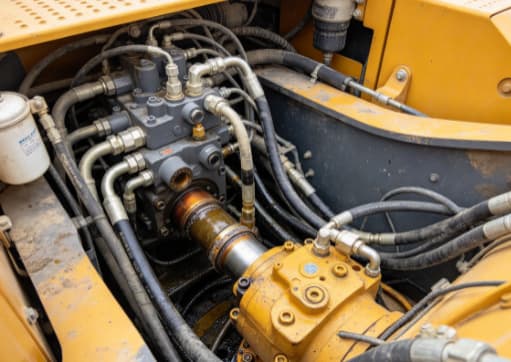
Mining loaders depend heavily on hydraulics for lifting, tilting, steering, and attachments.
Inspect for:
- Hose abrasion
- Loose fittings
- Cylinder leakage
- Damaged rods
- Slow or uneven movement
- Abnormal hydraulic temperature
- Contaminated fluid indications
Small hydraulic leaks can quickly become hose failures or contamination problems in abrasive mining environments.
Cooling and Airflow
Dust, heat, and high-duty cycles can reduce cooling performance.
Maintenance teams should monitor:
- Radiator and cooler cleanliness
- Air-intake restriction
- Fan condition
- Coolant level
- Engine or hydraulic temperature trends
- Debris accumulation around cooling packages
Cleaning frequency should reflect the actual mine environment rather than a generic fixed interval.
Bucket, Pins, Bushings, and Linkage
The front linkage receives repeated shock loads.
Inspect:
- Bucket wear
- Teeth and adapters
- Pin movement
- Bushing wear
- Cracks around high-stress areas
- Lubrication condition
- Attachment locks
Poor lubrication accelerates wear and can create larger repair work later.
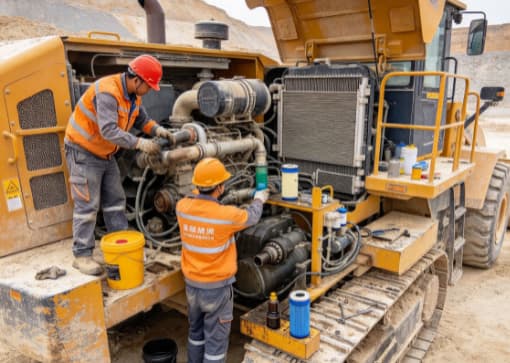
Tires, Traction, and Ground Contact
Tires influence productivity as well as maintenance cost.
Check:
- Cuts and sidewall damage
- Embedded rock
- Uneven wear
- Pressure where applicable
- Protection-chain condition
- Wheel fasteners
- Repeated spin or traction problems
If the site regularly damages tires, review the tire specification and operating route rather than treating every failure as a maintenance issue.
Brakes and Steering
Brake and steering inspections should follow the OEM manual and site safety procedure.
Watch for:
- Changes in pedal feel
- Increased stopping distance
- Leaks
- Steering delay
- Unusual noise
- Excessive heat
- Parking-brake problems
For underground and ramp applications, braking issues should receive high priority because machine load and grade can increase the consequence of failure.
Filters, Fluids, and Contamination Control
Do not replace filters or fluids simply from a generic internet schedule. Use the model’s stated maintenance interval and adjust only with approved site procedures.
Good contamination control includes:
- Clean filling equipment
- Correct fluid specification
- Sealed storage
- Clean sampling points
- Filter-condition monitoring
- Records of oil or hydraulic analysis where used
This is especially important for hydraulic systems and drivetrains operating in dusty environments.
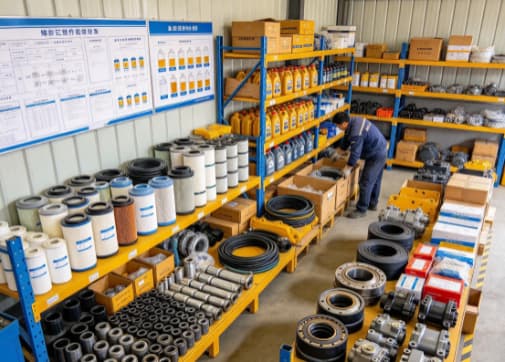
Use Maintenance Data, Not Only Memory
A simple maintenance record should track:
- Operating hours
- Planned service
- Unplanned failures
- Parts used
- Failure cause
- Downtime hours
- Repeat faults
Useful fleet KPIs include MTBF, MTTR, planned versus unplanned downtime, and maintenance cost per operating hour.
Patterns matter. Repeated hose failures, tire damage, overheating, or bucket wear may point to an operating-condition problem rather than a one-off component issue.
Spare-Parts Planning
Parts planning should focus on both usage frequency and downtime risk.
Keep a model-specific list of:
- Filters
- Hoses and seals
- Bucket wear parts
- Pins and bushings
- Belts where applicable
- Brake consumables
- Sensors or electrical items with long lead times
- Critical hydraulic or driveline components identified by the supplier
For buyers reviewing new equipment, the Mining Loaders page provides the product range, while individual model pages such as the ZL30E Loader should be used to request the correct parts and maintenance documentation.
Maintenance Practices That Reduce Downtime
A practical maintenance system includes:
- Pre-shift inspection
- Clear defect reporting
- Scheduled preventive service
- Clean lubrication and fluid handling
- Condition monitoring where available
- Critical spare-parts stocking
- Root-cause review for repeat failures
- Operator feedback during shift handover
Operators often notice changes in steering, braking, sound, temperature, or cycle behavior before a fault becomes obvious in the workshop. Their feedback should be part of the maintenance process.
Conclusion
Effective mining loader maintenance combines daily inspection, preventive servicing, contamination control, wear monitoring, accurate records, and realistic spare-parts planning.
Follow the exact model manual for service intervals, but use operating data to identify repeated problems and improve the maintenance strategy over time. The goal is not only fewer breakdowns; it is more predictable machine availability.
FAQ
How often should a mining loader be serviced?
Follow the service intervals in the exact model’s operation and maintenance manual. Dust, heat, duty cycle, and site policy may require additional inspections.
What should be checked every shift?
Typical checks include leaks, tires, bucket and linkage wear, hoses, fluid levels, alarms, lights, steering, brakes, and visible damage.
Which parts should be kept in stock?
Stock routine consumables and high-risk parts based on the supplier’s recommendations, actual usage, and delivery lead time.
How can maintenance reduce loader downtime?
Use preventive inspections, clear defect reporting, condition monitoring, root-cause analysis, and planned parts inventory.
Should the same maintenance checklist be used for every loader?
No. Use a common fleet framework, but model-specific tasks and intervals must follow the correct OEM documentation.
References
- Mineloaders — Mining Loaders
- Mineloaders — ZL30E Loader
- Caterpillar — Compact Loader Maintenance
- Caterpillar — Planned Maintenance