Choosing between an electric underground LHD and a diesel LHD is not simply a question of fuel type. Powertrain choice affects ventilation, mine infrastructure, duty cycle, maintenance requirements, and operating flexibility.
For procurement teams, the better option depends on actual mine conditions. Buyers should compare model-specific specifications and site requirements rather than assuming electric or diesel is automatically better.
Available Underground LHD models can be used as a starting point before requesting detailed product documentation.
Electric vs Diesel Underground LHD: Quick Comparison
| Factor | Electric LHD | Diesel LHD |
|---|---|---|
| Underground exhaust | No diesel tailpipe emissions | Requires exhaust and ventilation management |
| Energy supply | Cable, battery, or charging system | Diesel fuel |
| Mobility | Depends on cable or battery configuration | Generally flexible between work areas |
| Infrastructure | Electrical supply and charging/cable equipment | Fuel storage and refueling |
| Maintenance focus | Motors, electrical systems, batteries/cables | Engine, fuel, exhaust and drivetrain systems |
| Duty-cycle planning | Charging or cable arrangement matters | Refueling and ventilation matter |
| Best fit | Depends on mine infrastructure and cycle | Depends on ventilation and operating flexibility |
These are system-level differences. Exact performance must still be verified from the selected LHD’s product documentation.
Ventilation and Underground Environment
Ventilation is one of the main reasons mines compare electric and diesel LHDs.
Diesel equipment produces exhaust gases and diesel particulate matter, so ventilation capacity and exhaust-control systems must be considered during fleet planning. NIOSH notes that managing underground diesel pollutants requires coordination between ventilation, maintenance, production, safety, and equipment-procurement teams.
Electric LHDs remove diesel tailpipe emissions at the machine, but they do not eliminate all ventilation or thermal-management requirements. Motors, electrical equipment, batteries, and charging systems can still generate heat.
For this reason, buyers should compare total site impact, not simply engine emissions.
Infrastructure Requirements
Electric and diesel machines place different demands on the mine.
Electric Underground LHD
Depending on the design, buyers may need to consider:
- Electrical distribution capacity
- Charging stations
- Battery-change arrangements
- Trailing cable management
- Electrical maintenance skills
- Charging time within the duty cycle
Battery-electric equipment also requires planning around battery condition, replacement, and charging strategy.
Diesel Underground LHD
Typical considerations include:
- Underground fuel supply
- Refueling locations
- Ventilation capacity
- Exhaust-treatment equipment
- Fuel-system maintenance
- Engine service capability
If the mine already has established diesel infrastructure, changing to electric equipment can involve additional capital investment. Conversely, constrained ventilation may strengthen the case for electric equipment.
Duty Cycle and Productivity
Powertrain should be evaluated against the complete LHD cycle:
Load + travel loaded + dump + return
Important site inputs include:
- Payload
- Material density
- Bucket fill
- Haul distance
- Ramp grade
- Shift length
- Waiting time
- Charging or refueling time
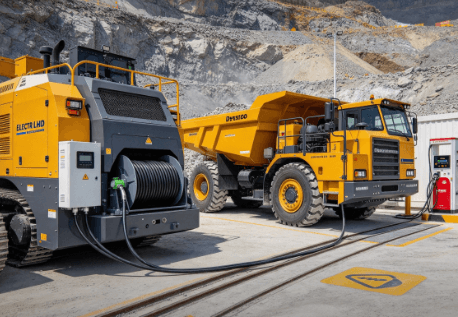
For battery-electric equipment, determine whether charging can be completed during natural pauses such as shift changes or waiting periods. Current battery-electric LHD designs from major OEMs demonstrate different charging strategies, including opportunity charging and battery swapping, so procurement teams should confirm the exact system offered by each supplier.
Diesel equipment does not require charging windows, but fuel stops, ventilation restrictions, and engine servicing still affect availability.
Actual productivity should therefore be calculated from the proposed model and mine cycle rather than from powertrain type alone.
Maintenance and Lifecycle Considerations
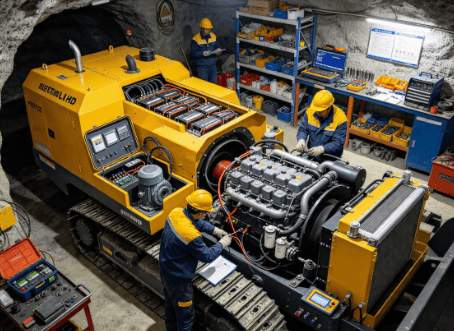
Electric drivetrains can reduce some engine-related maintenance, but they introduce different technical requirements.
Electric equipment may require expertise in:
- Electric motors
- Power electronics
- High-voltage systems
- Batteries
- Chargers or trailing cables
Diesel equipment requires established maintenance for:
- Engine systems
- Fuel systems
- Filters and fluids
- Exhaust treatment
- Cooling systems
Buyers should compare maintenance intervals, technician capability, critical spare parts, and component lead times rather than assuming one powertrain always costs less to maintain.
When Does an Electric Underground LHD Make Sense?
An electric LHD may be worth prioritizing when:
- Underground ventilation is constrained.
- Electrical infrastructure is already available.
- Haul cycles are predictable.
- Charging or cable operation can fit the production cycle.
- Reducing diesel exhaust underground is an important operating objective.
“Electric” does not automatically mean “battery-electric.” Cable-powered and battery-powered machines have different mobility and infrastructure requirements.
Mineloaders currently lists the WJD-1 as an electric underground scraper using an electric motor and adjustable cable take-up system, illustrating why buyers should confirm whether a proposed electric LHD is cable-powered or battery-powered before comparing it with diesel equipment.
When Does a Diesel Underground LHD Make Sense?
Diesel equipment may remain practical when:
- Machines frequently move between different mine areas.
- Existing diesel infrastructure is well established.
- Charging infrastructure is limited.
- Continuous operation leaves few charging opportunities.
- Mine ventilation capacity can support the planned diesel fleet.
For example, Mineloaders also lists internal-combustion LHD configurations such as the WJ-1 and WJ-2. Their individual product pages provide model-level payload, dimensions, braking, drive, and climbing information that should be compared separately from powertrain choice.
What Should Buyers Request From Suppliers?
When comparing electric and diesel underground LHDs, request the same basic technical information from every bidder:
- Exact model and configuration
- Rated payload and bucket capacity
- Machine dimensions and turning radius
- Powertrain specification
- Energy or fuel consumption data
- Expected operating duty cycle
- Gradeability and braking information
- Maintenance intervals
- Spare-parts requirements
- Required supporting infrastructure
For electric machines, also request battery, charging, or cable-system information as applicable.
For diesel machines, request engine, exhaust-treatment, and relevant ventilation information.
Buyers evaluating suppliers can also review the site’s Underground LHD product range before requesting model-specific documentation.
Selection Checklist
Before choosing between electric and diesel, confirm:
- Tunnel dimensions suit the machine.
- Required payload is documented.
- Haul distance and grade are known.
- Ventilation capacity has been reviewed.
- Electrical or fuel infrastructure is available.
- Charging or refueling fits the duty cycle.
- Maintenance skills match the powertrain.
- Spare-parts availability is confirmed.
- Energy or fuel use is based on comparable operating conditions.
- Site trials or acceptance testing are included where practical.
If additional technical information is required, procurement teams can use the RFQ contact page to request model documentation.
Conclusion
The choice between an electric underground LHD and a diesel LHD should be based on the mine’s complete operating system.
Electric equipment can reduce underground diesel exhaust and may suit mines with suitable electrical infrastructure and predictable duty cycles. Diesel machines may provide greater operational flexibility where fuel infrastructure and ventilation are already established.
Before making a decision, compare model-level payload, dimensions, duty cycle, infrastructure, maintenance requirements, and total operating conditions. Start with the Underground LHD range and request documentation for the specific configuration being considered.
FAQ
Does an electric underground LHD eliminate the need for ventilation?
No. It removes diesel tailpipe emissions from the machine, but motors, batteries, chargers, and other underground equipment still contribute heat and other ventilation requirements.
Is an electric LHD always cheaper to operate?
Not necessarily. Operating cost depends on electricity and fuel prices, ventilation requirements, infrastructure investment, maintenance, battery replacement, and equipment utilization.
Is a battery-electric LHD the same as a cable-electric LHD?
No. Battery machines carry onboard energy storage, while cable-electric machines depend on an external electrical connection. Their operating range and infrastructure requirements differ.
What should I compare before selecting electric or diesel?
Compare payload, haul distance, grade, duty cycle, ventilation, charging or refueling requirements, maintenance capability, and supporting infrastructure.
What documentation should suppliers provide?
Request model-specific datasheets, powertrain information, energy or fuel consumption data, maintenance schedules, infrastructure requirements, spare-parts information, and relevant compliance documentation.
References
- Mineloaders — Underground LHD Product Category
- Mineloaders — Contact / RFQ Enquiries
- NIOSH — Diesel Aerosols and Gases in Underground Mines
- Epiroc — Electric Underground Loaders / Scooptram Battery-Electric Loaders
- Sandvik — Battery-Electric and Diesel Underground Loaders