Selecting an underground mining truck requires more than comparing payload capacity. The truck must fit the tunnel, match the loading equipment, handle the mine’s grades, and complete the required haul cycle without creating unnecessary maintenance or ventilation problems.
Buyers can start with the Mining Truck product range to identify candidate models, then verify each machine using its official product page and technical documentation.
Start With the Underground Haul Route
Before comparing trucks, define how the machine will actually work.
Record:
- Minimum tunnel width and height
- Average and maximum haul distance
- Maximum ramp grade
- Turning and passing areas
- Loading and dumping locations
- Ground conditions
- Production target
- Operating hours per shift
These inputs often narrow the equipment shortlist faster than comparing engine power or nominal tonnage alone.
Verify Payload and Hopper Configuration
Rated payload determines the model’s documented carrying capacity, while hopper volume determines how much material can physically fit in the body.
Both should be reviewed with material density.
For example, the 5T Mining Transport Vehicle lists a 5,000 kg rated load and 2.2 m³ hopper for that specific model. It also publishes machine dimensions, drive mode, climbing ability, and optional configurations.
Use these numbers only for the named machine. Other models should be checked separately rather than assuming the capacity label tells the full story.
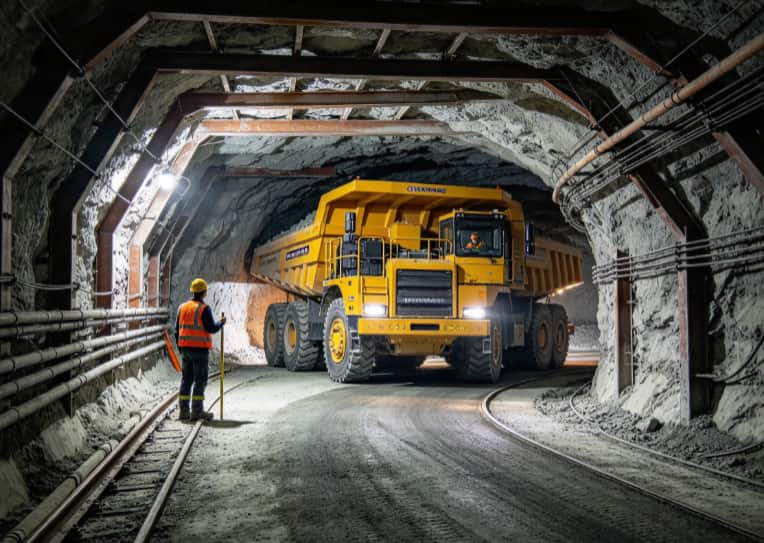
Check Tunnel Fit and Maneuverability
An underground truck can meet the required payload and still be unsuitable because of its physical size.
Compare:
- Overall width
- Overall height
- Total length
- Wheelbase
- Ground clearance
- Turning space
- Safety-cab height
- Dumping clearance
Pay particular attention to the narrowest section of the haul route.
A machine that just fits through the tunnel may still lose cycle time if the operator needs repeated corrections when turning, loading, or positioning at the dump point.
Match the Truck to the Loading Equipment
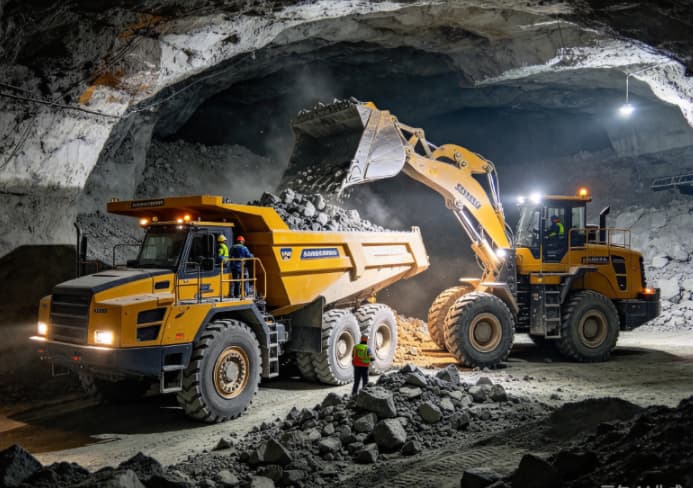
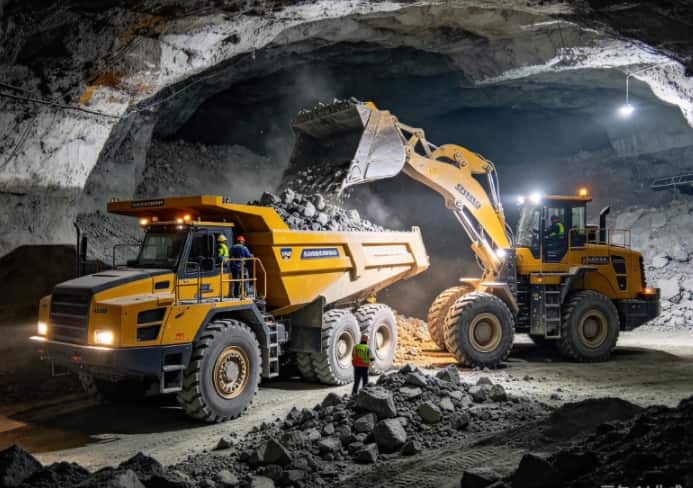
Truck selection should also consider the loader or LHD feeding it.
Important factors include:
- Loader bucket capacity
- Material density
- Average bucket fill
- Number of passes per truck
- Loading height
- Truck positioning space
- Loader cycle time
For example, if a truck needs too many loader passes, loading time becomes a bottleneck. If the body is too small, the loader may spend more time repositioning while trucks cycle more frequently.
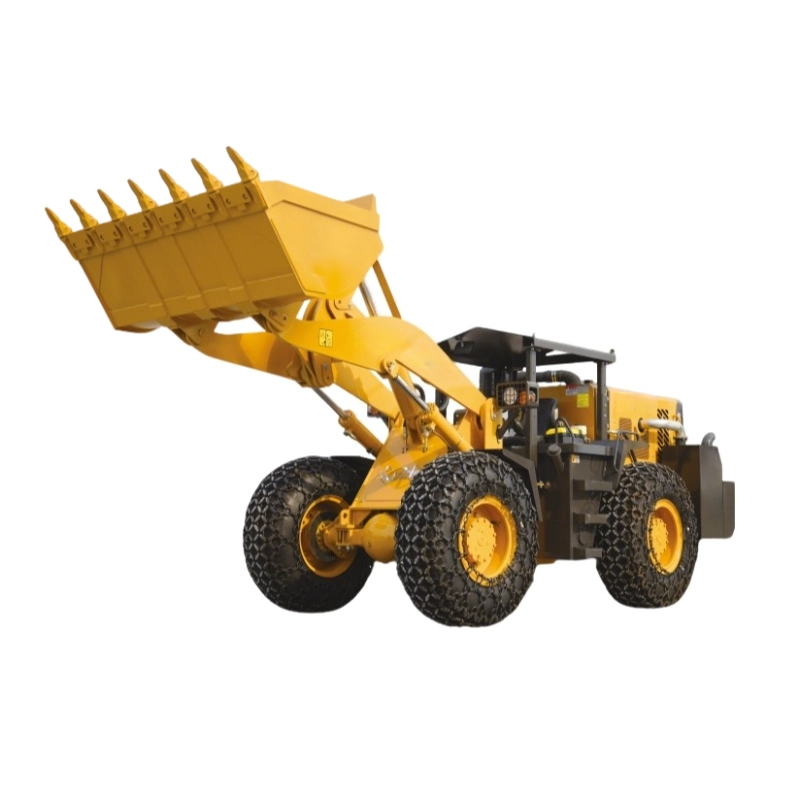
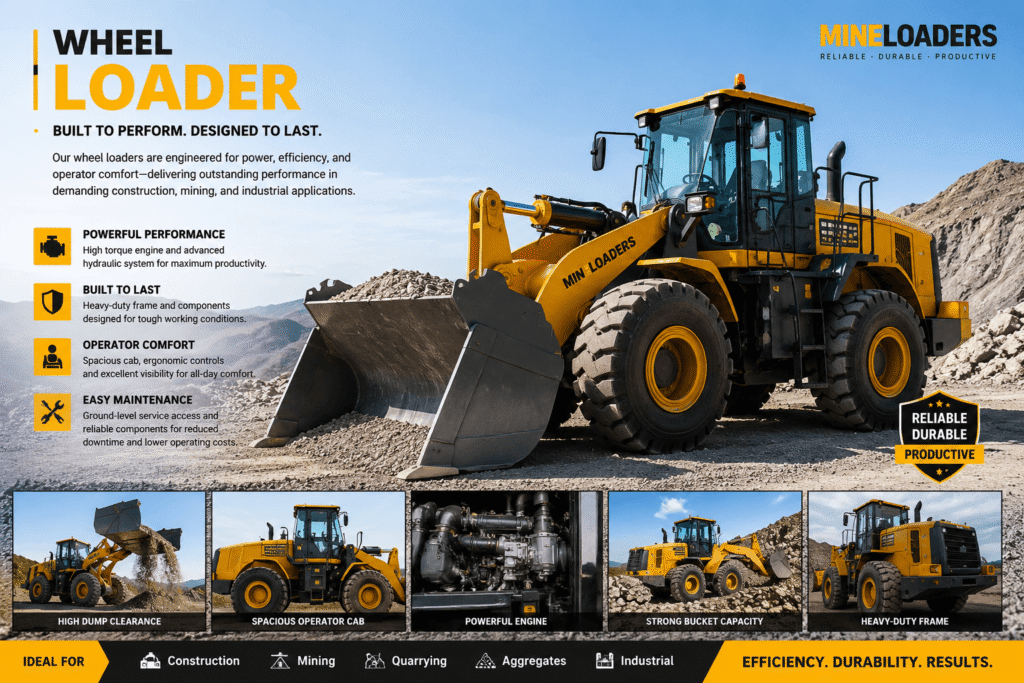
For broader fleet matching, buyers can review the Mining Loaders range together with the selected haulage equipment.
Grade, Traction, and Braking
Underground ramps make traction and braking major selection factors.
Before ordering, provide the supplier with:
- Maximum sustained grade
- Direction of loaded travel
- Longest decline
- Typical floor condition
- Expected loaded travel distance
Then request model-specific information about drive configuration, climbing ability, braking, tires, and optional traction packages.
The Sandvik Toro TH545i is an example of how established OEM documentation combines payload, operating weight, dimensions, dump body capacity, braking, powertrain, and ventilation-related data in a single model specification.
Epiroc’s Minetruck MT42 documentation similarly includes detailed grade-performance information rather than relying only on nominal capacity.
For procurement teams, this is a useful benchmark for the level of model-specific information to request.
Consider the Complete Haul Cycle
Truck productivity depends on the full cycle:
Loading + loaded travel + dumping + empty return + delays
A shorter haul may favor frequent cycles and fast positioning. Longer underground routes increase the importance of travel speed, braking, cooling, and operator comfort.
Do not use theoretical top speed alone. Actual cycle time can change because of:
- Ramp grade
- Tight corners
- Traffic
- Poor road surfaces
- Loading delays
- Dump-point congestion
Where possible, use representative site data or a controlled trial to estimate the expected cycle.
Ventilation and Powertrain
For internal-combustion underground trucks, ventilation planning should consider engine emissions, heat rejection, machine utilization, and the number of vehicles operating simultaneously.
Electric haulage changes the infrastructure requirement toward power supply, charging, battery change, or other electrical systems.
Keep this as a site-level decision rather than assuming one powertrain is universally better.
Maintenance and Serviceability
An underground mining truck normally operates in a demanding environment, so maintenance access should be checked before purchase.
Review:
- Daily inspection points
- Filter access
- Lubrication points
- Brake inspection access
- Hydraulic components
- Cooling-system access
- Diagnostic functions
- Recommended service intervals
- Spare-parts lead times
Maintenance personnel should be involved in the technical review before the truck is ordered.
Powered Haulage Safety
Truck selection should also account for visibility, interaction with smaller equipment, loading and dumping zones, alarms, and site traffic procedures.
The current MSHA Powered Haulage Equipment Safety Guidance identifies haul trucks, loaders, LHDs, shuttle cars, and other mobile mining equipment as powered-haulage equipment and emphasizes controls around traffic patterns, blind spots, communication, and equipment interaction.
These recommendations should complement the mine’s own safety procedures and applicable local regulations.
Underground Mining Truck Selection Checklist
Before shortlisting a model, confirm:
- Rated payload from the model documentation
- Hopper dimensions and material compatibility
- Full machine dimensions
- Tunnel and turning clearance
- Maximum operating grade
- Drive and braking configuration
- Loader-to-truck matching
- Expected haul-cycle time
- Ventilation or electrical requirements
- Maintenance access and spare-parts availability
For machines moving closer to purchase, also request factory inspection or acceptance procedures and define the final configuration clearly in the RFQ.
Common Selection Mistakes
Avoid:
- Selecting only by tonnage
- Assuming category labels prove rated payload
- Ignoring safety-cab height when checking clearance
- Comparing top speed without considering grade
- Choosing truck capacity without matching the loader
- Assuming optional wet brakes or four-wheel drive are standard
- Ignoring maintenance and parts lead times
These issues can create more operating problems than small differences between headline specifications.
Conclusion
An underground mining truck should be selected as part of the complete haulage system.
Start with tunnel geometry, haul distance, grade, production target, material characteristics, and loading equipment. Then verify the proposed truck’s payload, dimensions, braking, drive configuration, maintenance requirements, and supporting documentation.
Use the Mining Truck product range to identify candidate machines, but rely on the individual model page and supplier documentation before final procurement.
FAQ
What should I check first when selecting an underground mining truck?
Start with tunnel dimensions, required payload, haul distance, and maximum grade. These factors quickly determine which truck classes are practical.
How does material density affect truck selection?
Material density changes the mass carried in a given hopper volume. Dense ore may reach the truck’s rated payload before the hopper is completely full.
How should a truck be matched to an LHD?
Compare truck payload with the LHD’s realistic bucket payload and calculate the number of passes required to fill the truck.
Why is braking especially important underground?
Underground trucks frequently work on ramps and declines. Loaded downhill travel increases braking demand, so brake configuration should be checked against the actual route.
What documents should buyers request?
Request the model datasheet, dimensional drawing, operations and maintenance manual, parts catalogue, braking information, option list, and relevant factory or acceptance-test documentation.
References
- Mineloaders — Mining Truck Product Range
- Mineloaders — 5T Mining Transport Vehicle
- Mineloaders — Mining Loaders
- Sandvik — Toro TH545i Underground Truck Technical Specification
- Epiroc — Minetruck MT42 Technical Specification
- MSHA — Powered Haulage Equipment Safety Guidance