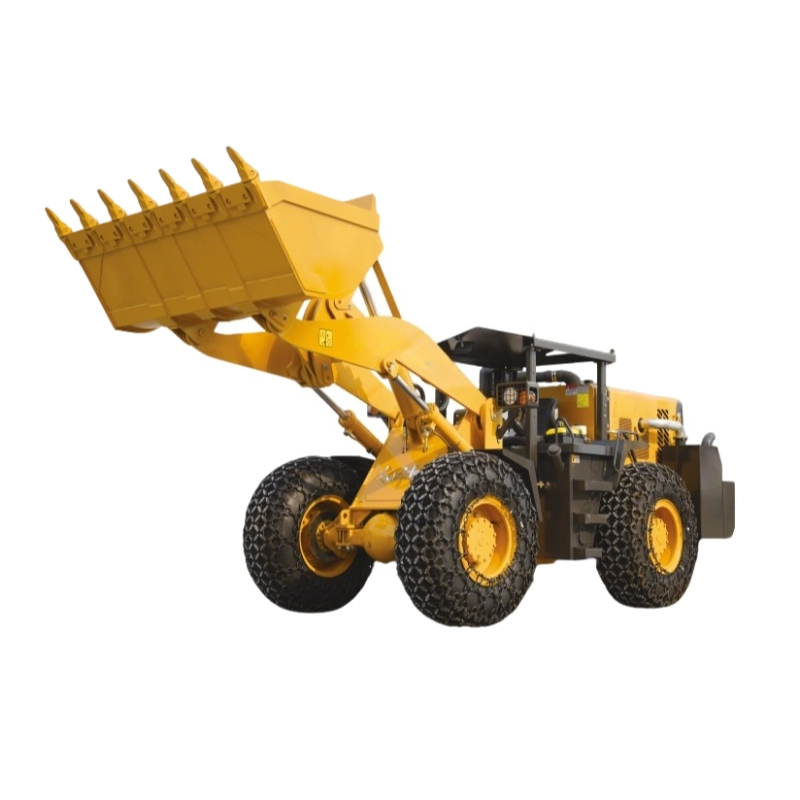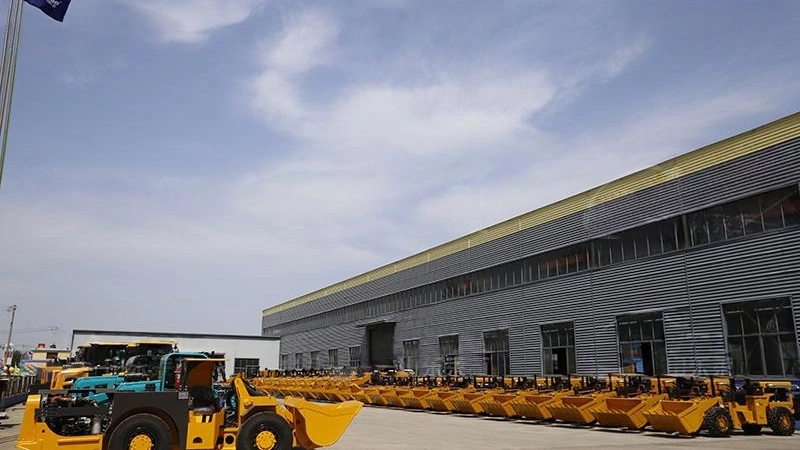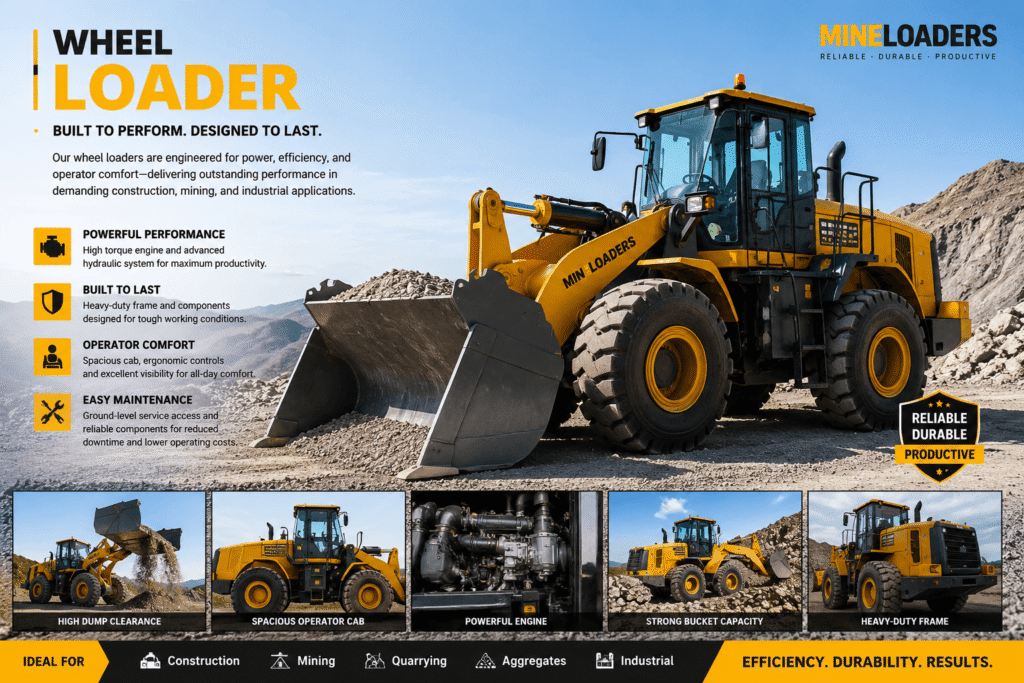
Selecting the wrong wheel loader for a project often leads to one of two outcomes: a machine that bottlenecks production or an oversized asset that drains fuel and capital. Understanding a technical specification sheet is more than just reading numbers; it is about interpreting how physics, mechanical engineering, and site-specific requirements intersect.
When fleet managers or site engineers review wheel loader specifications, they are essentially looking for the machine’s “productivity envelope.” This guide breaks down the core metrics—from breakout force to tipping loads—ensuring you can match the equipment to the material density and cycle time requirements of your operation.
The Core Trinity: Capacity, Weight, and Power
The performance of any wheel loader, whether it is a compact utility model or an ultra-class mining loader, is governed by three primary categories of specifications. These metrics must be balanced to ensure the machine remains stable under load while delivering enough hydraulic force to penetrate a pile.
1. Bucket Capacity (SAE vs. Struck)
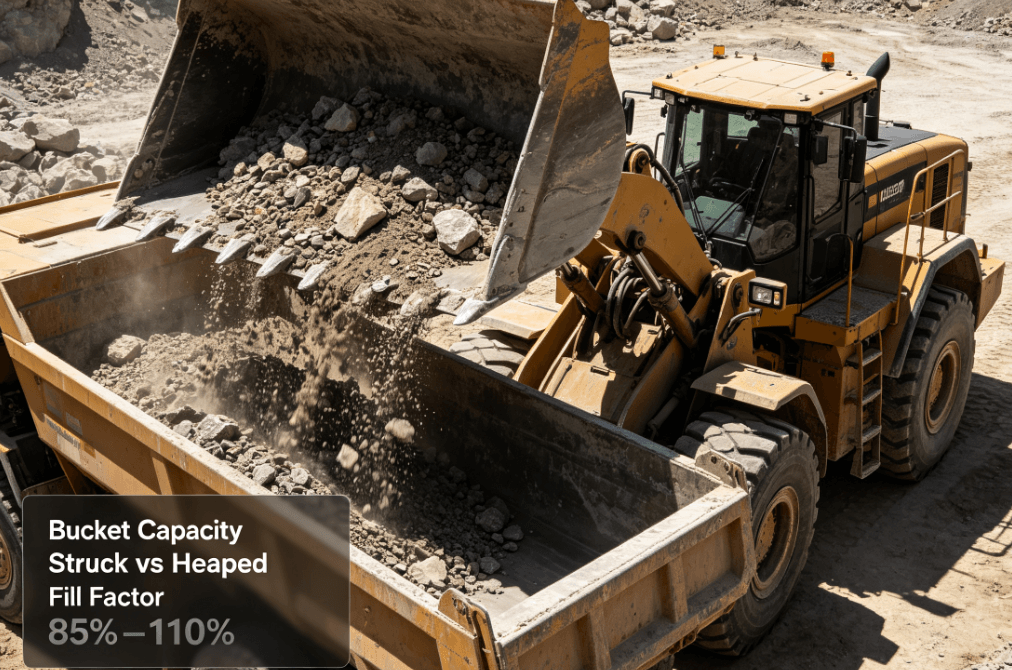
Bucket capacity is the most cited specification, yet it is often the most misunderstood. Manufacturers typically list two types of ratings:
- Struck Capacity: The volume of material the bucket holds when filled level with the top of the side plates.
- Heaped Capacity (SAE J742): The volume when material is piled at a 2:1 slope above the bucket’s strike plane.
In real-world applications, your actual capacity depends on the fill factor. For instance, blasted rock might only achieve an 85% fill factor due to voids, whereas moist sand might exceed 100%. Overestimating capacity leads to “spillage,” which increases tire wear and safety risks on haul roads.
2. Operating Weight and Tipping Load
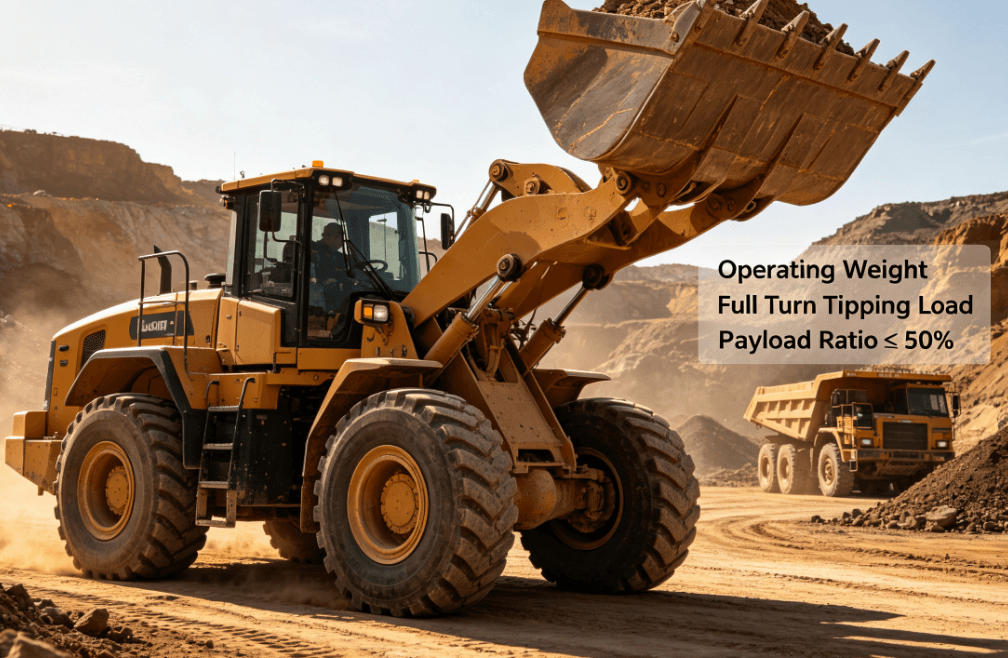
Operating weight isn’t just about transport logistics; it is the counterweight to your payload. A critical specification to watch is the Full Turn Tipping Load. This represents the maximum weight the loader can lift when the machine is at its maximum articulation angle without the rear wheels leaving the ground.
For safety and longevity, most engineers recommend a “Payload to Tipping Load” ratio of no more than 50%. If a loader has a full-turn tipping load of 10,000 kg, your safe operating payload is 5,000 kg.
3. Engine Power: Gross vs. Net
When reviewing engine specifications, the distinction between Gross Power and Net Power is vital. Gross power measures the engine without accessories like fans or alternators. Net power reflects the actual energy available to the drivetrain and hydraulics. High-altitude sites or underground mining environments require engines with high torque rise to maintain hydraulic pressure during the “crowd” phase of the loading cycle.
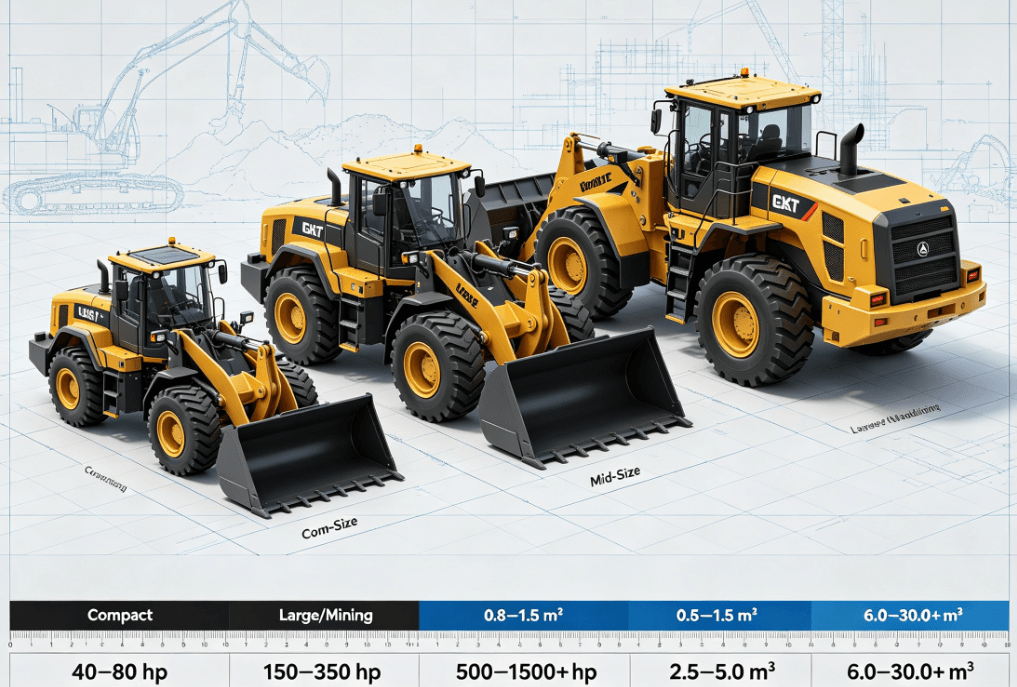
Comparative Specifications by Loader Class
The following table summarizes typical specification ranges across different equipment classes to help categorize your needs.
| Specification | Compact Wheel Loaders | Mid-Size Loaders | Large/Mining Loaders |
| Engine Power | 40 – 80 hp | 150 – 350 hp | 500 – 1,500+ hp |
| Bucket Capacity | 0.8 – 1.5 m³ | 2.5 – 5.0 m³ | 6.0 – 30.0+ m³ |
| Operating Weight | 4,000 – 8,000 kg | 15,000 – 30,000 kg | 50,000 – 200,000+ kg |
| Breakout Force | 30 – 60 kN | 100 – 250 kN | 400 – 1,000+ kN |
Hydraulic Performance and Breakout Force
Breakout force is the measure of the loader’s “digging power.” It is the maximum upward force exerted by the bucket’s tilt cylinders, measured at the cutting edge.
For contractors working in hard-packed materials or heavy clay, breakout force is often more important than horsepower. High breakout force allows the operator to fill the bucket in a single pass without excessive tire spinning, which is the primary cause of premature tire failure.
Hydraulic cycle times—the time it takes to raise, dump, and lower the bucket—are equally important. In high-volume production, a difference of two seconds in cycle time can translate to hundreds of tons of lost productivity over a 12-hour shift.
Dimensional Constraints and Maneuverability
In environments with restricted spatial footprints, such as underground mining or urban construction, the physical size of the machine is a hard constraint.
- Dump Clearance: Ensure the loader’s hinge pin height is sufficient to clear the sideboards of your haul trucks.
- Turning Radius: This is influenced by the articulation angle (usually between 35° and 40°). A tighter turning radius reduces maneuvering time in the pit and lowers fuel consumption.
- Static Dimensions: For underground operations, the machine’s overall height and width must account for ventilation ducting and safety clearances. Advanced models, such as those found in Mineloaders’ specialized inventory, are engineered with a low-profile chassis to maximize capacity within narrow drift dimensions.
Evaluating Specification for Industry-Specific Applications
Underground Mining
Specifications for underground loaders (LHDs) prioritize different factors than surface loaders. Here, the power-to-weight ratio is balanced against emission controls (DPF/SCR) to manage air quality in confined spaces. Dimensions are the “Primary Spec” here—the machine must fit the tunnel before it can move the muck.
Aggregate and Quarry
In these settings, “Tons Per Hour” is the king of specs. You need a loader that matches your truck fleet. For example, a “three-pass match” (where three bucket-loads fill a haul truck) is the industry standard for optimal efficiency.
Waste and Recycling
Specifications for these loaders focus on cooling system integrity and tire protection. High-lift linkages are often specified to reach over high-sided trash hoppers.
Understanding the Technical Spec Sheet: A Checklist
Before finalizing an equipment acquisition, cross-reference these technical points:
- Transmission Type: Is it a traditional powershift or a Hydrostatic drive? Hydrostatic drives offer excellent speed control for short-cycle loading.
- Axle Configuration: Does the machine have limited-slip differentials? This is crucial for maintaining traction in muddy or uneven terrain.
- Tire Selection: Bias-ply vs. Radial. Radial tires offer better heat dissipation for long hauls, while bias-ply offers stiffer sidewalls for heavy loading.
- Emissions Compliance: Does the engine meet Tier 4 Final or Stage V standards? This impacts both environmental compliance and DEF (Diesel Exhaust Fluid) consumption.
Conclusion
Wheel loader specifications are not just isolated numbers; they are a blueprint for your site’s productivity. By focusing on the relationship between tipping load, bucket fill factors, and hydraulic speeds, you can select a machine that optimizes fuel efficiency and reduces the total cost of ownership. For specialized applications where standard construction specs won’t suffice—particularly in high-intensity industrial or underground sectors—consulting with OEM experts on custom configurations is often the most viable path to operational excellence.
FAQ
What is the most important specification for a wheel loader?
While bucket capacity is the most visible, the Full Turn Tipping Load is the most critical for safety and stability. It determines the actual usable payload the machine can handle in real-world, non-linear movements.
How do I calculate the correct bucket size for my material?
Divide the machine’s rated payload by the material’s density ( kg/m ³). For example, if your loader has a 5,000 kg safe payload and you are moving gravel (1,600 kg/m ³), your ideal bucket size is approximately 3.1 m³.
What is the difference between Z-bar and Parallel lift linkage?
Z-bar linkage is the industry standard for high breakout force and excavation. Parallel lift (often called Tool Carrier linkage) is designed to keep the load level throughout the lift cycle, making it ideal for pallet forks and material handling.
Why does “Breakout Force” matter in wheel loader specifications?
Breakout force determines how well the machine can penetrate tough piles. Higher breakout force reduces the need for “ramming” the pile, which protects the transmission and significantly extends tire life.
Reference Sources
- ISO 7546:2023 – Earth-moving machinery — Loader and front-loading excavator buckets — Volumetric ratings.
- SAE J732 – Specification Definitions — Front End Loader technical standards.
- Association of Equipment Manufacturers (AEM) – Technical safety and classification manuals for earth-moving equipment.
- ISO 14397-1:2007 – Methods for determining rated operating load and testing of breakout forces.