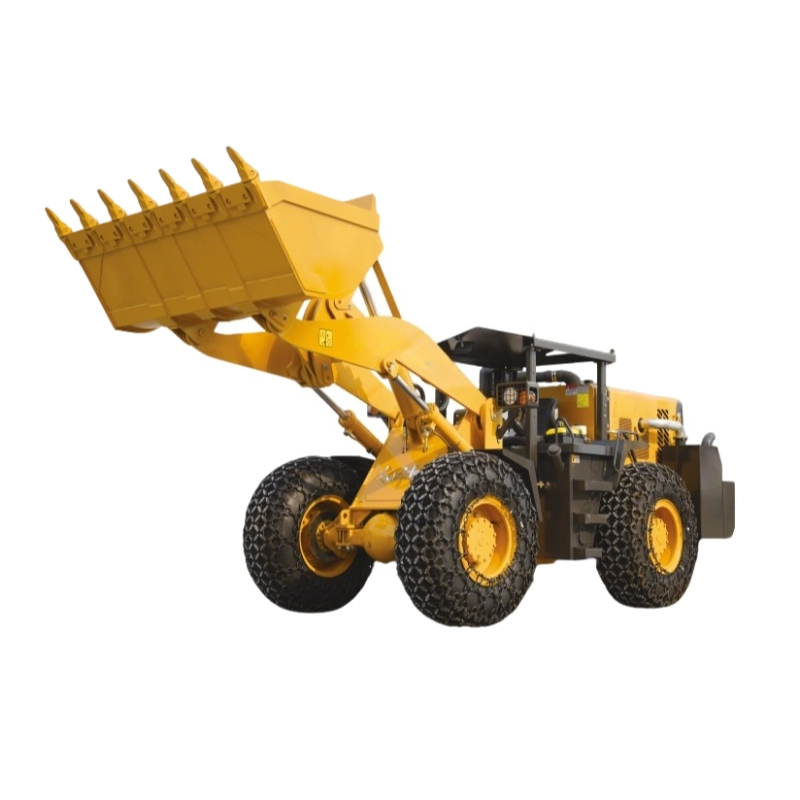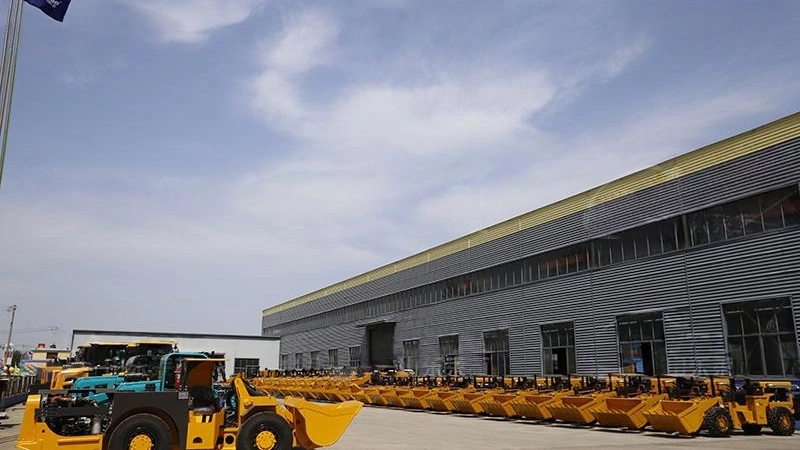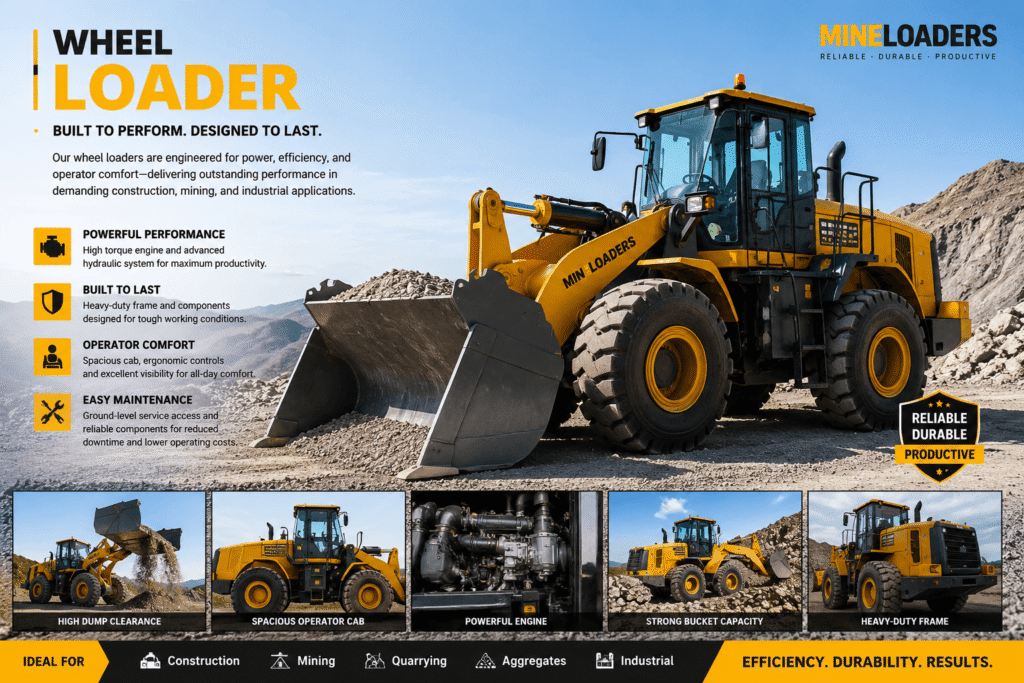
Mining loader specifications are a core part of any equipment purchase decision for surface and some underground operations. Buyers need a practical checklist that links machine parameters to site conditions, production goals, and maintenance capability. This article explains the key parameters to review, how to compare options, and which items should be confirmed by RFQ or site inspection.
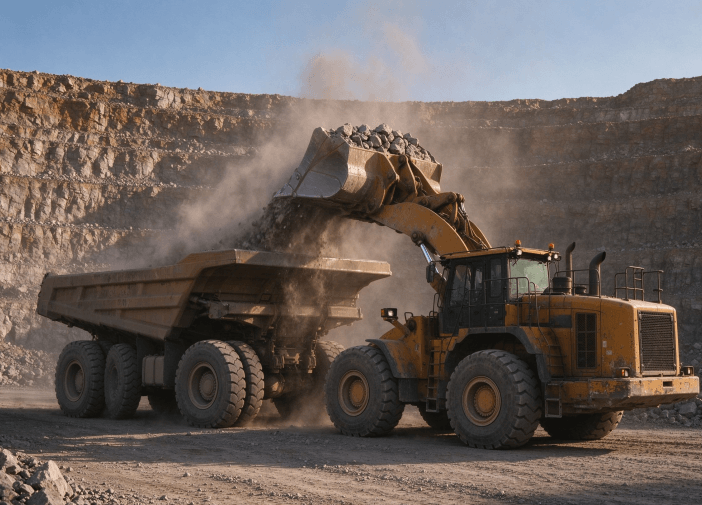
mining loader specifications: what to prioritise
When assessing mining loader specifications, treat each parameter as part of a system: payload and bucket design influence cycle time, powertrain and traction affect mobility on ramps and grades, while serviceability and local parts support shape uptime and total cost of ownership. Many hazards and operational limits are site-specific, so use these topics to structure supplier questions and on-site trials rather than as absolute performance promises [1][2].
Core technical parameters
These are the specification areas buyers commonly evaluate and compare:
- Payload and bucket capacity: How much mass or volume the machine moves per cycle and how bucket geometry interfaces with the material and truck body or stockpile.
- Lift and reach geometry: The loader\’s dump height and forward reach determine compatibility with truck bodies, hoppers, and feed points.
- Powertrain and traction: Engine power, torque delivery, transmission type, and drivetrain layout affect acceleration, hill-climb, and traction on wet or loose surfaces.
- Operating weight and stability: Machine weight and centre of gravity affect stability when lifting or travelling on slopes; this intersects with tyre choice and ballast options.
- Serviceability and access: Ease of access to filters, fluid points, batteries and routine service items affects downtime and maintenance labour.
- Braking and retarding systems: Specifications should be reviewed against route profiles; supplemental braking or retarding may be needed on long declines.
- Cab environment and controls: Ergonomics, visibility, and diagnostic interfaces influence operator productivity and safety.
- Support and parts availability: Local parts stock and dealer service capability are practical specification considerations that affect lead times and repairs.
Operational and environmental considerations
Match specifications to the material, duty cycle, and environment. Dusty, abrasive material accelerates tyre and bucket wear; high ambient temperatures or dusty conditions affect cooling and air-intake arrangements. Underground or semi-enclosed work can impose diesel emissions and ventilation constraints; selection choices should reflect ventilation and aerosol guidance where applicable [3][4].
Decision table: comparing specification priorities
| Buyer priority | Primary specification to review | Key buyer question |
|---|---|---|
| High production throughput | Payload per cycle and cycle time | How does bucket geometry and breakout force affect load time with our material? |
| Steep site grades | Traction, engine torque, braking systems | Can the machine maintain safe travel speed on loaded and empty grades? |
| Remote site with limited parts | Commonality of components and serviceability | Are routine wear parts and filters standardised across our fleet? |
| Strict ventilation limits | Emissions controls, engine options, cooling capacity | Can we operate within mine ventilation constraints and still meet duty cycle? |
| Tight loading geometry | Lift height and forward reach | Does the loader dump cleanly into our truck or feed point without rework? |
How many parameters are negotiable?
Some specification elements are standard for a model family, others are options. Typical negotiable items include tyre type, bucket configuration, hydraulic quick couplers, and service packages. Final decisions that affect compliance, dimensions, or capacity should be confirmed by RFQ and, where possible, on-site trials or OEM confirmation [2].
RFQ and site-confirmation checklist
| Item to confirm | Why it matters | Who confirms |
|---|---|---|
| Final machine dimensions and transport footprint | Ensures fit for transport, access ramps, and maintenance bays | OEM and mine/site planner |
| Rated payload and recommended bucket spec | Matches production targets and reduces rehandle | Supplier and site production engineer |
| Engine and emission option availability | Impacts ventilation, fuel choice, permitting | OEM and mine ventilation engineer |
| Service intervals and local parts support | Drives uptime, stocking decisions and cost | Supplier service rep and site maintenance lead |
| Braking/retarding capability for haul routes | Safety on declines and emergency stopping distance | Site safety officer and supplier technical rep |
Trade-offs and practical selection tips
In many cases buyers trade higher payload for increased tyre and structure wear, or choose a more powerful engine to meet ramp performance at the cost of fuel. Use duty cycle data from production plans to model hourly fuel and maintenance consumption rather than relying solely on single-number specifications. Where powered haulage hazards are present, factor in route design and braking demands during selection and testing phases [1].
Supplier model lists and verifying fit
Some suppliers publish model families and loader model labels to help shortlisting. These labels indicate relative capacity bands; they do not replace RFQ confirmation of dimensions, final configuration, accessories, and compatibility with your trucks or hoppers. The supplier product page lists mining loader model labels and mining truck labels that can help you identify likely matches, but final fit must be confirmed by technical data and site checks.
Operational support and maintenance considerations
Serviceability features that should appear in specification sheets include access to routine service points, modular component arrangements for rapid replacement, and onboard diagnostics. Confirm whether a supplier offers maintenance training, recommended spare parts lists, and options for extended service contracts. These practical items often determine whether an otherwise technically suitable loader remains productive on site.
FAQ: What are common buyer questions?
How should I match bucket type to my material?
Bucket selection depends on material abrasivity, density, and whether the operation loads trucks, hoppers or conveyors. Request guidance from suppliers on recommended bucket geometry and wear package options, and include sample material properties and photos with your RFQ so proposals are specific to your duty.
Can I use published specs to compare machines directly?
Published specs are useful for initial shortlisting, but numbers alone can be misleading. Differences in testing standards, optional equipment states, and duty-cycle assumptions mean buyers should use published figures only as conversation starters, then confirm through supplier test data and site-based performance trials where possible [2].
What role does tyre choice play in specification?
Tyre size, compound and tread pattern affect ground pressure, rolling resistance and wear life. Specify operating surface condition and expected duty when requesting tyre recommendations; tyre choices interact with payload and stability, so confirm mounting and spare handling arrangements in your RFQ.
How important is operator comfort in the spec sheet?
Operator ergonomics, visibility, and control layout affect fatigue and productivity. While not a performance number, these items influence real-world cycle times and safety; include operator trials in the evaluation if possible.
What environmental limits should I state in the RFQ?
Provide ambient temperature range, altitude, dust levels, and any ventilation constraints for enclosed or underground operations. These parameters determine cooling packages, air-intake filtration, and emissions options that suppliers should confirm before final quotation [3].
Scope note
Final configuration, dimensions, capacity, documentation, price, lead time, and site fit require RFQ/OEM/mine confirmation as applicable. Use the checklist above to structure formal supplier replies and on-site verification.
If you are shortlisting suppliers and need to see product families and model labels, review the supplier construction and mining equipment range for initial matching; follow that with RFQs and technical reviews to confirm fit.
For a product-page starting point, review the construction and mining equipment range and request application-specific confirmation.
Scope note: final configuration, dimensions, capacity, documentation, price, lead time, and site fit require RFQ, OEM, and mine confirmation as applicable.
Additional buyer checks before final selection
Before comparing quotations, document the normal and peak duty cycle, material condition, available working envelope, haul or travel route, operator interface, planned inspection process, and service access. Ask each respondent to state the assumptions used for its recommendation and to identify any attachments, optional systems, or operating limits that could change the final configuration. This makes it easier to compare proposals on a like-for-like basis and to plan a practical commissioning review.
Procurement teams should also separate facts that are published by a supplier from items that require project-specific validation. Request drawings, operating documentation, maintenance requirements, and the applicable safety or regulatory information for the intended jurisdiction. If the machine will work alongside other mobile equipment, include traffic management, visibility, communication, and training considerations in the site review. These checks support a more complete RFQ without implying that a generic article can replace an engineering assessment or the mine’s own safety process.