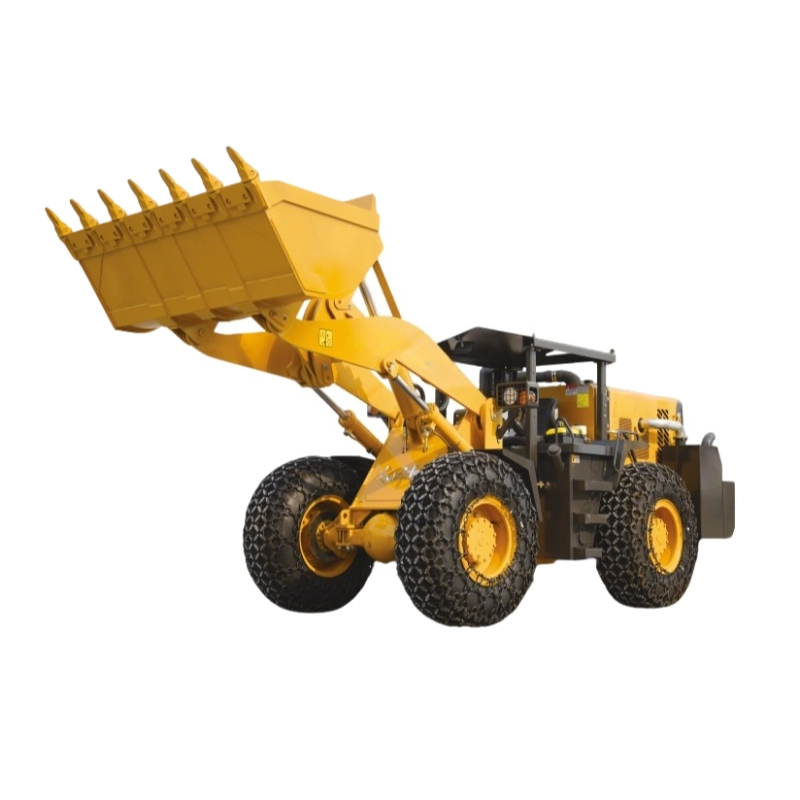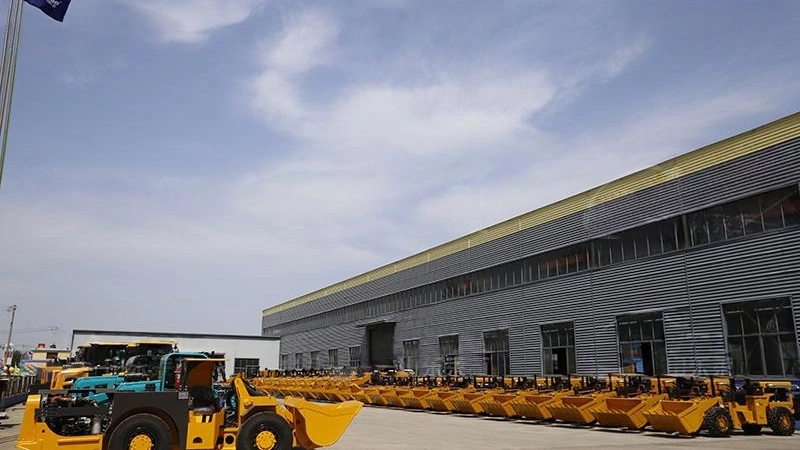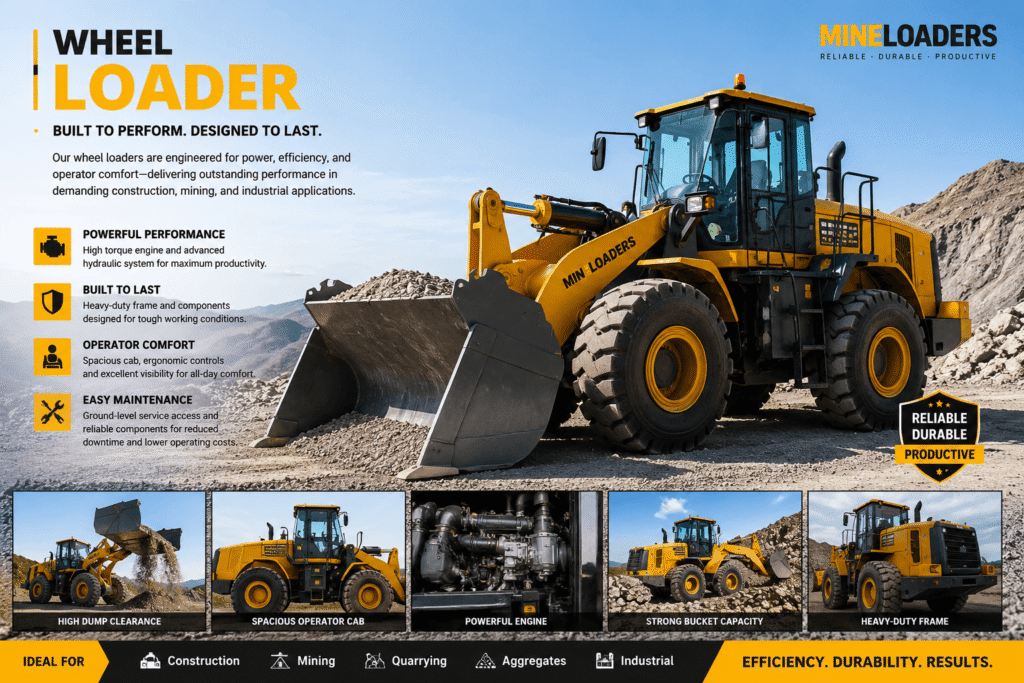
Understanding the Multi-Role Utility of Compact Wheel Loaders
The modern jobsite demands equipment that bridges the gap between manual labor and heavy-duty machinery. The compact wheel loader (CWL) has emerged as the primary solution for this gap, particularly where space is constrained but lifting capacity cannot be sacrificed. Unlike their larger counterparts, compact wheel loaders typically weigh under 18,000 pounds and feature an articulated steering system. This design allows the machine to “pivot” in the middle, providing a tighter turning radius while minimizing ground disturbance—a critical factor when working on finished surfaces or sensitive agricultural soil.
From a technical perspective, the versatility of these machines stems from their hydraulic versatility. Equipped with quick-coupler systems, a single unit can transition from a high-capacity bucket loader to a pallet fork carrier or a specialized snow blower in under a minute. For project managers and farm operators, this adaptability transforms the CWL from a simple material mover into a strategic multi-tool that maximizes fleet utilization rates.
The Technical Anatomy of Versatile Performance
To understand why compact wheel loader applications are expanding, one must look at the mechanical advantages of the platform. Most modern units, such as those featured in professional lineups like Mineloaders, utilize hydrostatic transmissions. This allows for infinite speed control and high torque at low speeds, which is essential for “pushing” into a pile of dense aggregate or manure.
Furthermore, the choice of linkage—typically Z-Bar or Parallel lift—determines the machine’s primary application suitability. Z-Bar linkages provide superior breakout force for tough digging in construction, while Parallel lift linkages keep the load level throughout the lift cycle, making them the gold standard for pallet handling in farming and logistics.
Compact Wheel Loader Applications in Modern Construction
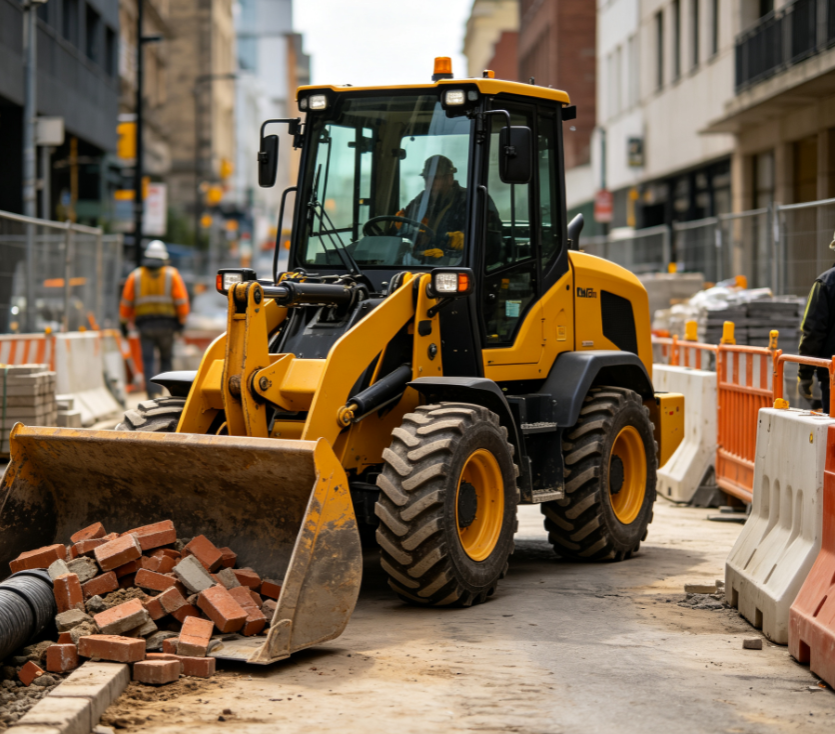
In the construction sector, the shift toward urban infill projects and utility maintenance has made the CWL indispensable. Large wheel loaders are often too cumbersome for residential streets, while skid steers may lack the visibility or reach required for high-side truck loading.
Urban Infrastructure and Utility Work
Compact wheel loaders excel in “street-side” applications. Because of their articulated steering, they can navigate narrow lanes without the “skidding” motion that damages asphalt or decorative paving. They are frequently used for:
- Backfilling Trenches: Using side-dump buckets to fill utility lines without blocking two-way traffic.
- Site Cleanup: Maneuvering around foundation walls to remove debris.
- Material Transport: Moving pallets of brick, block, or drainage pipe from staging areas to the precise point of installation.
Landscaping and Hardscaping
For professional landscapers, the low ground pressure of a CWL is its greatest asset. When equipped with flotation tires, these loaders can transport heavy decorative stone or bulk mulch across established turf with minimal rutting. This reduces the time and cost associated with site remediation after the primary work is completed.
Agricultural Utility: Enhancing Farm Productivity
Agriculture remains one of the most demanding environments for machinery. While tractors are the traditional workhorse, the compact wheel loader offers superior cycle times and better operator visibility for material handling tasks.
Livestock Management and Dairy Operations
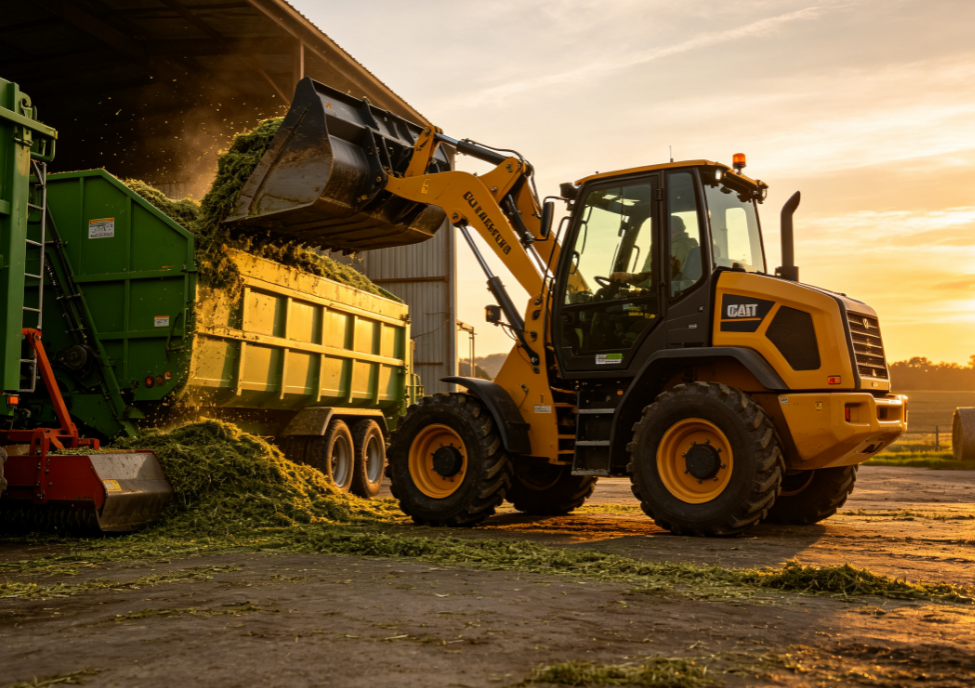
In dairy and feedlot environments, the CWL is often the most used machine on the farm. Its high seating position allows the operator to see over the edge of feed mixers and high-sided wagons. Key applications include:
- Silage Handling: Pushing and packing silage in bunkers or loading TMR (Total Mixed Ration) mixers.
- Manure Management: Scraping alleys and loading spreaders, where the articulated joint allows for easy navigation in tight barn stalls.
- Bale Stacking: Using specialized bale grabs to stack hay or straw in high-clearance hay sheds.
Specialized Crop and Orchard Work
In orchards and vineyards, “narrow-track” versions of compact wheel loaders are used to move bins of harvested fruit. The smooth hydraulic controls prevent the “jerking” motion that can bruise sensitive produce during transport from the field to the cooling facility.
Comparative Performance: CWL vs. Other Compact Equipment
Deciding on a compact wheel loader often involves comparing it to Skid Steer Loaders (SSL) or Compact Track Loaders (CTL). The following table outlines why a CWL is often the preferred choice for specific applications:
| Feature | Compact Wheel Loader (CWL) | Skid Steer / Track Loader |
| Visibility | 360° view from high cab position | Limited rear and side visibility |
| Tire/Track Wear | Low (Articulated steering) | High (Skidding motion) |
| Fuel Efficiency | High (Hydrostatic drive) | Moderate to Low |
| Travel Speed | Up to 20+ mph | Generally under 12 mph |
| Ground Disturbance | Minimal | Significant (especially SSL) |
Engineering Considerations for Application Matching
When selecting a machine for a specific application, three technical metrics are paramount:
- Tipping Load (Full Turn): This is the maximum weight the loader can lift when the machine is fully articulated. It is the most realistic measure of capacity in real-world conditions.
- Breakout Force: Critical for construction applications involving digging or demolition. It measures the hydraulic power available to “break” material away from a pile.
- Auxiliary Hydraulic Flow: Measured in Gallons Per Minute (GPM). High-flow hydraulics are required for demanding attachments like cold planers, wood chippers, or heavy-duty snow blowers.
Modern manufacturers have integrated “inching pedals” into these machines. This allows the operator to divert full engine power to the hydraulic system while maintaining a very slow travel speed—a vital feature for precision tasks like trenching or milling.
Selecting Attachments for Maximum ROI
The return on investment (ROI) for a compact wheel loader is directly tied to its attachment versatility. For a construction firm, this might mean owning a 4-in-1 bucket that can bulldoze, grapple, grade, and load. For a farming operation, it may involve a specialized silage defacer or a hydraulic broom for keeping feed lots clean.
When evaluating a fleet addition, it is essential to consider the “hitch” system. Most compact wheel loaders utilize a universal skid steer-style coupler or a proprietary ISO-standard horizontal pin coupler. Ensuring compatibility across your existing attachment inventory is a key step in operational planning.
FAQ: Common Questions on Compact Wheel Loader Usage
Q: Can a compact wheel loader replace a tractor on a small farm?
A: In many material handling scenarios, yes. While a tractor is better for PTO-driven field work (like plowing), a CWL is significantly faster and more maneuverable for loading, stacking, and cleaning tasks.
Q: Are compact wheel loaders safe for use on indoor jobsites?
A: Yes, provided they are equipped with appropriate emissions systems (like Tier 4 Final diesel engines) or if they are electric models. Their articulated steering makes them much easier to maneuver inside warehouses or large barns than fixed-frame machines.
Q: How does the “lifting path” affect different applications?
A: A radial lift path is excellent for mid-range reach tasks like dumping over a wall. A vertical lift (or parallel lift) path keeps the load at the same distance from the machine throughout the cycle, which is essential for pallet work and stacking high loads safely.
Q: What is the typical lifespan of a compact wheel loader in industrial use?
A: With proper maintenance of the hydraulic system and pivot pins, a high-quality CWL can easily exceed 5,000 to 8,000 hours of service. Because they don’t “skid” their tires, the drivetrain often lasts longer than that of a skid steer.
Reference Sources
- Association of Equipment Manufacturers (AEM): Trends in Compact Construction Equipment (2023).
- ISO 14397-1:2007: Earth-moving machinery — Loaders and backhoe loaders — Part 1: Calculation of rated operating capacity.
- American Society of Agricultural and Biological Engineers (ASABE): Standards for Agricultural Loader Safety and Performance.
- Manufacturer Technical Documentation: Engineering specifications for articulated loader steering and hydrostatic transmission systems.