The transition from diesel-to-electric in the mining sector is no longer a speculative trend; it is a strategic pivot driven by operational efficiency and regulatory pressure. For mine managers and OEM project managers, the choice between traditional internal combustion engines (ICE) and Battery Electric Vehicles (BEVs) involves more than just swapping fuel types. It requires a fundamental rethink of mine design, ventilation infrastructure, and long-term OpEx.
This analysis examines the critical differences between diesel and electric mining equipment, specifically focusing on underground mining trucks and loaders, to help you determine which power source aligns with your site’s specific depth, temperature, and production goals.
The Fundamental Engineering Shift: Diesel vs. Electric
Traditional diesel mining equipment relies on high-torque compression-ignition engines. While these systems are mature and offer high energy density, they convert only about 30% to 35% of fuel energy into mechanical work, with the remainder lost as heat and exhaust.
In contrast, electric mining equipment—particularly modern battery-powered trucks—utilizes high-efficiency electric motors. These motors provide instant torque and can reach efficiency rates exceeding 90%. Furthermore, electric drivetrains allow for regenerative braking, a critical feature for deep-decline mines where energy can be recovered during downhill hauls to recharge the battery.
1. Ventilation and Thermal Management
In underground mining, ventilation is often the largest single operational expense. This is where the gap between diesel and electric is most pronounced.
- Diesel Challenges: Diesel engines emit Diesel Particulate Matter (DPM), NOx, and SOx. To maintain safe air quality standards (such as those set by MSHA or local regulatory bodies), mines must invest in massive Ventilation-on-Demand (VoD) systems to dilute these toxins. Additionally, diesel engines generate significant heat, which can become a limiting factor in deep mining where ambient rock temperatures are already high.
- The Electric Advantage: Electric equipment produces zero tailpipe emissions. By removing the need for DPM filtration and significantly reducing the heat load, operators can often reduce ventilation requirements by 30% to 50%. In new mine developments, this allows for smaller shaft diameters and lower capital expenditure on primary fans.
2. Performance Comparison: Torque and Gradeability
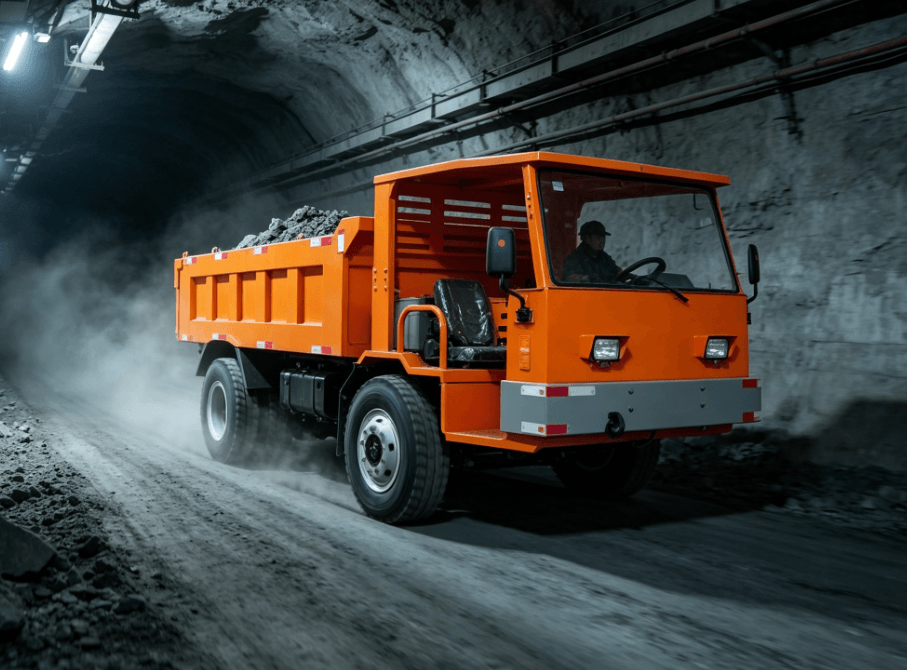
When evaluating underground mining trucks, performance on steep ramps is the primary KPI.
| Feature | Diesel Mining Equipment | Electric Mining Equipment |
| Torque Delivery | Gradual; dependent on RPM and gear ratios. | Instant; full torque available from zero RPM. |
| Speed on Grade | May slow down as the engine heats up or oxygen levels drop. | Constant; maintains higher speeds on steep inclines. |
| Braking | Relies on friction brakes and hydraulic retarders (generates heat). | Regenerative braking (converts kinetic energy to electricity). |
| Refueling/Charging | 10–15 minutes for a full tank. | 20–90 minutes for fast charge or 10 minutes for battery swap. |
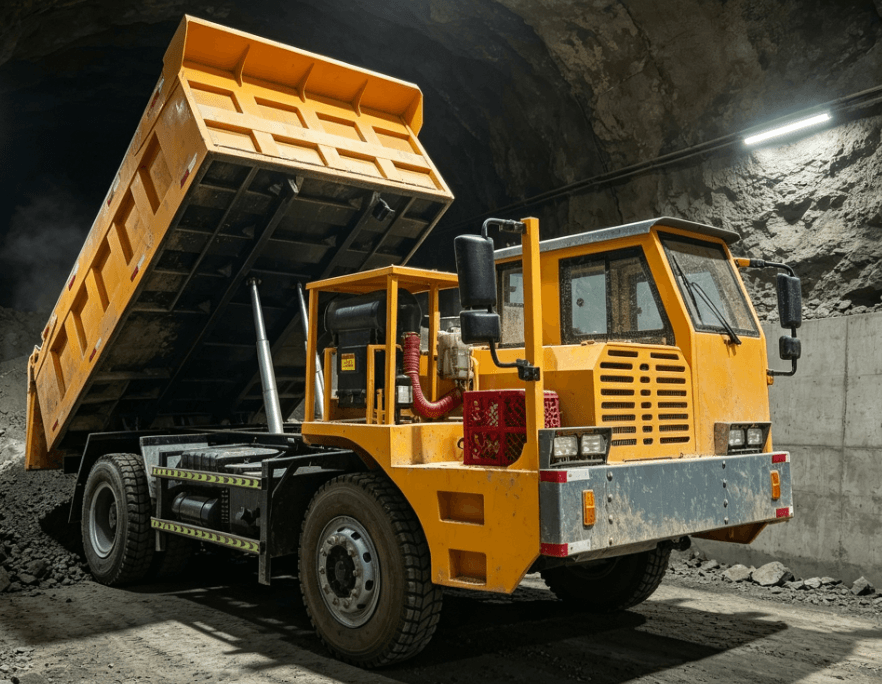
Electric motors do not suffer from the same “derating” issues as diesel engines at high altitudes or in low-oxygen environments. For a 30-ton or 50-ton haul truck, an electric drivetrain often results in faster cycle times because the machine can maintain higher speeds while climbing ramps.
3. Maintenance and Reliability
The maintenance profile of electric equipment is significantly leaner than that of its diesel counterparts. A typical diesel engine has hundreds of moving parts subjected to high heat, vibration, and friction.
Diesel Maintenance Requirements:
- Frequent oil and filter changes.
- Turbocharger and fuel injector servicing.
- Complex exhaust after-treatment systems (DPF/SCR).
- Transmission and cooling system overhauls.
Electric Maintenance Requirements:
- Minimal moving parts in the motor.
- No engine oil, cooling fans for radiators (though battery cooling is required), or complex transmissions.
- Battery health monitoring and thermal management systems.
- Significantly longer intervals between major component overhauls.
While the battery itself is a high-cost component that requires monitoring, the overall mechanical reliability of BEVs tends to be higher, leading to increased machine availability.
4. Total Cost of Ownership (TCO) Analysis
When comparing diesel vs electric mining equipment, the decision usually comes down to CapEx versus OpEx.
Capital Expenditure (CapEx):
Electric equipment generally has a higher upfront price tag—often 30% to 50% more than diesel—primarily due to the cost of high-capacity lithium-ion battery packs and the required charging infrastructure (substations, rapid chargers, or battery-swapping stations).
Operating Expenditure (OpEx):
This is where electric equipment excels.
- Energy Cost: Electricity is generally cheaper and more price-stable than diesel fuel, especially in remote regions where fuel must be trucked in.
- Maintenance Savings: Reduction in labor and parts for engine-related repairs.
- Ventilation Savings: Significant reduction in kilowatt-hours required for mine cooling and air circulation.
For long-life mines (10+ years), the TCO of electric equipment often falls below diesel after the first 3 to 5 years of operation.
5. Infrastructure and Operational Logic
The most significant barrier to adopting electric equipment is the “charging vs. swapping” dilemma.
- Fast Charging: Requires the truck to be stationary. This can be integrated into the loading/unloading cycle but requires high-power electrical infrastructure at specific points in the mine.
- Battery Swapping: Minimizes downtime. A depleted battery is swapped for a fresh one in 10 minutes, similar to refueling. However, this requires additional investment in spare battery packs and specialized cranes.
Diesel equipment remains the “easy” choice for greenfield sites with no grid access or for short-term projects where the infrastructure investment for electric cannot be amortized.
Choosing the Right Equipment for Your Mine
The choice between diesel and electric is rarely binary; many modern fleets are hybrid. For shallow mines with existing ventilation capacity, diesel trucks remain highly productive and cost-effective. However, for deep-vein mining, high-temperature environments, or projects with strict ESG (Environmental, Social, and Governance) targets, electric is the superior technical solution.
When evaluating mining trucks and loaders, consider the “Duty Cycle.” If your operation involves long, flat hauls, diesel’s energy density is an advantage. If your operation involves frequent starts, stops, and steep ramps, the efficiency of an electric drivetrain will provide a faster return on investment.
FAQ
Q: Can electric mining trucks handle the same payload as diesel trucks?
A: Yes. Modern electric mining trucks are engineered to match or exceed the payload capacities of diesel equivalents. The primary difference is the weight distribution; batteries are heavy, but the removal of the engine and transmission offsets much of this weight.
Q: How long do batteries last in electric mining equipment?
A: Most industrial-grade LFP (Lithium Iron Phosphate) or NMC (Nickel Manganese Cobalt) batteries used in mining are rated for 3,000 to 5,000 charge cycles. In a typical mining environment, this translates to 5–8 years of service life before a significant drop in capacity.
Q: Is electric equipment safer than diesel?
A: Electric equipment eliminates the risk of hot exhaust igniting hydraulic fluids and removes toxic DPM from the air. However, it introduces different risks, such as thermal runaway in batteries, which requires specialized fire suppression systems and technician training.
Q: What is the “Ventilation Ratio” for diesel vs electric?
A: Generally, a diesel engine requires roughly 100 cfm (cubic feet per minute) of air per brake horsepower to dilute emissions. Electric equipment requires only enough air to manage the heat generated by the motor and to provide fresh air for personnel, often reducing air requirements by over 50%.
Reference Sources:
- International Council on Mining and Metals (ICMM): Innovation for Cleaner, Safer Vehicles (ICSV) Initiative.
- ISO 23875: Mining—Air quality control systems for operator enclosures—Performance requirements and test methods.
- MSHA (Mine Safety and Health Administration): Diesel Particulate Matter (DPM) Control Technologies.