The efficiency of an underground mining operation is dictated by the synergy between geological conditions and the machinery deployed to navigate them. Unlike open-pit mining, where space allows for massive scale, underground environments demand high power density within tight spatial constraints. Selecting the right underground mining equipment types requires a deep understanding of rock mechanics, ventilation requirements, and the specific extraction method employed, whether it be room-and-pillar, longwall, or sublevel stoping.
To maintain operational continuity, engineers must balance machine throughput with the atmospheric challenges of deep-earth environments. This guide examines the primary categories of equipment used to develop, extract, and transport ore safely and efficiently.
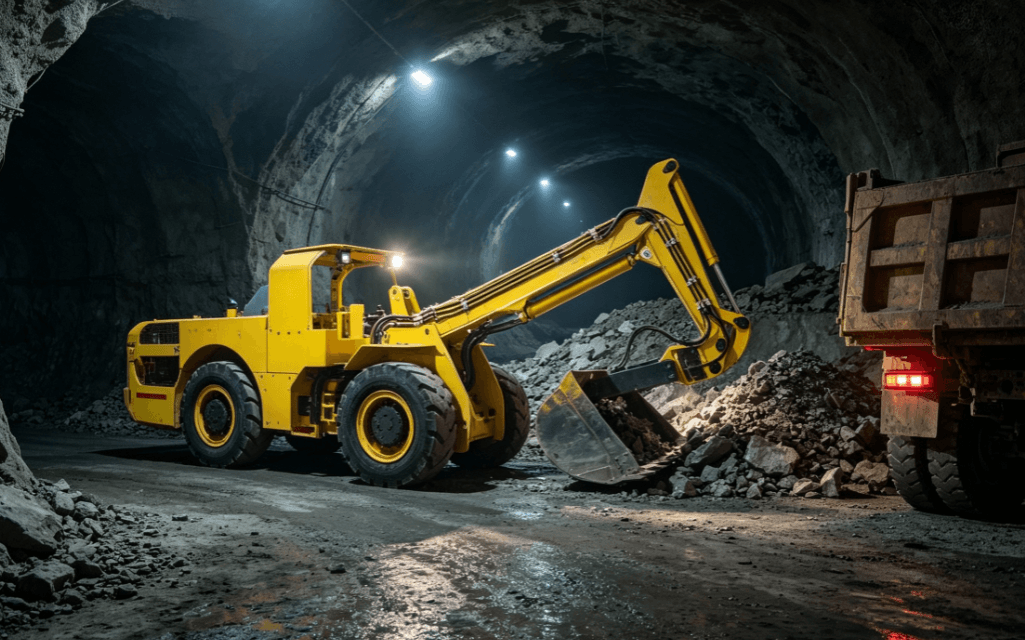
Primary Development and Production Drilling Equipment
Before any material can be moved, the rock face must be prepared. Drilling is the first step in both development (creating tunnels) and production (extracting ore).
Face Drill Rigs (Jumbos)
Often referred to simply as “Jumbos,” these machines are the workhorses of tunnel development. A jumbo typically features one, two, or three hydraulic booms that hold drill machines. These are used to drill holes for explosives in the tunnel face. Modern jumbos incorporate automated “bolt-hole” precision, ensuring that the blast pattern is optimized to minimize “overbreak”—the unnecessary excavation of waste rock.
Longhole Production Drills
In methods like sublevel stoping, longhole drills are used to create deep, precise holes (often exceeding 20 meters) into the ore body from a remote drift. Accuracy is critical here; even a slight deviation in the drill path can lead to poor fragmentation or dilution of the ore with waste rock.
Load-Haul-Dump (LHD) Machines: The Pulse of the Mine
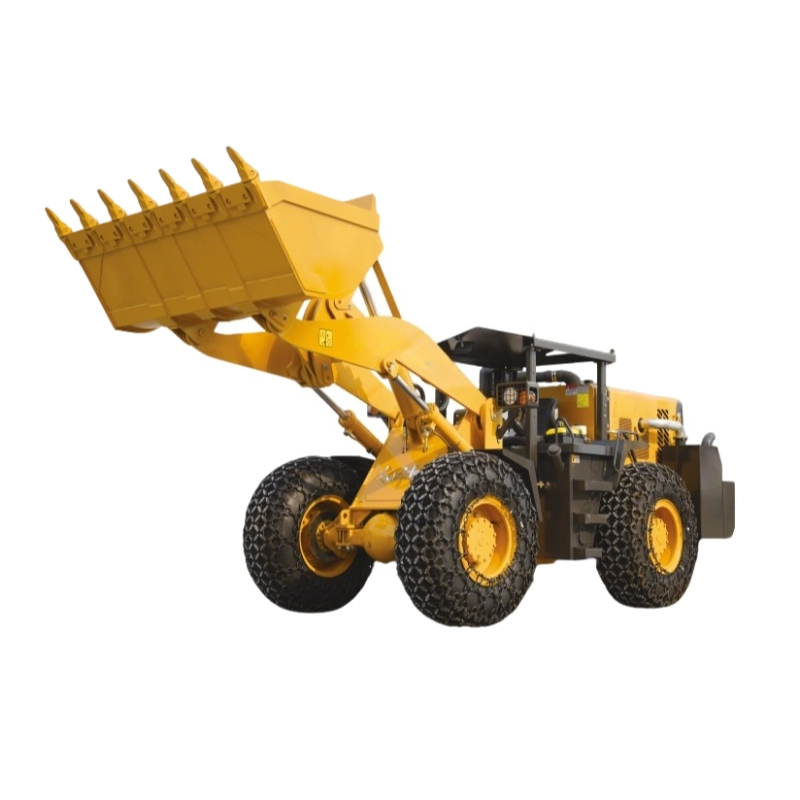
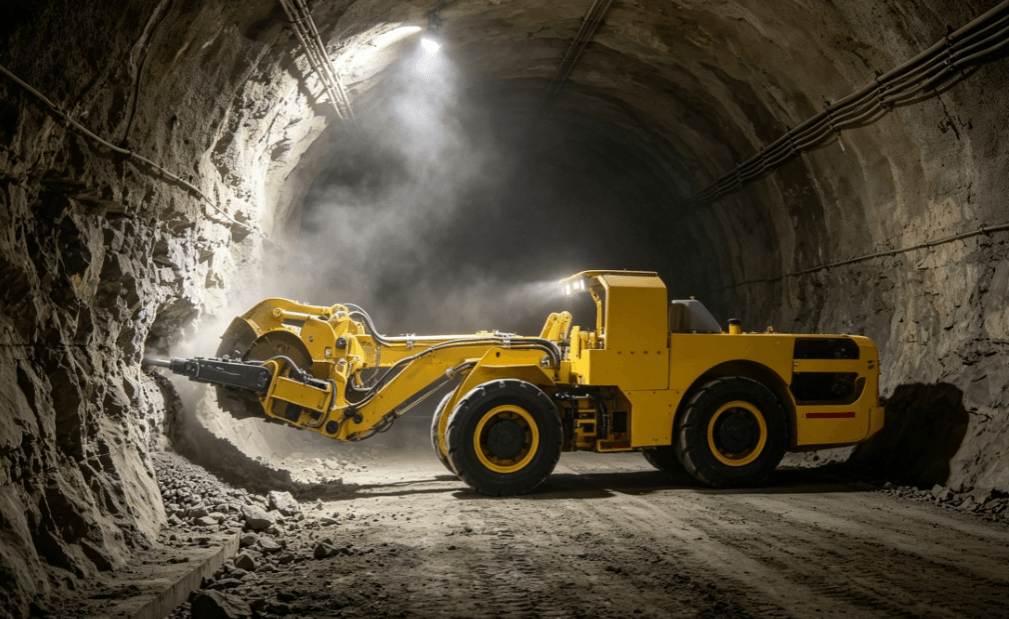
In the world of underground mining, the LHD loader (Load-Haul-Dump) is perhaps the most versatile and critical piece of equipment. Often called “Scooptrams,” these machines are designed to perform three distinct functions in a single cycle.
LHDs differ from surface loaders in their low-profile design and articulated steering, which allows them to navigate narrow headings and sharp turns. According to engineering standards at Mineloaders.com, the selection of an LHD is usually driven by the “tramming capacity”—the weight the machine can safely carry while moving.
Key Technical Considerations for LHDs:
- Power Source: Mining fleets are increasingly shifting from diesel to Battery Electric Vehicles (BEVs). Electric LHDs significantly reduce the “heat load” and diesel particulate matter (DPM) in the mine, which in turn lowers the massive costs associated with underground ventilation.
- Bucket Geometry: For high-density ores like copper or gold, buckets are reinforced with wear-resistant liners. For lower-density materials, larger “volume” buckets are used to maximize throughput.
- Narrow Vein Operations: In specialized mining where the ore seam is thin, “extra-low-profile” (XLP) loaders are utilized. These machines allow operators to work in heights as low as 1.2 to 1.8 meters.
Underground Haul Trucks
While LHDs are excellent for short-range transport (mucking), underground haul trucks are used for longer-distance tramming to the surface or a central crusher.
These trucks are distinct from their surface-level counterparts. They feature an articulated chassis for maneuverability and are built with a high power-to-weight ratio to climb steep “ramps” or declines. Typical capacities range from 20 to 65 tonnes. The integration between the LHD and the truck is a vital metric for site managers; usually, a “three-pass load” (where the LHD fills the truck in three bucket loads) is considered the gold standard for operational balance.
Comparison of Primary Loading and Hauling Equipment
| Equipment Type | Primary Function | Ideal Application | Key Advantage |
| LHD (Scooptram) | Load, Transport, Dump | Short-range mucking | High maneuverability in narrow drifts |
| Underground Truck | Long-range Transport | Moving ore to the surface/shaft | High payload capacity for steep ramps |
| Conveyor Systems | Continuous Transport | High-volume, fixed-route mines | Lowest cost per ton for long-term use |
| Electric LHD | Clean Loading | Deep mines with limited ventilation | Zero emissions and reduced heat output |
Ground Support and Safety Equipment
Safety in underground mining is predicated on “ground control”—the ability to prevent rockfalls. As soon as a section of rock is blasted and cleared, ground support machinery moves in.
Roof Bolters
These machines drill holes into the ceiling (back) and walls of the tunnel, inserting steel bolts that “knit” the rock layers together. In high-stress environments, resin-encapsulated bolts or cable bolts are used to provide superior tension.
Scaling Equipment
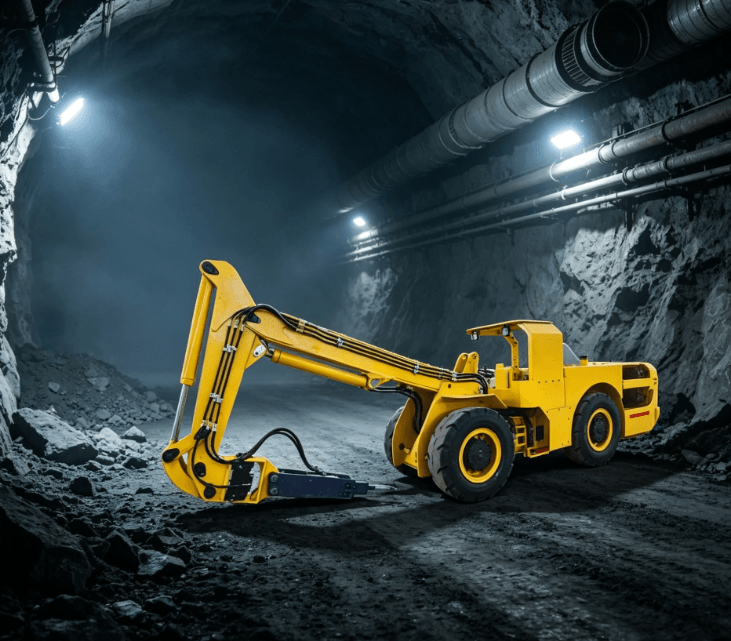
After a blast, loose fragments of rock (known as “scaly” rock) hang from the ceiling. Mechanical scalers use hydraulic hammers or picks to pry these fragments down before personnel enter the area. This is a critical step in the “Scale-Bolt-Mesh” safety cycle.
Auxiliary and Support Vehicles
A mine cannot function with production machines alone. A fleet of utility vehicles (UVs) handles the logistics of the underground city:
- Personnel Carriers: Ruggedized, enclosed vehicles that transport miners safely to the working face.
- Explosive Chargers: Specialized units equipped with tanks and hoses to pump ANFO (Ammonium Nitrate/Fuel Oil) or emulsion explosives into drill holes.
- Scissor Lifts: Used for installing ventilation ducting, piping, and electrical cables along the tunnel roof.
Electrification and Future Trends
The industry is currently undergoing a “Green Shift.” The primary driver isn’t just environmental regulation, but the physics of depth. As mines get deeper, the air gets hotter, and the cost of pumping fresh air down to dilute diesel exhaust becomes exponential.
OEMs are now prioritizing “Zero Emission” fleets. Battery-swapping technology for LHDs allows a machine to run a full shift by simply trading a depleted battery for a charged one in under 10 minutes. This transition reduces the heat signature of the machine by up to 80%, creating a safer and more comfortable environment for operators while drastically cutting operational expenditures (OPEX) related to ventilation fans.
FAQ
Q: What is the difference between a standard loader and an underground LHD?
A: A standard surface loader is tall and wide, designed for open spaces. An underground LHD (Load-Haul-Dump) is “low-profile,” meaning it is built short and narrow to fit into tunnels. LHDs also feature articulated steering to handle tight 90-degree turns and are designed to operate with equal speed in both forward and reverse.
Q: Why are mines moving away from diesel equipment?
A: The main reason is ventilation cost and miner health. Diesel engines produce heat and Particulate Matter (DPM). In deep mines, the energy required to circulate enough air to clear these pollutants is incredibly expensive. Electric equipment runs cooler and produces zero exhaust, making it more cost-effective in the long run.
Q: What is “Narrow Vein” mining equipment?
A: Narrow vein equipment refers to ultra-compact machines designed for ore bodies that are very thin. These machines are often less than 1.5 meters wide and are used to minimize “dilution”—the accidental mining of surrounding waste rock—by keeping the tunnel as small as the ore seam itself.
Q: How do miners choose between trucks and conveyors?
A: It usually comes down to the mine’s lifespan and geometry. Conveyors have high upfront costs but offer the lowest cost-per-ton for high-volume, long-term mines with fixed paths. Haul trucks offer more flexibility and lower initial investment, making them ideal for mines with complex, changing layouts.
Reference Sources
- MSHA (Mine Safety and Health Administration): Safety standards for underground mobile equipment and diesel particulate matter regulations. msha.gov
- CIM (Canadian Institute of Mining, Metallurgy and Petroleum): Best practices for underground mining methods and equipment selection. cim.org
- ISO 19296:2018: Mining — Mobile machines working underground — Machine safety. iso.org
- NIOSH Mining Program: Research on the impact of electrification and automation on underground miner safety. cdc.gov/niosh/mining