International procurement teams need straightforward, actionable checks when engaging Chinese wheel loader manufacturers. This guide is written for buyers who must separate marketing claims from site-fit facts, plan RFQs, and prepare for on-site confirmation. It focuses on practical verification steps rather than product specifications.
Chinese wheel loader manufacturers: primary buyer checks
Before requesting quotations or confirming orders, buyers should treat manufacturer selection as a structured project: verify capability, confirm parts and service arrangements, test relevant documentation, and align required configurations with mine-site constraints. Where safety or powered haulage is concerned, consult authoritative guidance and incorporate hazard-aware checks into procurement [1].
How to assess manufacturer capability and quality control
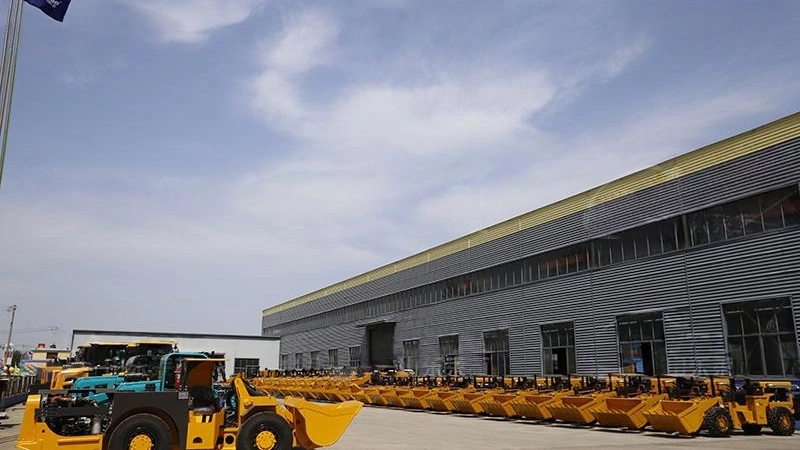
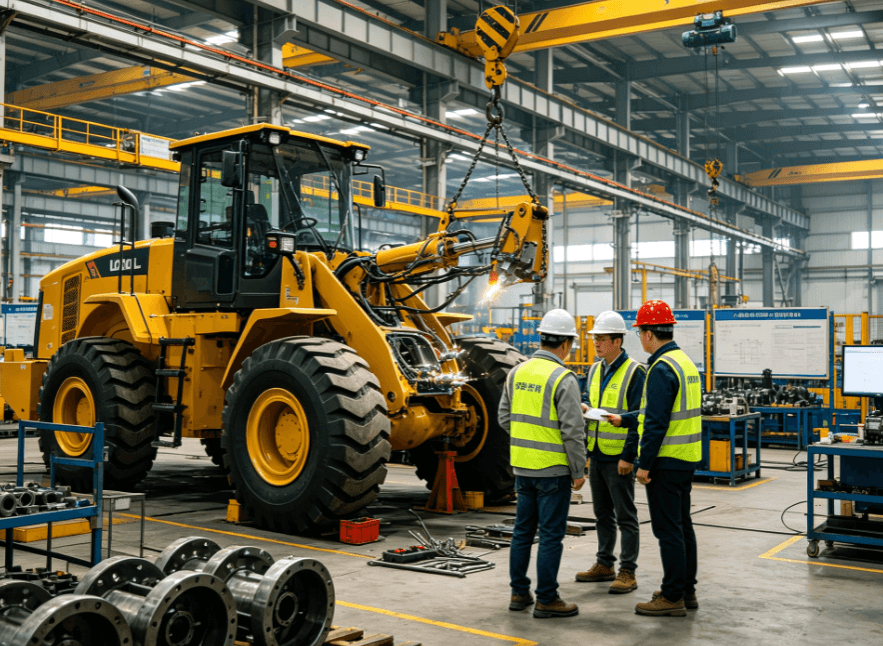
Manufacturer capability is more than advertised models. Verify the production process, quality control steps, and after-sales organization. Practical checks include on-site or virtual factory walkthroughs, sample inspection reports, non-conformance procedures, and evidence of routine testing practices. Ask for traceability records that show how parts and assemblies are controlled through production.
Factory and process checks
- Confirm factory layout and production flow for similar heavy equipment assembly.
- Inspect welding procedures, paint and corrosion-prevention processes, and final inspection criteria.
- Request examples of inspection records and non-destructive testing where applicable.
Supply chain and parts management
Availability of spare parts and consumables is a decisive commercial factor. Ask how critical components are stocked, lead times for common wear items, and whether the manufacturer has authorised dealers or parts distributors in your region. Obtain a parts-list template (not a final bill) that indicates serviceable items and typical part numbers for RFQ planning.
Key comparison factors for shortlist decisions
The table below helps compare manufacturers on the most influential factors. Use it during initial supplier scoring to prioritize follow-up audits or RFQs.
| Decision factor | Why it matters | Quick check |
|---|---|---|
| Manufacturing consistency | Impacts reliability and field downtime risk | Factory records, sample inspection reports |
| Parts availability | Determines maintenance speed and inventory cost | Regional stockists, lead-time norms, parts list template |
| After-sales service | Field support capability reduces project risk | Local service partners, SLA examples, spare tech contacts |
| Documentation and certification | Needed for import, operation and insurance | Ask for typical documentation package contents |
| Reference projects and operator feedback | Real-world performance and maintainability indicators | Site references and test reports from similar environments |
Operational, emissions and site-fit considerations
Wheel loaders are used across surface mining, construction, and bulk-material handling; understanding intended operating cycles, duty, and site access is essential for correct configuration [6]. For diesel-powered equipment, check emissions and ventilation implications where applicable, and confirm how the manufacturer supports emission-control options and related documentation [4].
Key site-fit items include transport route limitations, tipping-area geometry, and maintenance access. These require direct measurement at the mine and discussion with the manufacturer during RFQ; avoid assuming any standard configuration will be suitable without confirmation.
.png)
RFQ and site-confirmation checklist
Use the table below during RFQ preparation and site surveys. Items marked as RFQ/OEM/mine confirmation are decisions that cannot be finalized from marketing materials alone.
| Item | Decision required | Who confirms |
|---|---|---|
| Final configuration (attachments, axle/tyre options) | RFQ / OEM | Buyer & OEM |
| Dimensions and transport packaging | RFQ / site confirmation | Buyer & OEM & logistics |
| Rated capacity and duty cycle alignment | RFQ / mine confirmation | Buyer & site operations |
| Documentation package (maintenance manual, parts list) | RFQ | OEM |
| Emission controls and ventilation requirements | RFQ / site confirmation | Buyer, OEM & site engineering |
| Service network and spare parts lead times | RFQ | OEM & distributor |
| Operator training and technical support | RFQ | OEM & buyer |
Inspection and trial recommendations
Where practical, request a factory acceptance test, a demonstration under load, or a short-term rental to observe performance in context. Insist on witnessing operational checks and review the maintenance plan with the service team. For powered haulage and movement controls, align acceptance criteria with site hazard analyses and incorporate documented checkpoints into the contract [1].
What to look for during acceptance
- Consistent engine and transmission operation under representative loads
- Functional safety interlocks and clear operator controls
- Accessible service points and clear parts identification
Commercial terms and practical negotiation points
Commercial negotiation should convert observed risks into contract requirements: defined documentation delivery, agreed spare-parts lists, and service escalation routes. If regional support is limited, factor the need for training local technicians and stocking critical spares before first deployment.
International logistics considerations
Confirm packaging for export, export-clearance documentation, customs classification, and transport constraints. Large items may require disassembly for shipping; confirm responsibility for on-site reassembly and final calibration.
FAQs
How do I verify a manufacturer’s quality processes?
Request a factory visit or virtual walkthrough, sample inspection reports, and evidence of routine testing. Look for documented procedures for incoming material inspection, welding quality, painting, and final inspection records. If on-site visits are not possible, commission an independent inspection by a reputable third party.
What documentation should I insist on during the RFQ?
Ask for a documentation checklist that includes maintenance manuals, parts lists, wiring diagrams (where applicable), and a typical commissioning checklist. Confirm which items are standard and which are optional; final delivery contents must be specified in the RFQ and purchase agreement.
How should I handle emissions and ventilation questions?
Determine whether the equipment will operate in enclosed or poorly ventilated areas; diesel emissions and aerosols require attention and may mean additional ventilation or exhaust-control measures. Discuss available emission-control options with the manufacturer and consult relevant guidance on diesel aerosols and gases to inform site controls [4].
Can I rely on third-party service providers for maintenance?
Third-party maintenance is common, but verify that technicians have access to manufacturer parts, diagnostic tools, and training. Confirm the manufacturer’s policy on third-party maintenance, and define escalation procedures for warranty or technical issues as part of the RFQ.
What role do reference projects play in selection?
References reveal field reliability and maintenance realities. Ask for contacts at sites with similar duty cycles and environmental conditions. Where possible, speak to operators and maintenance staff to understand real-world issues not visible in marketing materials.
If you need a commercial starting point, review the supplier’s construction and mining equipment range for an overview of available product families and contact details for RFQ initiation.
Scope note: final configuration, dimensions, capacity, documentation, price, lead time and site fit require RFQ/OEM/mine confirmation. Do not treat this draft as a specification; it is a procurement checklist and guide for buyer-led verification.
For a product-page starting point, review the construction and mining equipment range and request application-specific confirmation.
When comparing options, use Chinese wheel loader manufacturers as a checklist topic rather than a promise of a particular machine outcome. Record the operating conditions, material, route restrictions, maintenance resources, and safety controls that the supplier or OEM must confirm in writing.
Additional buyer checks before final selection
Before comparing quotations, document the normal and peak duty cycle, material condition, available working envelope, haul or travel route, operator interface, planned inspection process, and service access. Ask each respondent to state the assumptions used for its recommendation and to identify any attachments, optional systems, or operating limits that could change the final configuration. This makes it easier to compare proposals on a like-for-like basis and to plan a practical commissioning review.
Procurement teams should also separate facts that are published by a supplier from items that require project-specific validation. Request drawings, operating documentation, maintenance requirements, and the applicable safety or regulatory information for the intended jurisdiction. If the machine will work alongside other mobile equipment, include traffic management, visibility, communication, and training considerations in the site review. These checks support a more complete RFQ without implying that a generic article can replace an engineering assessment or the mine’s own safety process.