When preparing to contract with a mining loader supplier, international buyers need to evaluate more than machine price or rated capacity. The right choice depends on the mine layout, material characteristics, production target, maintenance resources, ventilation conditions and local support available after delivery.
This guide provides a practical framework for comparing mining loader suppliers, preparing an RFQ and confirming whether a proposed machine is suitable for the intended application.
What Should Buyers Look for in a Mining Loader Supplier?
A reliable supplier should be able to provide more than a product catalogue. Buyers should evaluate whether the supplier can clearly explain the machine’s intended application, configuration, technical limitations, documentation, warranty coverage and after-sales support.
Key areas to review include:
- Application experience: Has the supplier handled similar surface or underground mining applications?
- Product capability: Does the supplier offer a suitable range of payloads, bucket capacities and configurations?
- Technical support: Can the supplier provide drawings, specifications, commissioning assistance and maintenance guidance?
- Spare parts: Are commonly required parts available, and what are the expected delivery times?
- Warranty: What is covered, for how long, and which exclusions apply?
- Training: Can the supplier provide operator and maintenance training?
- Compliance documentation: Can the supplier provide the documents required for the intended market and application?
Buyers should also distinguish between a supplier and a manufacturer. A supplier may represent or source equipment from different manufacturers, while a manufacturer generally controls the machine design and production process. Before signing a contract, confirm who is responsible for engineering support, warranty claims, spare parts and after-sales service.
Key Mining Loader Selection Criteria
The machine should be evaluated against actual site conditions rather than model names alone.
| Selection factor | What to check | RFQ / site-confirmation action |
|---|---|---|
| Operating environment | Surface or underground use, tunnel dimensions, gradients and ambient conditions | Provide site information and drawings |
| Material | Rock or ore type, density, fragmentation and moisture | Provide material characteristics |
| Production target | Required tonnes per hour/day, shift pattern and cycle distance | Include production targets in RFQ |
| Machine dimensions | Width, height, wheelbase, turning radius and ground clearance | Confirm against site measurements |
| Payload and bucket | Rated payload, bucket capacity and material density | Request model-specific specifications |
| Powertrain | Diesel, electric or other available configuration | Confirm power and infrastructure requirements |
| Maintenance | Service intervals, access to components and parts availability | Request maintenance schedule and parts support |
| Safety and training | Operator controls, visibility, safety systems and training | Request available training and documentation |
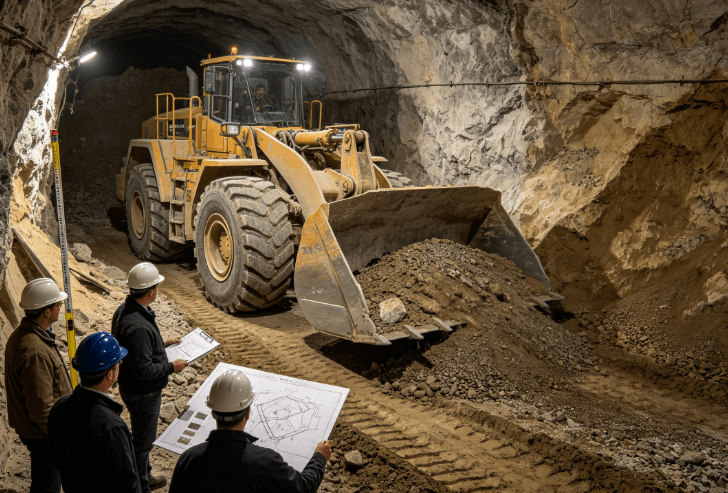
For underground operations, dimensions can be as important as payload. A higher-capacity machine may not provide a practical productivity advantage if tunnel width, roof height, turning space or ramp conditions restrict its operation.
How to Compare Mining Loader Suppliers
A useful supplier comparison should consider both machine capability and the supplier’s ability to support the equipment throughout its operating life.
| Factor | Higher-capacity option | Compact option | Buyer consideration |
|---|---|---|---|
| Payload | Potentially fewer loading cycles | More cycles may be required | Match payload to production targets |
| Machine footprint | May require more operating space | Better suited to restricted areas | Check tunnel and road dimensions |
| Bucket size | Higher volume per loading cycle | Easier to match to smaller machines | Consider material density and loader stability |
| Power system | Diesel may offer flexible refuelling | Electric options may suit some enclosed applications | Review infrastructure and ventilation |
| Serviceability | More complex systems may require greater technical support | Some configurations may be easier to maintain locally | Assess technician and parts availability |
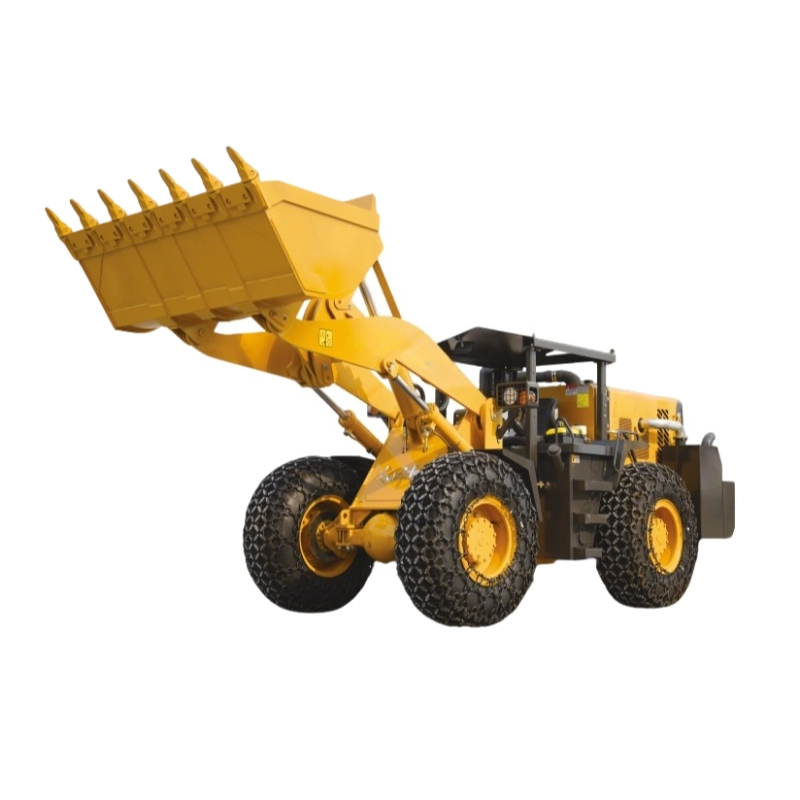
For example, the ZL30E Loader is listed with a 1.8 m³ bucket, a 3,500 kg rated load and 11,000 kg machine weight. Its published specifications also show wide and narrow body configurations, which illustrates why buyers should compare machine dimensions alongside rated capacity rather than evaluating payload alone. Final suitability should still be confirmed against the mine’s actual working conditions.
Mining Loader RFQ Checklist
A well-prepared RFQ makes supplier quotations easier to compare and reduces the risk of receiving recommendations based on incomplete site information.
Site and operating information
Include:
- Surface or underground application
- Tunnel or road width and height
- Ramp gradients
- Turning areas and travel distance
- Material type and approximate density
- Expected operating hours and shift pattern
- Ambient temperature and working conditions
Machine requirements
Ask suppliers to provide:
- Rated payload
- Bucket capacity
- Overall dimensions
- Turning radius
- Engine or motor specifications
- Travel speed
- Operating weight
- Optional attachments or configurations
- Fuel or electrical requirements
Commercial and support requirements
Request:
- Unit price and quotation validity
- Delivery lead time
- Warranty terms and exclusions
- Recommended spare-parts list
- Spare-parts lead times
- Maintenance schedule
- Operator and technician training options
- Installation or commissioning support
- Technical documentation
- Payment and shipping terms
Ask each supplier to clearly identify the assumptions behind its proposed configuration. This makes quotations easier to compare on a like-for-like basis.
Underground Mining Loader Considerations
Underground applications require additional attention to machine dimensions, visibility, ventilation, emissions and access to maintenance points.
For diesel-powered equipment, ventilation planning should consider the equipment mix, operating hours and applicable mine requirements. NIOSH notes that diesel-powered equipment can contribute to concentrations of diesel particulate matter and gases in underground mines, making exposure control and ventilation relevant parts of equipment planning. Buyers can refer to the NIOSH guide on diesel aerosols and gases in underground mines when developing technical questions for an underground equipment RFQ.
Safety considerations should also be incorporated into supplier evaluation. MSHA’s powered haulage guidance covers equipment including LHDs and highlights areas such as equipment condition, maintenance, operator practices, visibility and training. Buyers working in markets influenced by MSHA requirements can review the MSHA Powered Haulage Equipment Safety Guidance as part of their site and procurement review.
Where electric or alternative powertrains are being considered, buyers should also confirm charging, power supply, battery handling and maintenance requirements before comparing the purchase price with diesel alternatives.
How Should Buyers Evaluate Supplier Service and Spare Parts?
After-sales support can have a direct effect on equipment availability, so it should be included in the RFQ rather than discussed only after a purchase decision.
Ask potential suppliers for:
- Authorised service contacts in your region
- Typical spare-parts lead times
- Recommended critical spare-parts list
- Technician deployment options
- Remote technical support
- Preventive-maintenance recommendations
- Warranty claim procedures
- Training and commissioning arrangements
A supplier offering a suitable machine but limited regional support may present a different lifecycle cost from a supplier with stronger parts and service coverage. Buyers should therefore compare the complete support package rather than focusing only on the initial quotation.
What Documentation Should a Mining Loader RFQ Request?
At minimum, request the documents relevant to the proposed configuration and destination market, such as:
- Product specifications
- General arrangement drawings
- Operator manual
- Maintenance manual
- Parts catalogue
- Service schedule
- Warranty terms
- Safety documentation
- Applicable certificates or conformity documents
Do not assume that information shown on a product page represents the final machine configuration. Product listings are useful for initial shortlisting, while model-specific documentation and formal RFQ responses should be used for technical and commercial evaluation.
Common Buyer Questions
How should I compare mining loader suppliers?
Compare suppliers across machine suitability, manufacturing or sourcing capability, technical documentation, warranty, spare-parts support, training and regional service. Ask each supplier to explain the assumptions behind its proposed model.
When should a site survey be completed?
A site survey is particularly useful when dimensions, gradients, ventilation, turning space or transport routes may affect machine selection. Sharing verified site information with shortlisted suppliers can help them recommend a more appropriate configuration.
Should I choose a larger mining loader?
Not necessarily. A larger loader may offer greater payload, but its productivity advantage depends on access, material characteristics, cycle distance and the mine’s infrastructure. A compact machine may be more practical where working space is restricted.
What should I include in a mining loader RFQ?
Provide the application, material, production target, site dimensions, operating hours and route information. Then request model specifications, price, lead time, warranty, spare parts, training and technical documentation.
How should diesel ventilation requirements be evaluated?
Review the proposed engine and emissions-control configuration together with the mine’s ventilation capacity and applicable regulations. For underground applications, involve the appropriate mining, ventilation and safety personnel before finalising the equipment configuration.
Final Checks Before Signing a Mining Loader Contract
Before selecting a supplier, compare each quotation against the same technical and commercial requirements.
Confirm:
- The proposed loader fits the available working envelope.
- Payload and bucket capacity match the material and production target.
- Powertrain requirements are compatible with site infrastructure.
- Maintenance and spare-parts support are clearly defined.
- Warranty scope and exclusions are documented.
- Required manuals and certificates can be supplied.
- Training and commissioning responsibilities are clear.
- Delivery configuration and lead time are confirmed.
- Any optional equipment or attachments are separately identified.
For an initial product shortlist, review the supplier’s mining and construction equipment range and identify the model families relevant to your application. You can then provide your site conditions and production requirements when requesting an application-specific quotation.
Scope note: Product specifications, dimensions, capacity, configuration, documentation, price, lead time and site suitability should be confirmed through the supplier’s formal quotation and, where appropriate, mine-site engineering review or inspection. A product page should be treated as an initial reference rather than a substitute for project-specific technical confirmation.