International mining companies may consider Chinese suppliers when they need additional equipment capacity, different machine configurations, or competitive procurement options. However, selecting a mining loader manufacturer in China involves more than comparing catalog prices and rated payloads.
A useful supplier evaluation should cover the machine’s fit for the site, factory capability, component sourcing, safety requirements, transport, spare parts, and after-sales support.
This guide provides a practical checklist for buyers preparing an RFQ or comparing mining loader suppliers.
1. Start With the Manufacturer and Product Range
Before requesting detailed drawings, confirm that the supplier has relevant manufacturing capability and equipment for your application.
Initial checks should include:
- Company registration and manufacturing location
- Main product categories
- Relevant mining equipment experience
- Production and quality-control processes
- Previous deliveries to comparable applications
- Availability of inspection and testing records
A supplier’s product catalogue is useful for identifying possible models, but it should not be treated as confirmation that a particular machine will meet your site’s requirements.
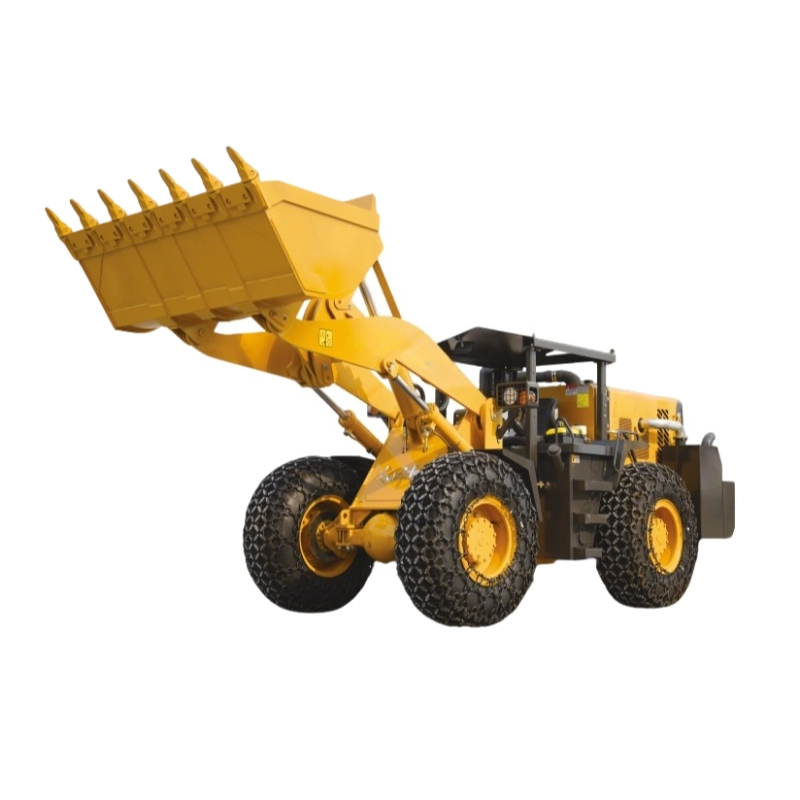
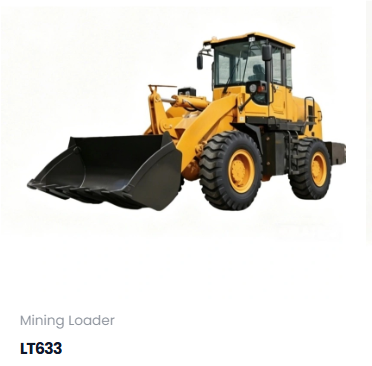
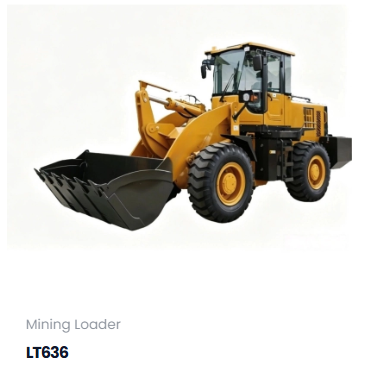
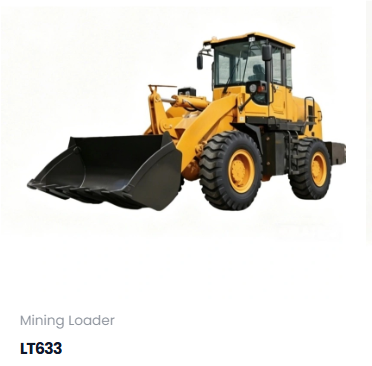
For example, the supplier’s mining loader range includes models such as LT633, LT636, LT640, LT656, and LT660. These models provide a starting point for comparison, while the final configuration should be confirmed through the RFQ and technical review.
2. Match the Loader to the Actual Duty Cycle
Payload is important, but it is only one part of loader selection. Give suppliers enough information about the operating environment to make a meaningful recommendation.
Include:
- Material type and approximate density
- Normal and peak payload
- Loading and hauling distance
- Road or tunnel dimensions
- Maximum operating grade
- Ground conditions
- Daily operating hours
- Required attachments
- Ambient temperature and dust conditions
- Surface or underground operation
For example, the published LT633 is listed with a 3-ton rated load capacity and a 1.8 m³ bucket, while the LT640 is listed with a 4-ton rated load capacity and a 2 m³ bucket.
These figures can help narrow the initial shortlist, but they should be checked against the material being handled, cycle conditions, available working space, and required production rate.
Buyers can review the LT633 mining loader and LT640 mining loader as examples of model-level information that can be incorporated into an RFQ.
For applications requiring a larger machine, the published LT656 is listed with a 5–5.5 ton rated load capacity and a 3 m³ bucket. Its dimensions and operating weight should also be assessed against haul-road width, loading areas, transport arrangements, and maintenance access. See the LT656 mining loader for the supplier’s published specifications.
3. Evaluate Factory Capability and Quality Control
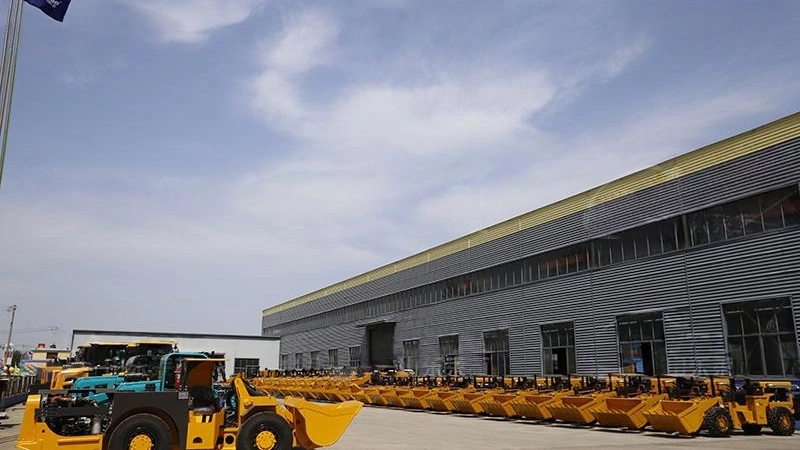
A factory audit can reveal details that are difficult to assess from a product catalogue.
During an inspection, pay attention to:
- Welding and fabrication processes
- Assembly workflow
- Hydraulic and electrical installation
- Inspection points
- Component traceability
- Testing procedures
- Finished-machine inspection
- Storage and handling of critical components
If an in-person visit is not practical, request a live production-line walkthrough, recent inspection records, factory acceptance-test documentation, and photographs or videos of comparable machines.
You can also ask whether the manufacturer operates a quality management system certified to ISO 9001. ISO describes ISO 9001 as a standard for quality management systems covering areas such as process control, performance evaluation, and continual improvement. ISO 9001 information
Certification can be useful evidence of a formal quality system, but it does not by itself establish that a particular loader is suitable for your mine.
4. Check Major Components and Spare Parts
Ask the supplier to identify the major components included in the quoted configuration.
Depending on the machine, this may include:
- Engine or electric power system
- Transmission
- Hydraulic pumps and valves
- Axles
- Braking system
- Tires
- Electrical and control components
- Wear parts
- Optional safety equipment
For instance, the published LT636 specification identifies a turbocharged engine, articulated hydraulic steering, fixed-shaft transmission, and disc braking system. Reviewing these details helps buyers understand what they are actually comparing between suppliers.
More importantly, ask whether critical replacement parts can be sourced in your operating region and how long typical shipments take.
A machine that is technically suitable may still create operational difficulties if critical components require long international lead times.
5. Review Safety and Underground Requirements
Mining equipment should be evaluated together with the conditions in which it will operate.
For powered-haulage environments, the U.S. Mine Safety and Health Administration (MSHA) provides guidance covering mobile equipment hazards, equipment condition, visibility, maintenance, operator training, and traffic-related risks. MSHA Powered Haulage Safety Guidance
For underground applications, also review:
- Overall machine dimensions
- Turning radius
- Braking performance
- Visibility and lighting
- Emergency controls
- Fire protection
- Engine emissions
- Ventilation requirements
- Operator training
- Traffic-management procedures
Diesel equipment deserves particular attention in underground environments. NIOSH discusses diesel aerosols and gases in underground mines and the role of exposure assessment and control measures. NIOSH guidance on diesel aerosols and gases
Do not determine underground suitability from a model name or product description alone. Confirm the proposed engine, emissions information, ventilation requirements, and applicable local regulations with the supplier and site engineering team.
6. Confirm Transport and Delivery Requirements
Mining loaders can create significant shipping and handling requirements, so logistics should be discussed before the purchase order is finalized.
Request:
- Overall dimensions
- Shipping weight
- Packing or corrosion-protection method
- Loading arrangements
- Port of shipment
- Export documentation responsibilities
- Estimated production lead time
- Inland transportation requirements
Also confirm the delivery term used in the quotation. ICC’s Incoterms® 2020 rules provide standardized definitions for the allocation of responsibilities, costs, and risks between buyers and sellers in international trade. ICC Incoterms® rules
The selected Incoterm should be considered together with customs clearance, port handling, insurance, inland transportation, and final site delivery.
7. Plan Spare Parts and Warranty Support Before Ordering
Before signing a purchase agreement, request a practical after-sales plan.
At minimum, ask for:
- Recommended spare-parts list
- Part numbers for wear components
- Routine maintenance schedule
- Typical parts lead times
- Warranty coverage
- Warranty exclusions
- Claim procedures
- Technical support contacts
- Recommended minimum stock
For critical fleet equipment, buyers can also discuss an initial spare-parts package or local stock arrangement.
Warranty responsibilities and response procedures should be written into the purchase agreement rather than relying on informal commitments.
Supplier Evaluation Scorecard
A simple scoring system can make quotations easier to compare. The following weighting is one possible starting point:
| Evaluation area | Suggested weight | What to compare |
|---|---|---|
| Technical fit | 25% | Payload, dimensions, duty cycle and configuration |
| Factory & QC | 20% | Production capability, inspection and testing |
| Components | 15% | Major component quality and parts availability |
| Safety & compliance | 15% | Site requirements, emissions and safety systems |
| Delivery & logistics | 10% | Lead time, shipping and delivery responsibilities |
| Spare parts & service | 10% | Parts availability and technical support |
| Commercial terms | 5% | Price, payment and warranty terms |
The exact weighting should reflect the mine’s priorities. For a remote operation, spare-parts support may deserve more weight; for an underground project, technical and safety requirements may carry greater importance.
The purpose is to avoid selecting a supplier based on purchase price alone.
RFQ Checklist for a Mining Loader Supplier
| Requirement | Buyer should confirm |
|---|---|
| Machine configuration | Engine, transmission, hydraulics, bucket and optional equipment |
| Payload | Rated payload and assumptions behind the quoted figure |
| Dimensions | Length, width, height, turning radius and ground clearance |
| Duty cycle | Material, grade, route and operating hours |
| Safety | Braking, visibility, emergency controls and applicable requirements |
| Emissions | Engine data and ventilation requirements where applicable |
| Factory testing | FAT procedure and acceptance criteria |
| Documentation | Manuals, parts lists, hydraulic/electrical drawings and certificates |
| Logistics | Shipping dimensions, weight, Incoterm and delivery responsibilities |
| Spare parts | Recommended stock, part numbers and lead times |
| Warranty | Coverage, exclusions, response time and claim procedure |
Can Factory Capacity Be Verified Remotely?
Yes, although remote verification should use more than factory photographs.
Request a live production-line walkthrough, current production information, recent testing records, and documentation from machines with similar specifications.
For higher-value or higher-risk orders, consider using an independent inspection company or arranging a factory visit before final acceptance.
The key question is not simply whether the supplier has a factory. It is whether the supplier can consistently manufacture and test the exact configuration stated in the quotation and purchase agreement.
What Should Be Included in the RFQ?
A well-prepared RFQ gives suppliers enough information to make comparable proposals.
Include:
- Required payload and bucket capacity
- Material type and approximate density
- Surface or underground operating environment
- Hauling distance and maximum grade
- Available working dimensions
- Required attachments
- Power or engine requirements
- Delivery destination
- Expected operating hours
- Documentation and acceptance-test requirements
Ask each supplier to state the assumptions behind its proposed configuration. This makes differences between quotations easier to identify.
Final Considerations
When comparing a mining loader manufacturer in China, separate published product information from project-specific commitments.
The supplier’s mining loader category can be used to identify candidate models, while individual pages such as LT633, LT640, and LT656 provide model-level information for initial comparison.
The final purchasing decision should be based on the quoted configuration, verified specifications, factory acceptance testing, site requirements, logistics arrangements, spare-parts support, and contractual terms.
For international procurement teams, a written RFQ is one of the simplest ways to turn these requirements into measurable supplier commitments.
Need to compare mining loader configurations for your operation? Provide the required payload, material conditions, working dimensions, and destination when requesting a quotation. This gives the supplier a clearer basis for recommending a suitable configuration.
Scope note: Product specifications, dimensions, capacity, pricing, lead time, configuration, documentation, regulatory compliance, and site suitability should be confirmed with the supplier and relevant site engineers before purchase. This guide provides general procurement information and does not replace professional engineering, safety, inspection, or legal advice.
References
- U.S. Mine Safety and Health Administration (MSHA), Powered Haulage Equipment Safety Guidance. View MSHA guidance
- CDC/NIOSH, Diesel Aerosols and Gases in Underground Mines. View NIOSH guidance
- International Organization for Standardization (ISO), ISO 9001 Quality Management Systems. View ISO 9001 information
- International Chamber of Commerce (ICC), Incoterms® Rules. View ICC Incoterms® information