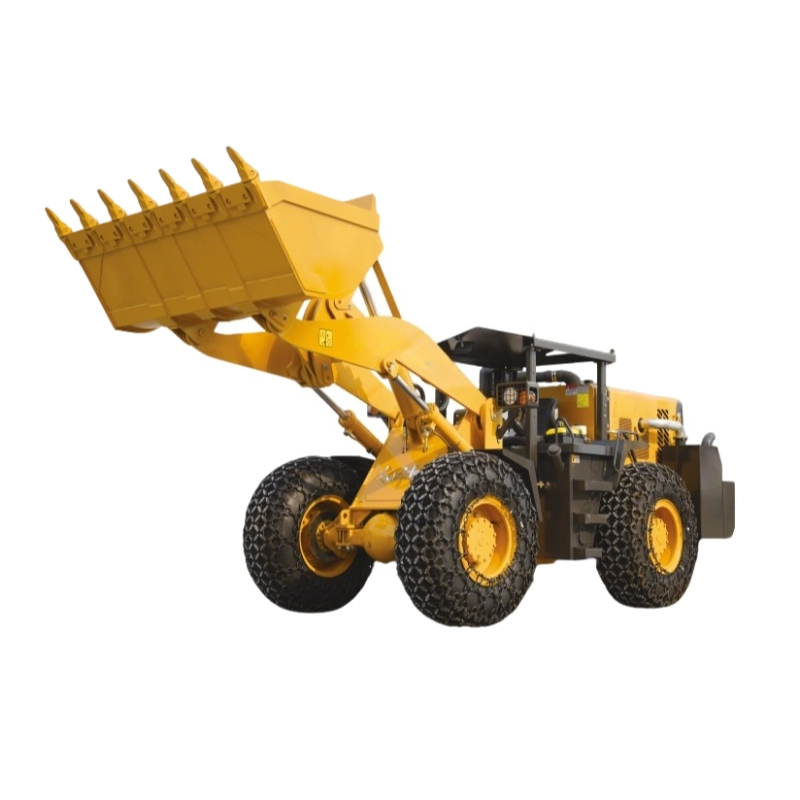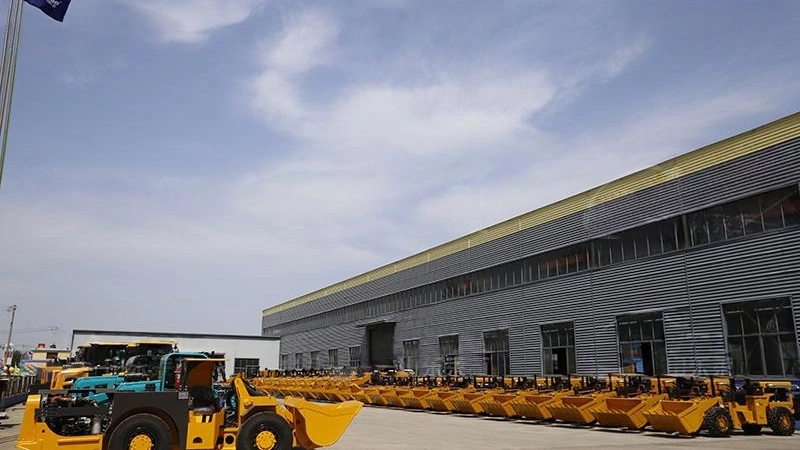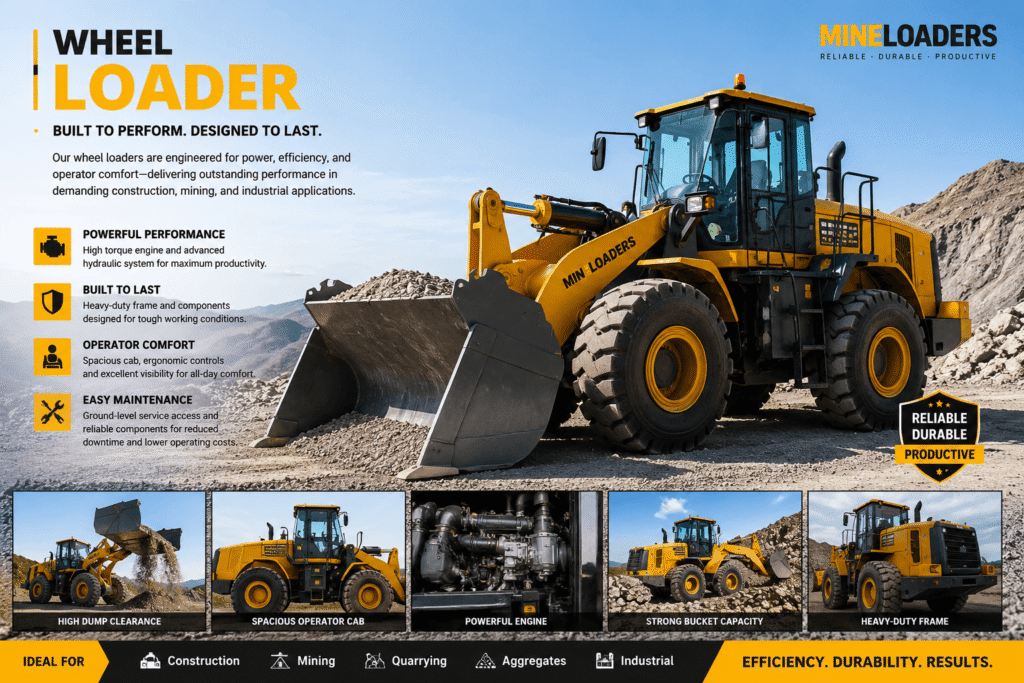
A 5 ton mining loader is a buyer-stage search term used by procurement teams and engineers evaluating dedicated loaders for short-haul loading, face support, or ancillary tasks in surface and underground operations. Because “5 ton” typically denotes nominal rated load, buyers must confirm rated load, configuration, and compliance details from the chosen model’s official documentation before specification or purchase.
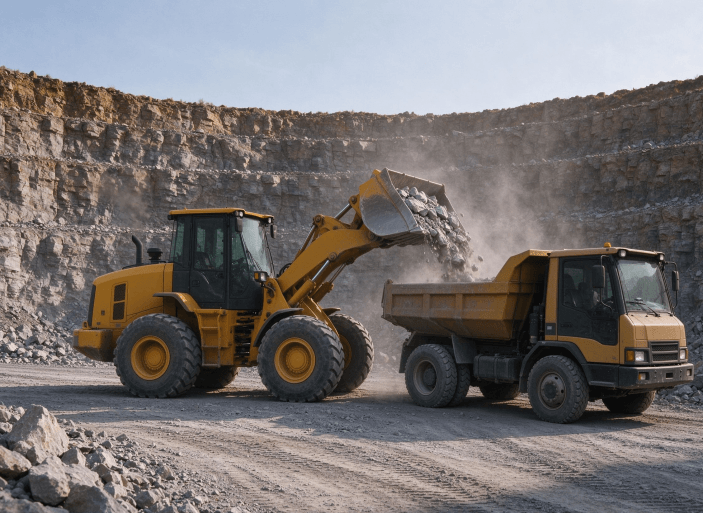
When a 5 ton class loader is appropriate
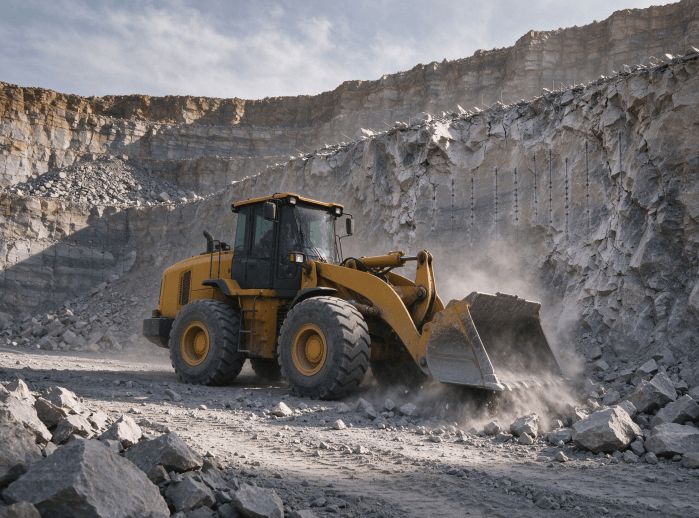
Use cases where a nominal 5 ton loader or similarly rated machine may fit include:
- Short-haul loading into small-dump hoppers or narrow-tailgate trucks.
- Face support and bench clean-up in small open pits or drift headings.
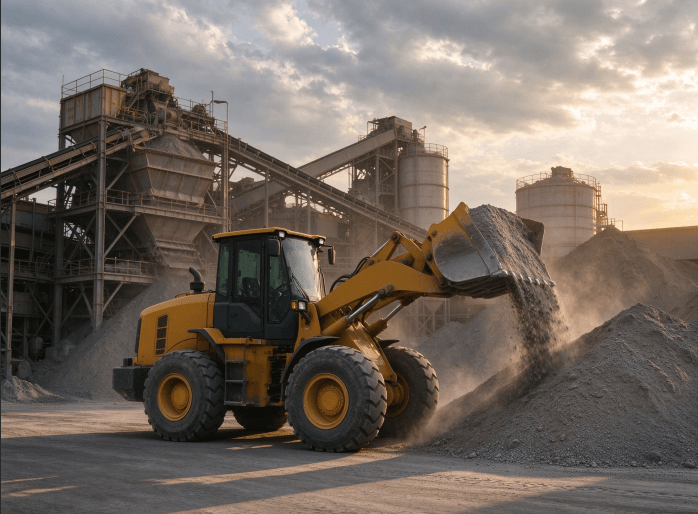
- Auxiliary material handling in construction and processing plant yards.
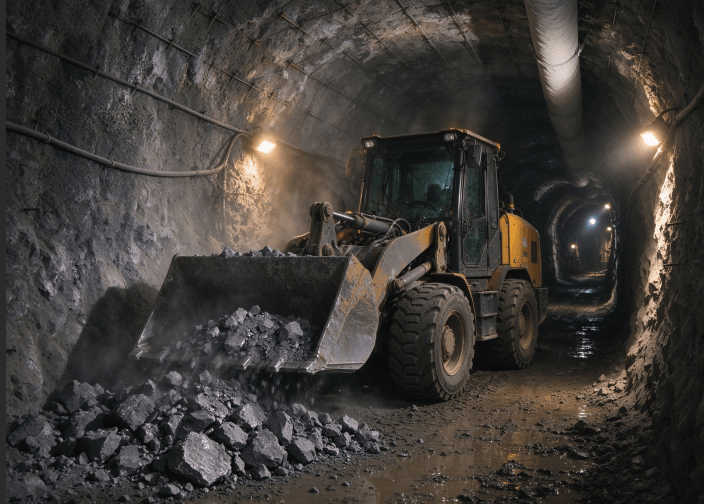
- Underground support where tunnel size, ventilation, and turning radius restrict larger machines.
Key operational relationships that affect machine selection
- Payload and bucket fill factor: Actual transported mass equals bucket volume × material density × fill factor. For fragmented rock, fill factor may be low; for well-blasted ore, fill factor rises. Always compute expected payload per cycle from site-specific density tests.
- Cycle time and haul distance: Cycle time comprises loading, travel, dump, and return. Short haul distances favor loaders; longer hauls shift to trucks. Match loader rated load to optimal cycle payload to avoid under- or over-utilizing trucks.
- Tunnel geometry and turning radius: Narrow headings and tight corners require compact machines with short swing and articulation clearances. Confirm turning radius and machine width from the model sheet.
- Grade, traction, and braking: Declines increase braking demand; climbs reduce achievable payload per cycle. Check traction systems, brake type, and recommended maximum grade for the selected model.
- Ventilation and duty cycle: Diesel power increases ventilation requirements underground. Duty cycle (hours per shift and cycle repetition) determines cooling, filtration, and component life considerations.
- Maintenance access and uptime: Easy access to service points reduces downtime. For BOFU evaluations, request maintenance layout drawings and mean time between failures (MTBF) data where available.
- Operator visibility and ergonomics: Operator fatigue and sight lines directly affect productivity and safety. Compare cab or ROPS visibility diagrams in model documentation.
- Attachment compatibility: Confirm pin sizes, hydraulic flow/pressure, and control schemes for forks, rock buckets, side-dump or breakage tools.
Technical selection checklist (BOFU)
- Verify rated load and configuration from the model product page or spec sheet. Do not assume a category label equals a specific rated load.
- Request bucket geometry, manufacturer-reported bucket capacity, and recommended fill factor for your material type.
- Obtain braking specification (service and parking), transmission type, and axle details from the product page.
- Confirm machine dimensions: width, length, height, ground clearance, and turning radius for site fit.
- Ask for declared machine weight and center of gravity data to evaluate stability on ramps and side slopes.
- Check service access points, filter locations, and recommended maintenance intervals.
- Get ventilation and emissions information for underground diesel applications; require manufacturer guidance for ventilation rates.
- Confirm operator controls, ergonomics, and available safety options such as ROPS/FOPS, cages, and work lights.
- Scope available attachments and any required hydraulic or electrical packages.
- Request supplier references, spare-parts lists, and recommended spare-parts kits for first 12 months.
Model-documentation verification
- A category page or product list does not substitute for model documentation. Buyers must obtain the official product page or datasheet for the selected machine and verify all numeric specifications there before procurement.
Example: when model-level specs are available
Only cite model specs directly from the supplier’s official product pages. For example, the ZL30E loader on mineloaders.com is presented on its product page as a mine safety certified product and lists Dongfanghong 6105 turbocharged engine, 103 kW rated power, 1.8 m³ bucket, 3,500 kg rated load, and additional dimensional and option details [1]. Use such model pages to confirm exact rated load and options for procurement decisions.
Operational performance considerations
- Material density and fragmentation: Heavier, denser materials reduce volumetric capacity per cycle. Run material-specific payload calculations before finalizing rated-load needs.
- Haul profile: Short, frequent cycles favor loaders; calculate break-even haul distance vs. truck payload to avoid mis-specified fleets.
- Cycle duty and component sizing: High-cycle applications need cooling, heavy-duty driveline components, and robust hydraulics. Verify duty-cycle ratings in technical documentation.
- Tires, tracks, and undercarriage: Choose the ground-contact system appropriate for roof and floor conditions. Confirm tire or track specifications from the product page for abrasion and puncture risk.
- Safety and regulations: Follow the manufacturer manual, site risk assessments, and local mining regulations. Do not assume regulatory compliance beyond explicit product-page claims.
Electric vs diesel system-level trade-offs (site assessment)
- Ventilation: Diesel engines add ventilation load underground; electric machines reduce ventilation needs but require cable/circuit infrastructure.
- Energy and logistics: Electric loaders often need onsite charging or trailing-cable management. Diesel loaders need fuel logistics and filtration maintenance.
- Duty cycle and shift patterns: Continuous high-duty operations favor powertrains with proven cooling and duty-cycle ratings in their model documentation.
- Maintenance skill sets: Electric drivetrains shift maintenance needs to electrical systems and battery management; diesel requires fuel-system and engine expertise.
For every powertrain choice, require model-level confirmation of configuration and any mine-safety wording on the official product page.
Procurement and supplier evaluation (BOFU)
- RFQ document checklist:
- Exact model number and configuration.
- Verified rated load, bucket capacity, and dimensions from the product page.
- Required attachments and options (e.g., wet brake, four-wheel drive).
- Warranty terms, spare-parts lead times, and recommended spare-parts lists.
- Service-support scope: regional service centers, authorized technicians, or field-service agreements.
- Acceptance test criteria and factory inspection requirements.
- Evaluation criteria:
- Fit-to-site: clearance, turning, and ramp compatibility.
- Operational cost estimates: fuel/electricity, consumables, and maintenance intervals (obtain from supplier).
- Parts availability and logistics for your region.
- Supplier track record and references from similar site types.
- On-site acceptance and testing:
- Define acceptance tests that replicate typical cycles and materials.
- Inspect safety systems, braking, and visibility during test runs.
- Verify documentation: operator manual, parts book, and maintenance schedule.
Case example notes for mineloaders.com product context
- The Mining Loader category lists multiple models and is the correct starting point for product-level selection. The category page itself does not prove rated-load or configuration details for any specific model; buyers must consult each model’s product page and datasheet on mineloaders.com for exact specifications [2].
- For mining transport vehicles, mineloaders.com publishes specific model pages that include rated load and dimensions for those vehicles. For example, the 5T Mining Transport Vehicle product page lists a 5,000 kg rated load and detailed hopper and drivetrain data; use that page when the 5T Mining Transport Vehicle is the chosen product [3]. Do not generalize that vehicle’s specs to loaders.
Next steps for procurement teams
- Shortlist models from the Mining Loader product category
- Request full product pages, datasheets, and factory acceptance test procedures for shortlisted models.
- Arrange factory or site trials focusing on representative materials and cycles.
- Include spare-parts kits in the RFQ and confirm lead times for critical components.
- Document acceptance criteria and post-delivery service commitments in the purchase contract.
Contact and supplier info (when ready to progress)
When ready to request model datasheets or an RFQ, use mineloaders.com contact channels to obtain model documentation and official quotations. Contact details are available on the site’s contact page .
FAQ
Q1: Does “5 ton” guarantee the loader will carry 5,000 kg on every site?
A1: No. “5 ton” is a nominal class. Verify the exact rated load and configuration from the selected model’s official product page or datasheet before specification.
Q2: How do I convert bucket volume to payload for my rock type?
A2: Payload = bucket volume × material bulk density × bucket fill factor. Obtain site-specific density tests and expected fill factor for accurate calculation.
Q3: Should I choose diesel or electric for underground operations?
A3: Choose based on ventilation capacity, power infrastructure, duty cycle, and maintenance skills. Evaluate system-level trade-offs and confirm powertrain information from the model documentation.
Q4: What acceptance tests should be included in an RFQ?
A4: Include representative loading cycles, braking and climb tests, visibility checks, attachment fit tests, and inspection of service access points. Define pass/fail criteria in the RFQ.
Q5: Can I use a surface loader in underground headings?
A5: Only if the machine’s documented dimensions, emissions/ventilation guidance, and safety options meet underground requirements. Confirm on the model product page and follow site risk assessment and regulations.