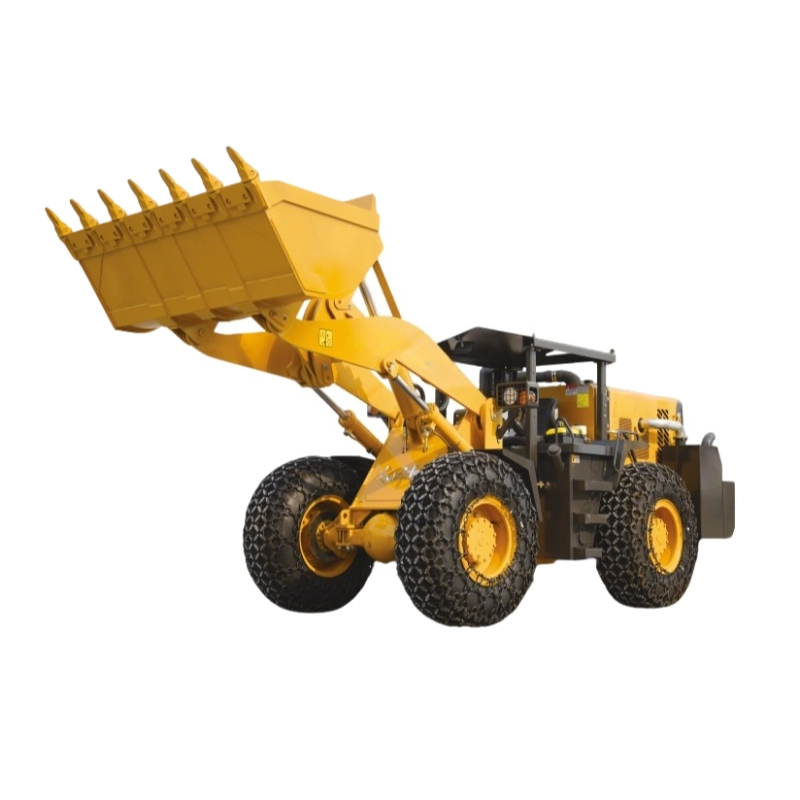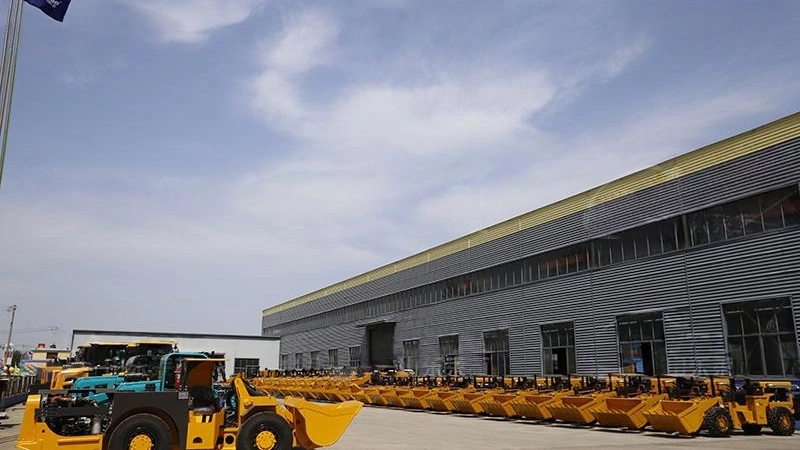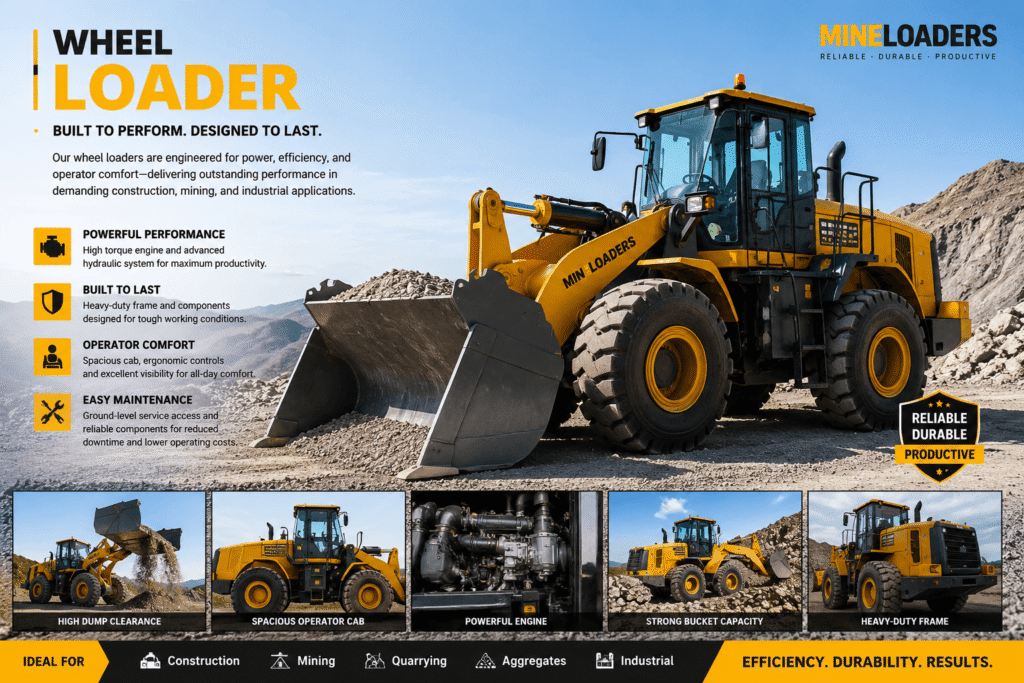
This BOFU guide helps procurement teams, mine engineers, and fleet managers evaluate and specify a “5 ton underground LHD” for purchase. The term “5 ton” or “5 ton underground LHD” is nominal; buyers must confirm rated load and full configuration from the selected model’s product documentation and official datasheet. This article explains the verification steps, site-fit factors, technical comparisons, and supplier documentation to request during an RFQ.
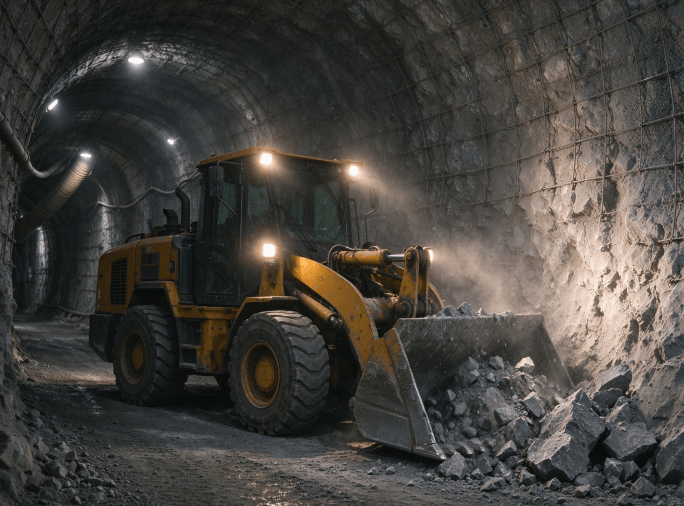
Confirming the “5 ton” designation
- Verify rated load on the official product page or datasheet. Category listings do not prove rated load.
- Request the model name, serial-range confirmation, and the manufacturer’s rated payload figure in writing. Include configuration options that affect rated load (e.g., bucket, tires/tracks, protective structures, and optional counterweights).
Key specification and documentation checklist to request
- Official product datasheet (model-specific) — rated load, bucket capacity, operating weight, dimensions, and engine/electrical system details.
- Certification and compliance documents — mine-safety certificates, explosion-protection statements, emissions or local regulatory compliance where applicable. Only accept claims that appear on the product page or manufacturer certificates.
- Drawings and transport dimensions — absolute outside dimensions for underground access planning.
- Performance curves and duty-cycle guidance — cycle time, hydraulic system flow/pressure, tractive effort, and recommended operating conditions.
- Maintenance and parts support documentation — service intervals, spare-parts catalog, and decentralized support network details.
- Test reports and acceptance criteria—factory acceptance test (FAT) or site acceptance test (SAT) protocols.
- Warranty and after-sales terms — coverage period, limits, and response times for critical components.
Site-fit factors that determine whether a 5 ton LHD is appropriate
- Tunnel and drive dimensions: Ensure machine transport and turning clearances allow safe operation and maintenance access. Provide CAD or measured clearances to the supplier.
- Haul distance and cycle time: Short-face operations may favor higher cycle-rate machines. Longer haul distances require evaluating travel speed, braking, and ventilation impacts.
- Material properties: Material density and bucket fill factor determine effective payload mass per pass. Confirm bucket shape and fill factor with supplier.
- Grade and traction: Grade and roof/floor conditions change tractive requirement and braking needs. Ask for tractive effort or discuss wheel/track options.
- Ventilation and emissions: Diesel vs. electric choices affect ventilation capacity and heat load. Discuss system-level site impacts rather than assuming a model type.
- Duty cycle and shift length: Continuous high-duty operation increases emphasis on cooling, filtration, and component life ratings.
- Maintenance access and downtime risk: Evaluate component placement, filter locations, and ease of routine service to estimate maintenance man-hours.
Operational relationships to model into procurement decisions
- Payload × material density × bucket fill = hauled mass per cycle. Verify bucket geometry and manufacturer guidance for fill factors.
- Cycle time = load time + tramming + dump + return. Small reductions in cycle time drive measurable productivity gains across shifts.
- Effective productivity = (rated payload × fill factor × cycles per hour) × availability. Use conservative availability assumptions for initial planning.
- Haul distance amplifies the importance of speed and braking. Longer distances increase fuel/energy use and equipment wear.
- Ventilation demand rises with diesel heat and emissions; electric units shift electrical infrastructure and charging/maintenance considerations.
Comparing configuration options (selection matrix)
- Drive type and traction: rear-wheel drive, four-wheel drive, or tracked variants change turning radius and traction. Confirm exact drive arrangement on the chosen model page.
- Braking: wet-brake, pneumatic, or regenerative systems impact service intervals and heat rejection. Require supplier confirmation of braking spec.
- Operator environment: cab protection, visibility, and ergonomics affect safety and productivity. Request operator ergonomics and visibility diagrams.
- Attachments and compatibility: buckets, rock-dump bodies, side-dump or remote-dump attachments change effective payload and cycle. Confirm attachment fitment and lifting ratings.
- Electrical vs internal combustion: compare total cost of ownership, ventilation, charging or refuelling logistics, and local maintenance skill sets. Do not assume a model’s power source unless stated on the product page.
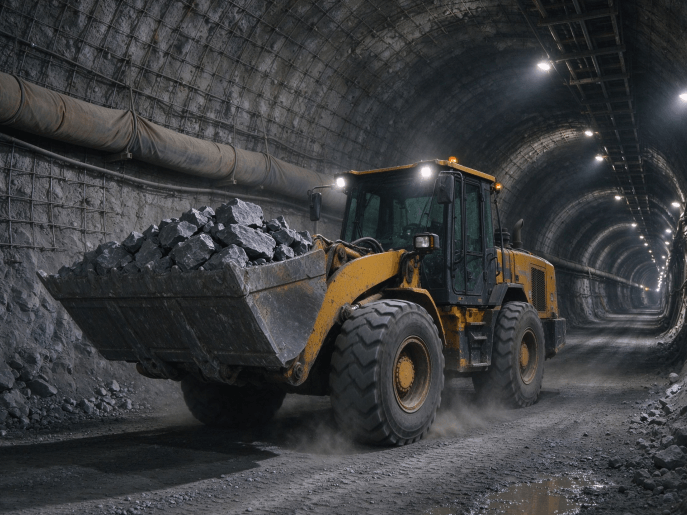
RFQ and supplier evaluation steps
- Define required performance envelope — rated payload (confirm 5,000 kg if that is mandatory), bucket form factor, maximum transport dimensions, and duty cycle.
- Ask for model-specific datasheets and certificates (see checklist above). Do not accept category pages as proof.
- Request factory layout drawings for transport and underground mobilization.
- Demand FAT and SAT procedures in writing, with agreed acceptance criteria.
- Require spare-parts lead times and local support contacts. Verify any claimed service network with references.
- Ask for example life-cycle-cost estimates and a breakdown of consumables and preventive-maintenance intervals.
- Negotiate delivery, commissioning, operator training, and initial spare-parts kit inclusion.
Testing, commissioning, and acceptance
- Use the supplier’s FAT and a site SAT to validate rated payload, cycle performance, steering and braking behavior, and ventilation load.
- Measure actual bucket fill and cycle times during acceptance trials to update production planning.
- Confirm documentation delivered: operator manual, maintenance manual, parts list, and FAT/SAT reports. Ensure serial numbers on delivered units match documentation.
After-sales, spares, and lifecycle support
- Confirm guaranteed parts availability and typical lead times. For critical components, require commitments or local stocking.
- Establish response-time SLAs for warranty repairs and specify escalation paths. Use written agreements where possible.
- Plan for operator and maintenance training during commissioning to reduce downtime and early failures.
Model examples and product references on mineloaders.com
- Mineloaders.com lists an Underground LHD category and specific underground scraper models. Category listings are useful starting points, but verify the selected model’s datasheet and certification before concluding a model is a 5 ton unit [1].
- For mining transport vehicles and wheel loaders, mineloaders.com provides product pages with explicit specifications for certain models. Use those product pages when referencing exact numbers. For instance, the site lists a 5T Mining Transport Vehicle with a 5,000 kg rated load and associated dimensional and drivetrain details; that specification applies only to that product page and should be confirmed in the model documentation before procurement [2]. Do not generalize such figures to LHD models without model-level confirmation.
Procurement checklist (quick action list)
- Obtain model-specific datasheet and certificate of rated payload.
- Request FAT/SAT procedures and acceptance criteria.
- Verify transport and underground clearance drawings.
- Confirm braking, traction, and ventilation impacts with site engineers.
- Get spare-parts list, recommended spares, and lead times.
- Include operator and maintenance training in contract.
- Define warranty SLAs and escalation contacts.
Conclusion
A “5 ton underground LHD” designation should be treated as a starting point. For BOFU procurement decisions, require model-level datasheets, certificates, FAT/SAT protocols, and clear spare-parts and service commitments. Evaluate machine fit using site-specific inputs—tunnel geometry, material density, haul distance, grade, ventilation capacity, and duty cycle—and build acceptance tests into the contract.
FAQ
Q: Does the category page prove a model is a 5 ton rated LHD?
A: No. Category listings do not replace the model-specific datasheet. Always request the product page or official datasheet that states the rated load.
Q: Where can I find documented rated load for a specific machine on mineloaders.com?
A: Model product pages on mineloaders.com provide model-specific specifications and any stated certifications. Use the exact product page to confirm numbers and certificates [1][2].
Q: What tests should be included in SAT for an LHD purchase?
A: Include payload verification, cycle-time measurement under site conditions, braking and gradient performance, ventilation and heat-load checks, and functional tests of attachments. Use the supplier FAT/SAT documents as the baseline.
Q: Should I prefer electric or diesel LHDs?
A: Choose based on site-level requirements: ventilation capacity, available electrical infrastructure, maintenance skills, duty cycle, and total cost of ownership. Discuss system-level trade-offs with the supplier; do not assume a given model’s power source without documentation.
Q: What documentation confirms mine-safety compliance?
A: Mine-safety certificates and explicit product-page statements. Only accept compliance claims shown on the model’s official documentation or certificates.
References
- Mineloaders — Underground LHD category.
- Mineloaders — 5T Mining Transport Vehicle product page.