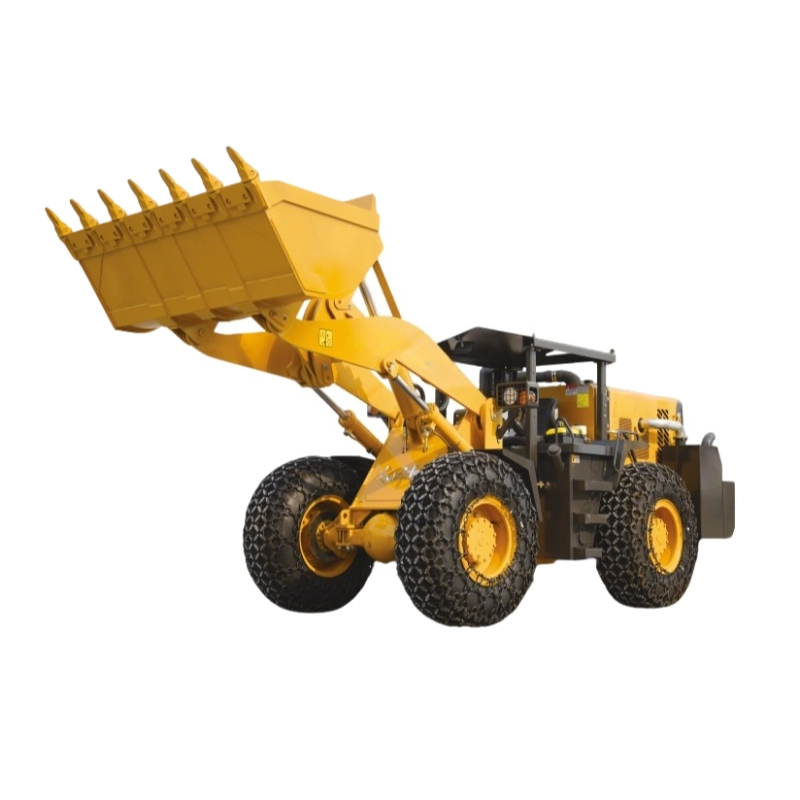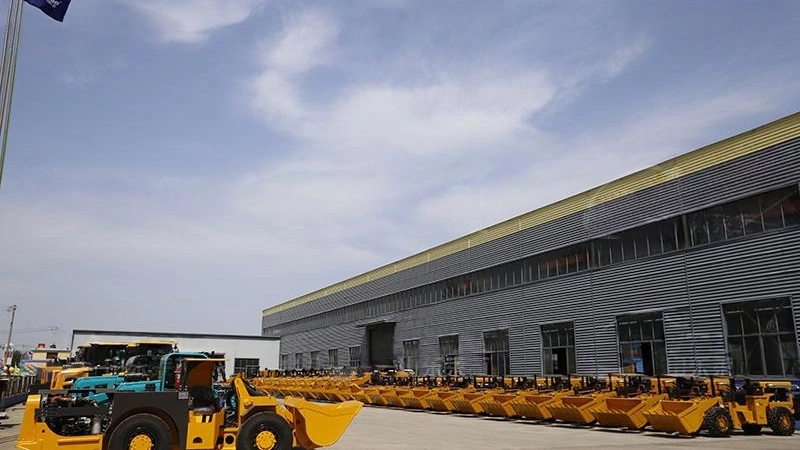
A 10 ton underground LHD is typically considered for mines requiring higher material movement per cycle while working within underground clearance, grade, ventilation, and maintenance limits.
However, “10 ton” should be treated as a nominal equipment class. Buyers should confirm the exact rated payload, bucket configuration, machine dimensions, braking system, and powertrain from the selected model’s technical documentation before purchase.
Start by reviewing available Underground LHD models and request a model-specific datasheet when a 10,000 kg rated payload is required.
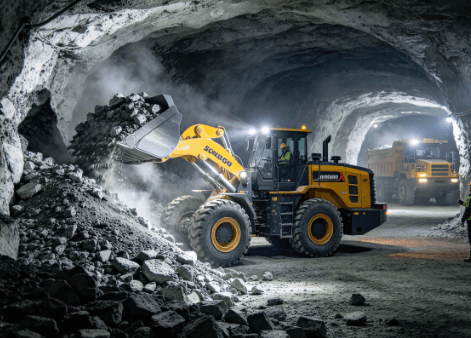
Confirm the 10 Ton Rating
Do not use a product category or model name as proof of capacity.
For each candidate machine, request:
- Exact model designation
- Rated payload
- Bucket capacity
- Operating weight
- Overall dimensions
- Powertrain configuration
- Braking system
- Factory test documentation
Competitor models such as the Epiroc Scooptram ST1030 and Sandvik Toro LH410 also publish capacity and other parameters at the individual model level. This is a useful reference for the level of documentation procurement teams should expect.
Match Payload to Material and Bucket Size
Actual material moved per cycle depends on more than nominal capacity.
A simple relationship is:
Bucket volume × material density × fill factor = approximate payload
Dense ore may reach the machine’s payload limit before the bucket is completely filled. Lower-density material may require a larger bucket to make effective use of available capacity.
Provide suppliers with material density, fragmentation, moisture, and expected operating conditions during the RFQ stage.
For more detail, see the Mining Loader Capacity Guide.
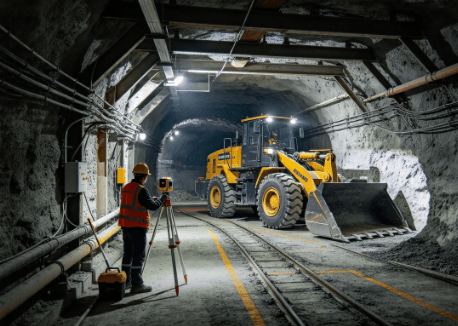
Check Tunnel Fit and Turning Space
A 10 ton LHD must physically fit the mine layout as well as meet production targets.
Confirm:
- Overall width and height
- Machine length
- Ground clearance
- Turning radius
- Articulation angle
- Maintenance access space
Compare these figures with the narrowest tunnel, ramp, crosscut, loading point, and workshop area.
Do not design around theoretical machine dimensions alone. Additional operating clearance is required for steering and safe positioning.
Consider Haul Distance and Cycle Time
LHD productivity depends heavily on the complete cycle:
Load + travel loaded + dump + return
Haul distance, grades, tunnel corners, traffic, and loading conditions all affect actual cycle time.
Request cycle information from the supplier and compare it with your site’s operating conditions. The Mining Loader Specifications Guide provides additional technical context for evaluating these parameters.
Verify Gradeability, Traction, and Braking
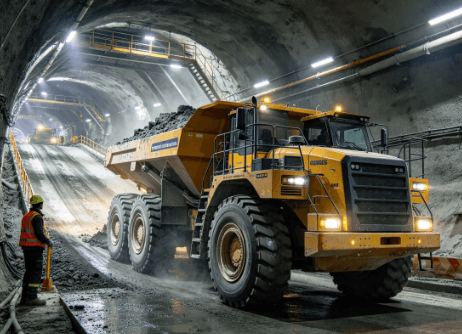
For underground ramps, braking and traction should be treated as major selection factors.
Provide the supplier with:
- Maximum ramp grade
- Loaded travel direction
- Floor condition
- Length of declines
- Expected haul distance
Then request model-specific gradeability and braking documentation.
If the machine regularly travels down long declines, braking performance should also be included in acceptance testing.
Diesel or Electric?
Powertrain selection should be based on the mine system rather than the loader alone.
Diesel LHDs require consideration of exhaust emissions, heat rejection, fuel logistics, and ventilation. NIOSH guidance on diesel aerosols and gases in underground mines highlights the importance of coordinating ventilation, equipment, and maintenance planning.
Electric LHDs reduce local engine exhaust but introduce requirements for power supply, charging or cable management, and electrical maintenance.
For a detailed comparison, refer to the Diesel vs Electric Mining Equipment Guide.
Maintenance and Spare Parts
Machine availability depends partly on how easily the LHD can be serviced.
Before ordering, review:
- Filter and lubrication access
- Hydraulic service points
- Brake inspection access
- Diagnostic systems
- Recommended service intervals
- Critical spare-parts availability
For remote projects, spare-parts lead time should be confirmed before commissioning.
What Should Be Included in the RFQ?
A useful RFQ should specify actual operating conditions rather than simply requesting a “10 ton LHD.”
Include:
- Required rated payload
- Material density
- Bucket requirements
- Tunnel dimensions
- Haul distance
- Maximum grade
- Operating hours per shift
- Required powertrain
- Safety options
- Spare-parts and training requirements
Ask all shortlisted suppliers to respond to the same technical requirements so quotations can be compared consistently.
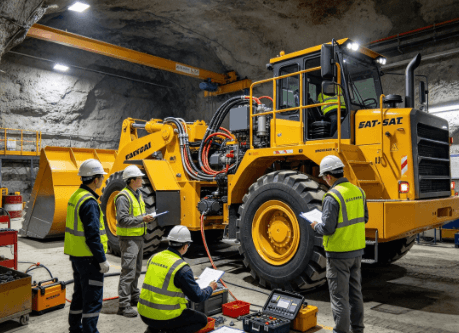
FAT and Site Acceptance
Before purchase, define how the machine will be accepted.
Factory Acceptance Testing may cover configuration, braking, steering, hydraulics, controls, and safety systems.
After delivery, site testing should confirm:
- Tunnel clearance
- Turning performance
- Loaded ramp operation
- Braking
- Loading and dumping
- Cycle time
Acceptance criteria should be written into the purchase agreement where performance is critical.
Procurement Checklist
Before placing an order, confirm:
- Rated payload is documented.
- Bucket configuration matches material density.
- Dimensions fit the underground layout.
- Braking and gradeability meet site requirements.
- Ventilation or electrical requirements are understood.
- Maintenance access has been reviewed.
- Spare-parts lead times are confirmed.
- FAT/SAT requirements are agreed.
- Warranty and after-sales support are documented.
Conclusion
A 10 ton underground LHD should not be selected by nominal capacity alone. Buyers should verify rated payload, bucket configuration, tunnel fit, haul cycle, braking, powertrain, and maintenance requirements against the actual mine environment.
Review the current Underground LHD range as a starting point, then request model-specific documentation before treating any machine as a confirmed 10 ton LHD.
FAQ
Does “10 ton underground LHD” always mean exactly 10,000 kg?
No. Treat “10 ton” as a nominal class until the exact rated payload is confirmed in the model-specific datasheet.
What information should I provide when requesting a quotation?
Provide payload requirements, material density, tunnel dimensions, haul distance, maximum grade, operating hours, and preferred powertrain.
What tests should be completed before acceptance?
Typical checks include braking, steering, hydraulic operation, tunnel clearance, loaded ramp performance, and cycle-time verification.
How should diesel LHD ventilation requirements be assessed?
Use model-specific engine, emissions, and heat-rejection data together with the mine’s ventilation calculations.
What spare parts should be ordered initially?
Prioritize routine consumables and critical parts with long delivery times. Final quantities should follow the manufacturer’s recommended maintenance plan.
References
- Mineloaders — Underground LHD Product Category
- Mineloaders — Mining Loader Capacity Guide
- Mineloaders — Mining Loader Specifications
- Mineloaders — Diesel vs Electric Mining Equipment
- CDC/NIOSH — Diesel Aerosols and Gases in Underground Mines
- Epiroc — Scooptram ST1030 Technical Specification
- Sandvik — Toro LH410 Underground LHD