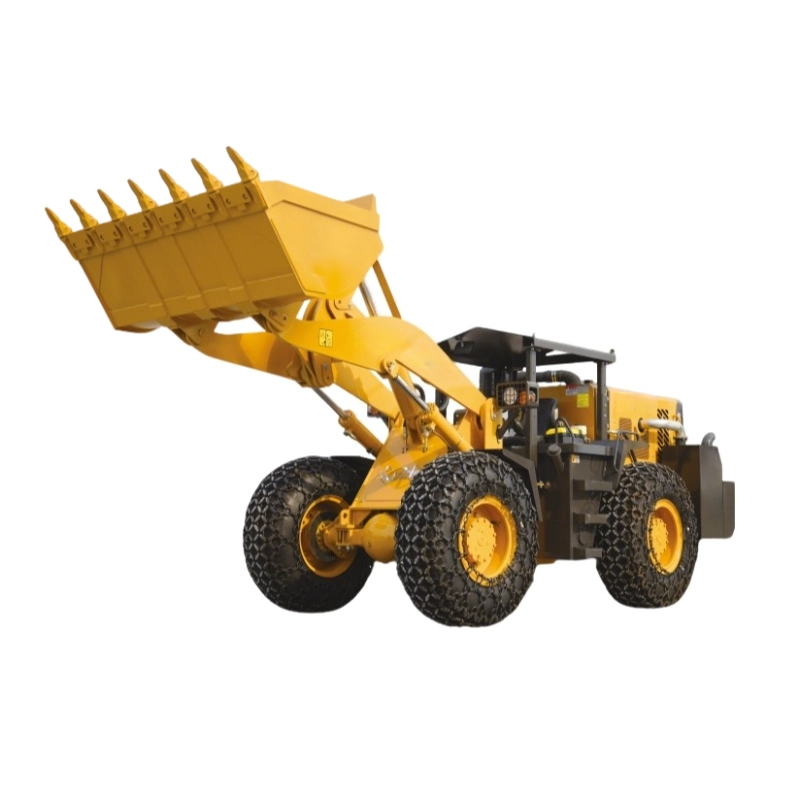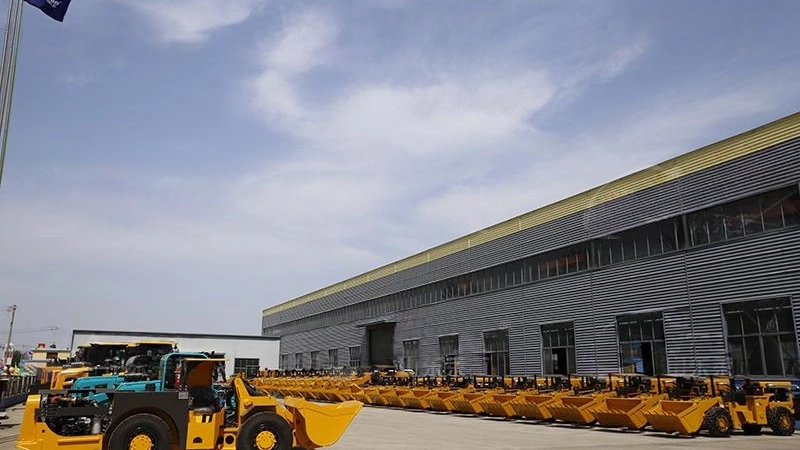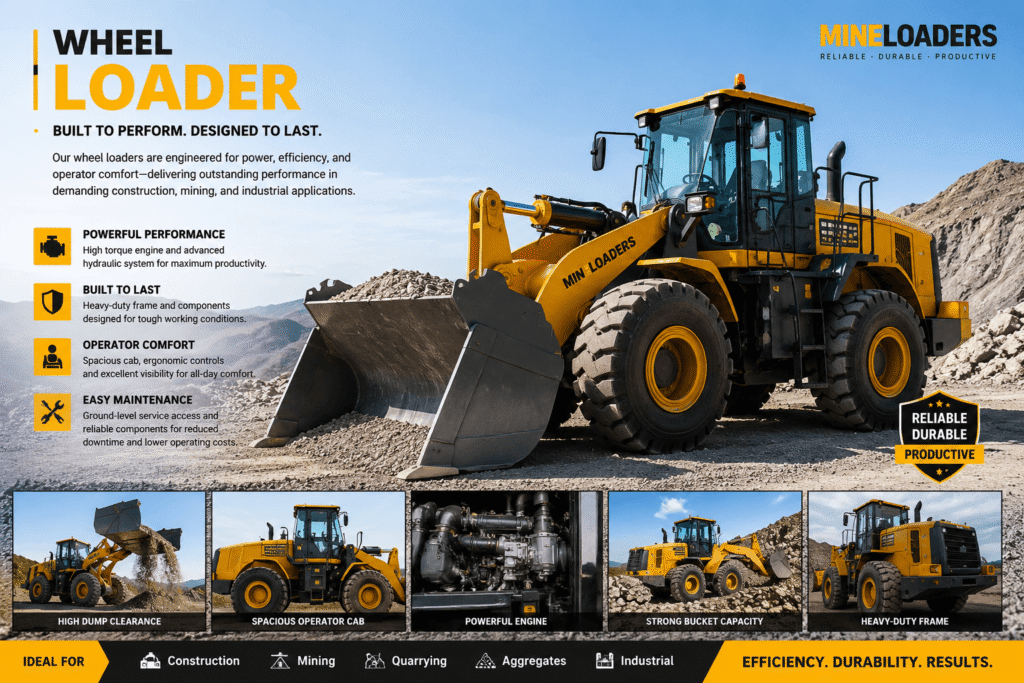
A mining loader can also be a wheel loader. “Wheel loader” describes the machine’s architecture; “mining loader” usually describes its application or commercial category. A useful mining loader vs wheel loader comparison therefore asks what changes in the actual machine, attachment and duty.
The distinction matters when similar articulated loaders appear in different catalogue sections. A mining label does not establish heavier protection, underground approval or a particular braking arrangement. Compare the supplied configuration with the task it must perform.
What is different about the machine rather than the label?
A conventional wheel loader uses a front-mounted attachment to handle material. On an articulated model, the front and rear frames steer through a central joint. Loaders used around mines can share that basic layout with machines used in construction or aggregate handling.
Mining work may call for a different bucket, tire arrangement, component protection or cooling specification. Whether those changes are necessary depends on the material and cycle. Whether they are supplied depends on the individual configuration.
| Comparison point | Conventional wheel loader configuration | Configuration evaluated for mining |
| Category meaning | Machine architecture | Intended application |
| Bucket | Selected for handled material | May need additional abrasion or impact protection |
| Tires | Matched to load and route | May prioritize cut resistance or specialized compounds |
| Cooling | Sized for specified duty | Must suit ambient conditions and sustained loading |
| Operating space | Depends on individual model | Must fit actual mine geometry |
| Underground acceptance | Cannot be inferred | Requires model-specific assessment |
The overlap between the categories is intentional. The mining loader catalogue and wheel loader category are browsing routes, not engineering standards. Move from either category to the named product and its equipment schedule.
Underground LHDs introduce a separate design question. Their packaging prioritizes confined load-haul-dump work, so they should not be treated as conventional loaders with different branding. The existing Mining Loader vs LHD comparison covers that distinction.
Applications in stockyards, blasted rock and mine support
At a prepared-material stockyard, repeated truck loading may dominate the shift. Bucket filling, discharge clearance and quick repositioning then matter more than the category name. A machine with useful loading reach may suit the task without extensive specialized equipment.
At a blasted-rock pile, the priority can shift to penetration, fragment handling and wear protection. Large pieces can bridge across the bucket opening and reduce effective filling. More nominal volume may leave that problem unresolved.
Mine support is different again. Intermittent work with aggregate, pallets or approved handling tools can favor attachment versatility. Each attachment still needs its own capacity and interface check.
The LT656 product information lists buckets, forks and stone clamps among its working devices. This establishes options on that named model. It does not establish interchangeability across the whole catalogue.
Define the dominant task before comparing specifications:
- Loose-material truck loading with a known receiving-body height.
- Abrasive-rock handling with measured fragmentation and density.
- Short carrying cycles between a stockpile and hopper.
- Intermittent support work using approved attachments.
- Repeated yard travel with a different tire and traffic duty.
A machine can cover several tasks, but one task usually determines its limiting requirement. Identify that requirement first. Otherwise, a versatile-looking specification can obscure poor performance at the main job.
How to compare protection and service access
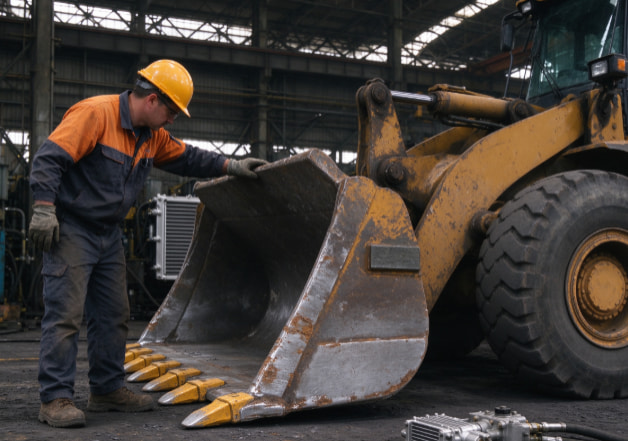
Inspect the places where the machine encounters the material. Bucket lips, teeth, sidewalls and floors face different wear mechanisms. Exposed hoses, the underside and cooling intake face different hazards again.
Ask how the proposed protection addresses those locations. A heavier bucket floor does little for an unprotected tooth adapter. Additional steel also changes attachment mass, so protection needs to be assessed with usable capacity.
Routine servicing deserves the same attention as structural protection. Check access to filters, lubrication points and cooling components with the selected equipment installed. A service point shown on a drawing may be awkward to reach beside a wall or parked truck.
Useful evidence includes:
1. A standard-equipment list with options identified separately.
2. A drawing of the complete attachment and operating envelope.
3. Component identities and maintenance instructions.
4. Details of replaceable wear components and their access.
5. Relevant inspection findings from a comparable duty.
Machine weight alone cannot establish durability. Engine power alone cannot establish useful loading output. Both become meaningful when connected to the attachment, drivetrain, operating conditions and maintenance arrangement.
Traffic protection is also an operating issue. WorkSafe Western Australia’s traffic-management bulletin addresses visibility, vehicle interfaces and equipment condition. Apply those concerns to the actual loading layout rather than assuming a machine category resolves them.
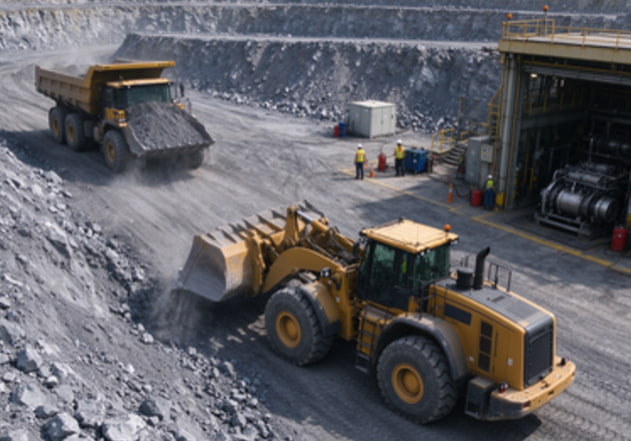
Mining wheel loader comparison through one complete cycle
Follow the same cycle for each candidate: approach, fill, reverse, travel, position, dump and return. Use representative material and record delays separately. That exposes the part of the operation an equipment change could improve.
Suppose a stockyard loader spends more time repositioning than filling its bucket. A larger bucket might reduce passes but increase maneuvering difficulty. The useful comparison is the completed truck load, not one impressive bucket fill.
A different site may lose time because sticky material remains in the bucket. There, discharge behavior can matter more than additional power. The right comparison depends on the observed restriction.
Keep the assumptions consistent when reviewing demonstrations. Different pile preparation, payloads or operators can alter the result. Ask which conditions produced the recorded cycle rather than comparing unqualified cycle-time claims.
Where underground diesel operation is proposed, ventilation becomes part of the assessment. NIOSH’s underground diesel guide explains why emissions control, maintenance and ventilation need coordinated review. Physical access alone does not settle underground suitability.
For the remaining shortlist, connect each claimed advantage to the task it helps. More reach should solve a discharge problem; more protection should address an identified wear mechanism. That is a stronger selection basis than choosing whichever catalogue label sounds more specialized.
FAQ
Can an ordinary wheel loader perform mining work?
It can suit some surface tasks when the configuration matches the material, operating space and duty. The label alone neither establishes nor rules out suitability.
Does a mining loader always have a low-profile design?
No. The term can include conventional articulated loaders. Use the named model’s dimensions and working envelope to assess restricted access.
Is the larger engine the better choice for abrasive rock?
Power alone does not answer that question. Bucket penetration, wear protection, traction and cycle conditions also influence useful performance.