Understanding the Underground LHD: Engineering the Mining Workhorse
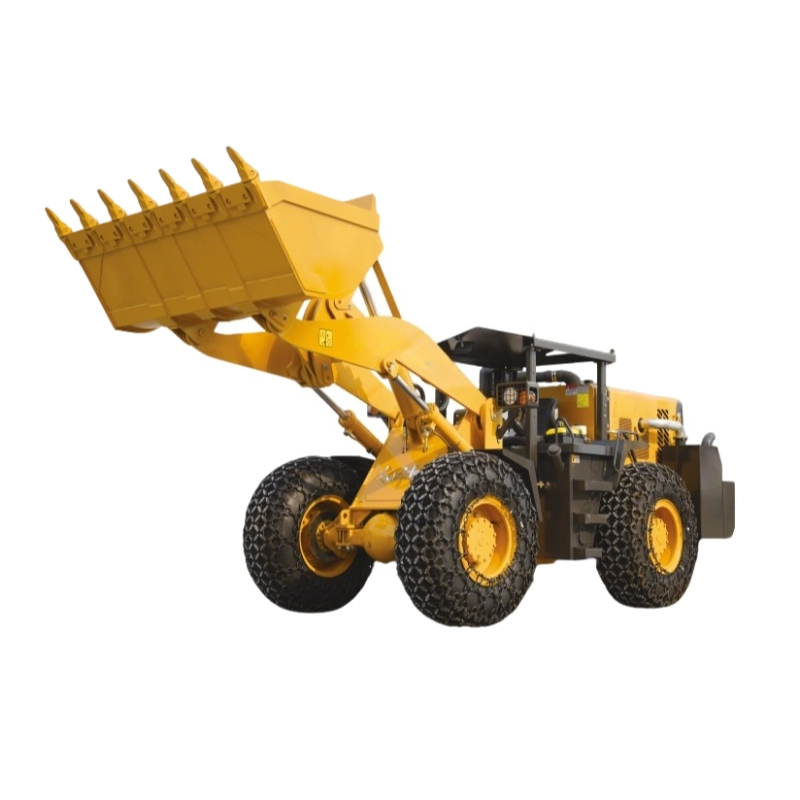
In the high-pressure environment of underground hard-rock mining, the LHD (Load-Haul-Dump) loader is the primary mover of material. Unlike surface wheel loaders, an LHD is engineered for extreme spatial constraints, high-torque requirements, and hazardous atmospheric conditions. Often referred to as “mucking machines,” these vehicles are the pulse of the production cycle.
To understand how an underground LHD works, one must look beyond its bucket. It is a highly specialized integration of low-profile structural engineering, articulated steering, and advanced powertrain management designed to operate where traditional machinery cannot.
The Structural Anatomy: Low Profile and Articulation
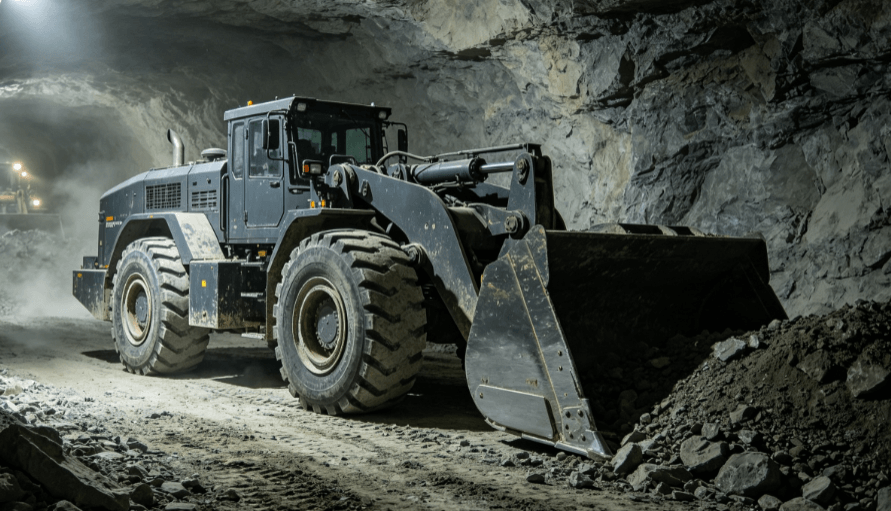
The most striking feature of an LHD is its physical silhouette. Underground tunnels (drifts) are expensive to excavate; therefore, machines must be kept as compact as possible.
1. Low-Profile Design
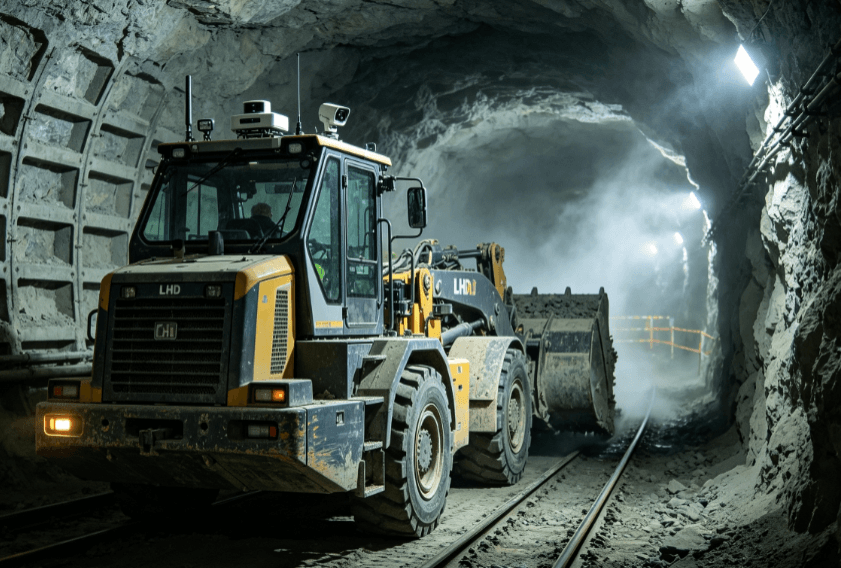
The chassis of an LHD is built exceptionally low to the ground. This allows the machine to operate in headings with limited overhead clearance. Every component—from the operator’s cab to the cooling package—is recessed into the frame to maintain a streamlined profile without sacrificing the breakout force required to penetrate a muck pile.
2. Articulated Steering and Oscillation
Standard steering racks are impractical in narrow mine drifts. Instead, an LHD uses an articulated joint in the center of the chassis. Two hydraulic cylinders push or pull the front and rear frames, allowing the machine to “bend” in the middle.
Furthermore, the “oscillation” occurs at this central pivot point. This ensures that all four wheels maintain contact with the uneven mine floor, providing constant traction and stability even when navigating over large debris or steep inclines.
The Load-Haul-Dump Cycle: A Three-Phase Workflow
The operational logic of an LHD is categorized into three distinct phases. Efficiency in these phases directly impacts the mine’s TPH (Tons Per Hour) metrics.
Phase 1: The Loading Process
The loader approaches the “muck pile”—the blasted rock. The operator uses the “crowding” technique, driving the bucket into the base of the pile while simultaneously lifting the boom and curling the bucket. This creates a massive breakout force. In modern LHDs, hydraulic systems are fine-tuned to ensure that power is prioritized to the bucket’s tilt cylinders during this phase to maximize the “fill factor.”
Phase 2: The Hauling (Tramming) Phase
Once the bucket is full, the LHD transitions to the haul phase, known in the industry as “tramming.” Because underground mines have steep gradients (often 1:7 or 1:8 ramps), the LHD must have a high power-to-weight ratio. During tramming, the bucket is kept low to the ground to maintain a low center of gravity, preventing the machine from tipping during high-speed travel through curved drifts.
Phase 3: The Dumping Phase
The LHD reaches the ore pass or a haul truck. The operator raises the boom and activates the dump cylinders. In many narrow-vein operations, LHDs utilize “ejector buckets” rather than standard tilt-dump buckets. An ejector plate pushes the material out horizontally, which is critical in tunnels where the ceiling is too low to allow a fully raised tilt bucket.
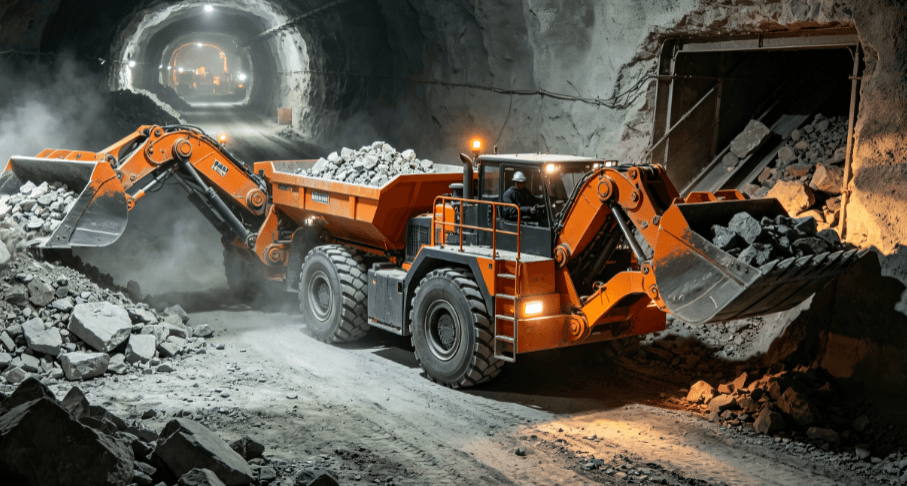
Technical Comparison: LHD Specifications by Application
The following table illustrates how LHD engineering adapts to different mining scales, based on standard industry configurations.
| Feature | Narrow Vein LHD | Mid-Size LHD | Mass Mining LHD |
| Bucket Capacity | 1.0 – 2.5 m³ | 3.5 – 6.0 m³ | 7.0 – 10.0+ m³ |
| Tramming Capacity | 2,000 – 4,000 kg | 7,000 – 12,000 kg | 14,000 – 25,000 kg |
| Engine Type | Diesel / Battery | Diesel / Electric | Diesel / Electric / Tethered |
| Typical Width | 1.2 – 1.8 meters | 2.2 – 2.8 meters | 3.0+ meters |
| Primary Use | Exploration / Gold | Production Drifts | Caving / Large Scale |
Powertrain Dynamics: Diesel vs. Electric Systems
The “How” of an LHD is heavily influenced by its power source. Historically, diesel engines were the standard, but the industry is shifting rapidly toward electrification.
- Diesel LHDs: These utilize high-torque, industrial engines equipped with sophisticated exhaust scrubbing systems. Because diesel engines produce heat and DPM (Diesel Particulate Matter), the machine’s operation is strictly tied to the mine’s ventilation capacity.
- Electric (Tethered) LHDs: These machines are powered by a trailing cable. They offer zero emissions and significantly lower heat output, making them ideal for deep, hot mines. However, their range is limited by the cable length.
- Battery Electric Vehicles (BEVs): The cutting edge of LHD technology involves swappable or fast-charge battery packs. These combine the mobility of diesel with the environmental benefits of electric, though they require significant infrastructure for battery management.
Hydraulics and Control Logic
The “nervous system” of an LHD is its hydraulic circuit. A variable displacement piston pump typically manages the flow, ensuring that hydraulic pressure is only generated when needed. This reduces fuel consumption and heat buildup.
- Pilot Controls: Most modern LHDs utilize electronic joysticks (fly-by-wire) rather than manual hydraulic levers. This allows for smoother transitions and reduces operator fatigue.
- Automated Guidance: Many LHDs now feature “Automine” or teleremote capabilities. Using LIDAR and onboard sensors, the LHD can navigate between the muck pile and the ore pass autonomously, allowing the operator to control the machine from a safe surface office.
Selection and Environment Matching
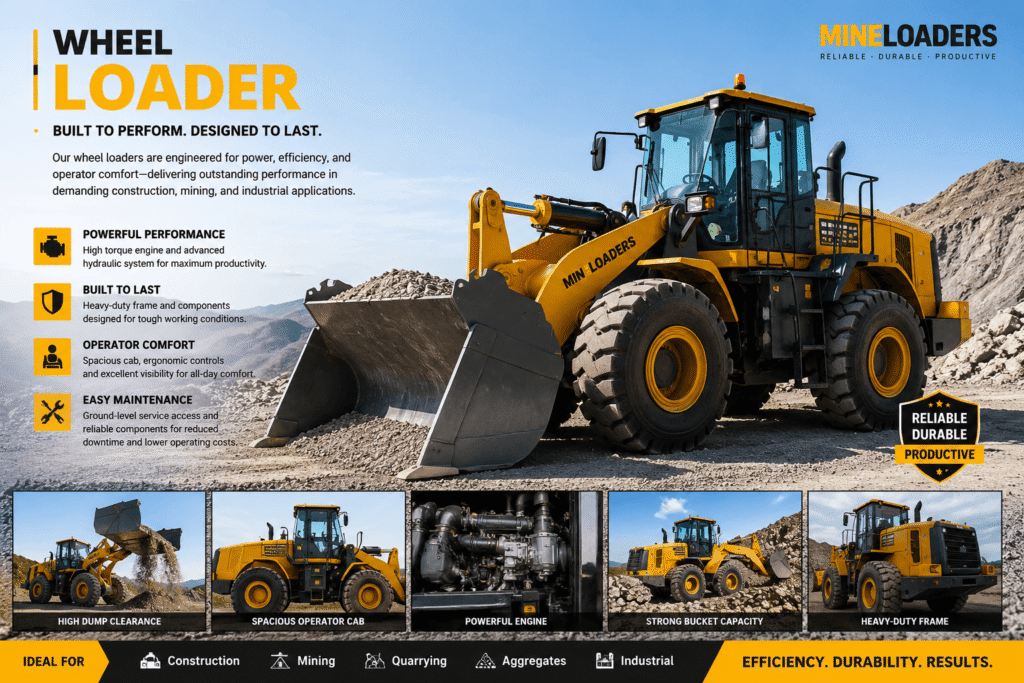
As highlighted by equipment specialists at MineLoaders, choosing an LHD is not just about size; it is about matching the machine to the specific mining method. In “Cut and Fill” mining, a smaller, more agile LHD is required to navigate tight turns. Conversely, in “Block Caving,” massive LHDs with high-capacity buckets are prioritized to move thousands of tons of ore as quickly as possible.
Safety remains the paramount engineering constraint. Every LHD is built with a ROPS (Roll-Over Protective Structure) and FOPS (Falling Object Protective Structure) certified cabin. Additionally, automated fire suppression systems are integrated into the engine bay, as an underground fire is one of the most critical risks in the industry.
FAQ
1. What is the difference between a surface loader and an underground LHD?
An LHD is significantly lower and narrower than a surface loader. It features an articulated chassis for tighter turning circles and is designed with specialized cooling and exhaust systems for confined air environments.
2. Why is articulated steering used in LHDs?
Articulated steering allows the machine to pivot in the center, which provides a much smaller turning radius than four-wheel steering. This is essential for navigating the 90-degree turns common in underground mine grids.
3. How do electric LHDs handle the power requirements for heavy loading?
Electric motors actually provide higher instant torque than diesel engines. This makes them exceptionally good at the “loading” phase where maximum breakout force is needed to penetrate the rock pile.
4. What is “tramming capacity”?
Tramming capacity refers to the maximum weight of material the LHD can safely carry in its bucket while moving at speed across the mine’s inclines and declines without compromising stability.
5. Can an LHD work on steep inclines?
Yes, LHDs are designed with high-torque transmissions and heavy-duty braking systems (usually liquid-cooled multiple-disc brakes) to operate safely on ramps with grades typically up to 20% (1:5).
Reference Sources
- ISO 19296:2018 – Mining — Mobile machines working underground — Machine safety.
- CIM (Canadian Institute of Mining, Metallurgy and Petroleum) – Best Practices for Underground Mining Equipment Maintenance.
- SME (Society for Mining, Metallurgy & Exploration) – Mining Engineering Handbook, Section on Underground Loading and Haulage.
- Manufacturer Documentation – Technical specifications for LHD series (standard industry benchmarks for breakout force and engine displacement).