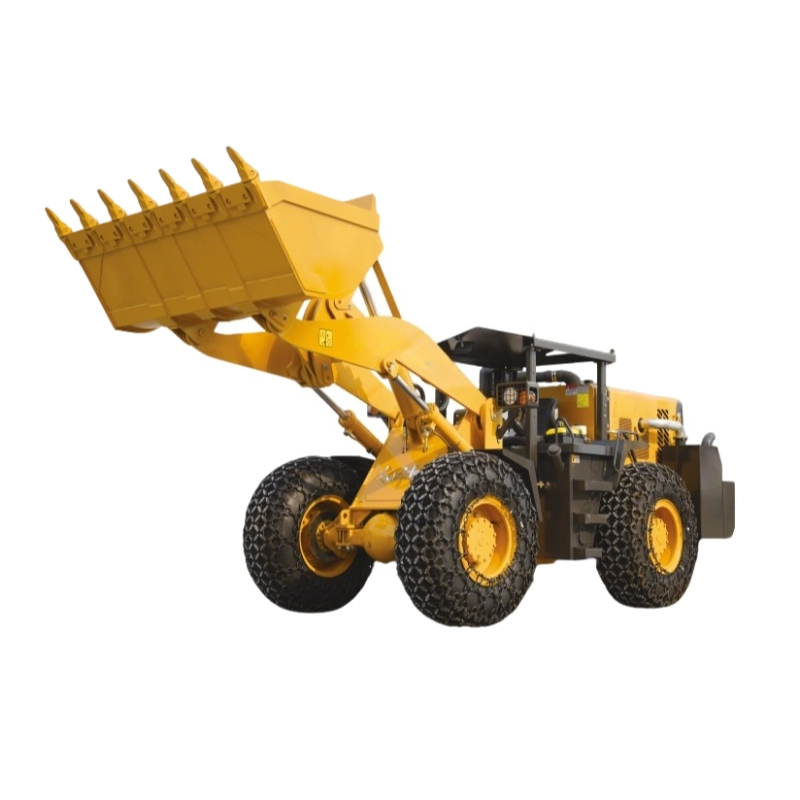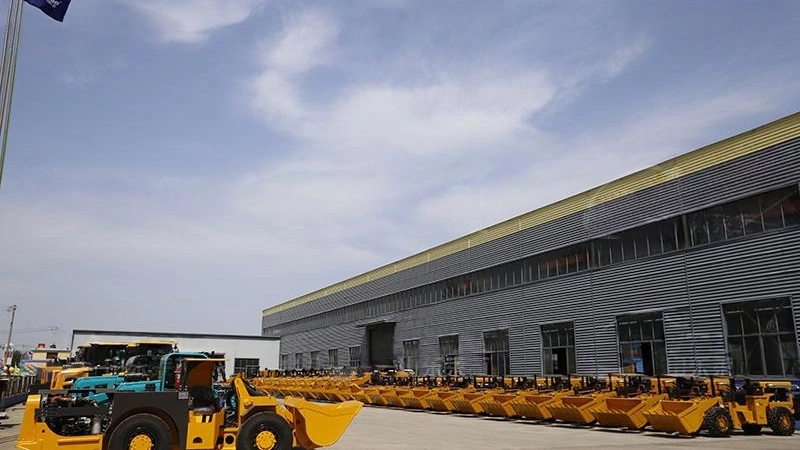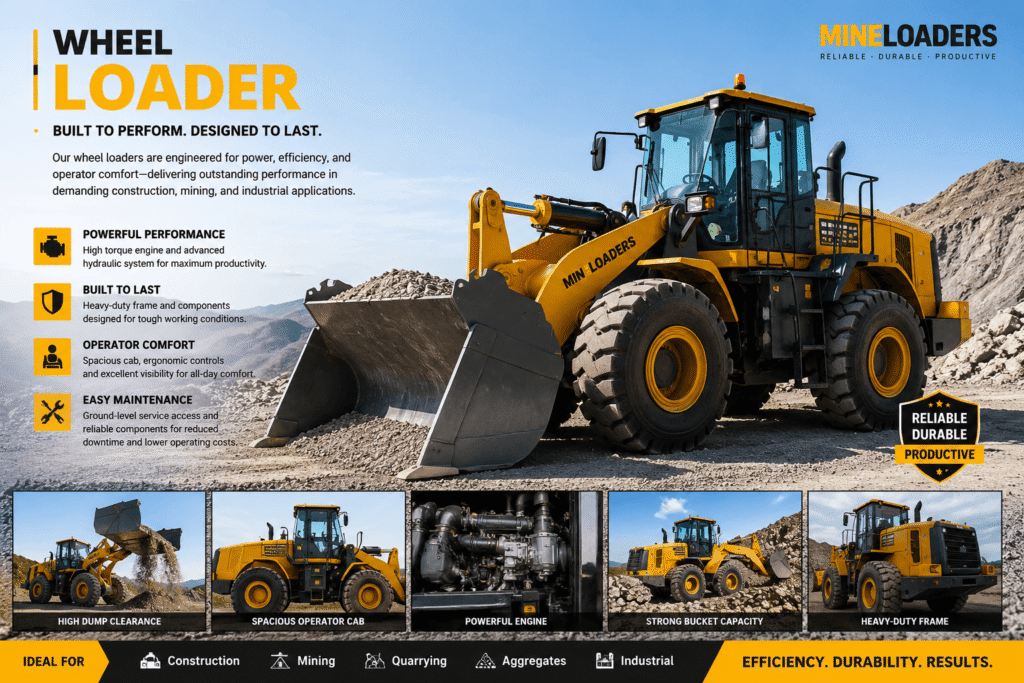
In the demanding environment of modern extraction, the mining loader—specifically the Load-Haul-Dump (LHD) machine—stands as the backbone of underground production. Unlike standard surface construction loaders, a mining loader is engineered to operate in confined spaces, manage extreme gradients, and handle high-density ores with surgical precision.
For project managers and site engineers, understanding the mechanics of these machines is critical for optimizing mucking cycles and ensuring operational safety. This guide examines the technical definition, mechanical architecture, and operational workflows of mining loaders.
Defining the Mining Loader: Beyond the Bucket
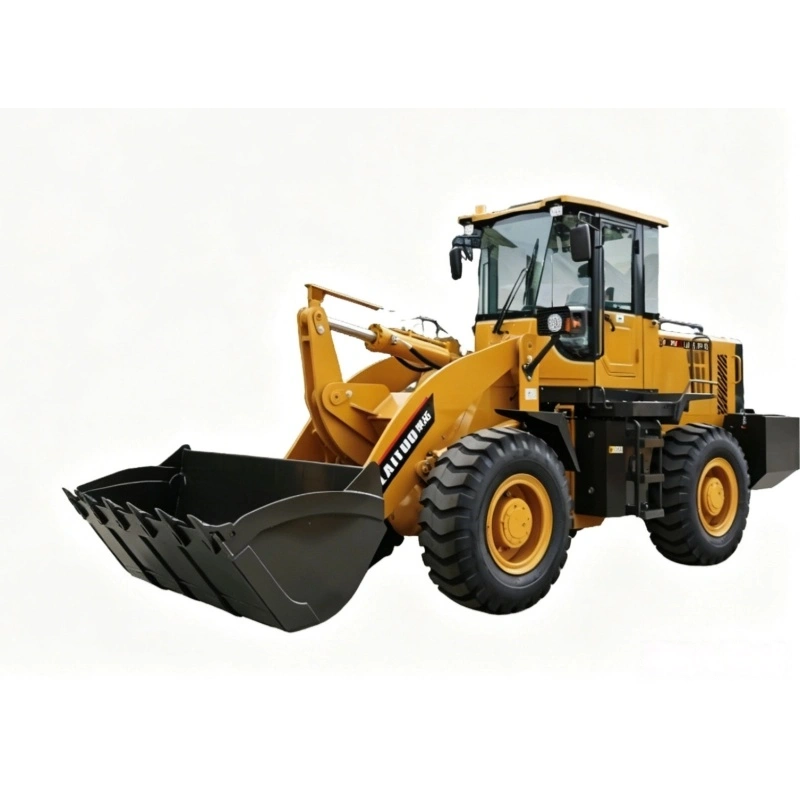
A mining loader is a heavy-duty material handling machine designed to scoop, transport, and discharge fragmented rock or ore. While “mining loader” is a broad term, in the context of underground hard-rock or coal mining, it almost exclusively refers to the LHD (Load-Haul-Dump) vehicle.
These machines are distinguished by their low-profile design and articulated steering. Because underground galleries often have strict height and width limitations, the mining loader must maintain a high power-to-weight ratio while keeping a compact footprint. A standard LHD, such as those found in MineLoaders’ product lineup, is characterized by its ability to perform the entire loading and hauling cycle without the immediate need for a separate haul truck over short distances (tramming).
The Engineering Mechanics: How Does a Mining Loader Work?
The operational logic of a mining loader revolves around hydraulic force and mechanical leverage. The process, known as the “mucking cycle,” is divided into three distinct phases.
1. The Loading Phase (Mucking)
The operator drives the loader into the “muck pile” (the blasted rock). Using a high-pressure hydraulic system, the bucket is lowered and forced into the base of the pile. The machine utilizes tractive effort—the force generated by the drivetrain against the ground—to penetrate the material. Once the bucket is deep in the pile, the operator activates the tilt cylinders to “break out” the material, lifting the bucket and curling it back to secure the load.
2. The Hauling Phase (Tramming)
Unlike surface loaders that usually dump into a truck parked adjacent to the pile, a mining loader often “trams” the material over a distance (typically 100 to 300 meters). The machine’s articulated chassis allows it to navigate tight 90-degree turns in narrow tunnels. During this phase, the center of gravity is critical; the bucket is carried low to the ground to maintain stability on uneven mine floors.
3. The Dumping Phase
Upon reaching a central ore pass, a hopper, or a larger haul truck, the loader raises its boom. The hydraulic cylinders extend to tilt the bucket forward, discharging the ore. In “ejector bucket” configurations, a hydraulic plate pushes the material out horizontally, which is essential in low-ceiling environments where a traditional tilt dump would hit the roof.
Comparison: Diesel vs. Electric Mining Loaders
| Feature | Diesel LHD Loaders | Electric/Battery LHD Loaders |
| Power Source | Internal Combustion (Stage V / Tier 4) | Trailing Cable or Lithium-ion Battery |
| Emissions | High (Requires heavy ventilation) | Zero local emissions |
| Heat Output | Significant | Low |
| Mobility | High (Unlimited range) | Restricted by cable or battery life |
| Noise Levels | 100+ dB | Significantly lower |
| Best For | Remote areas, long tramming distances | Deep mines with ventilation constraints |
Core Components of a Mining Loader
The reliability of a mining loader depends on several high-stress components designed for 24/7 operation in abrasive environments.
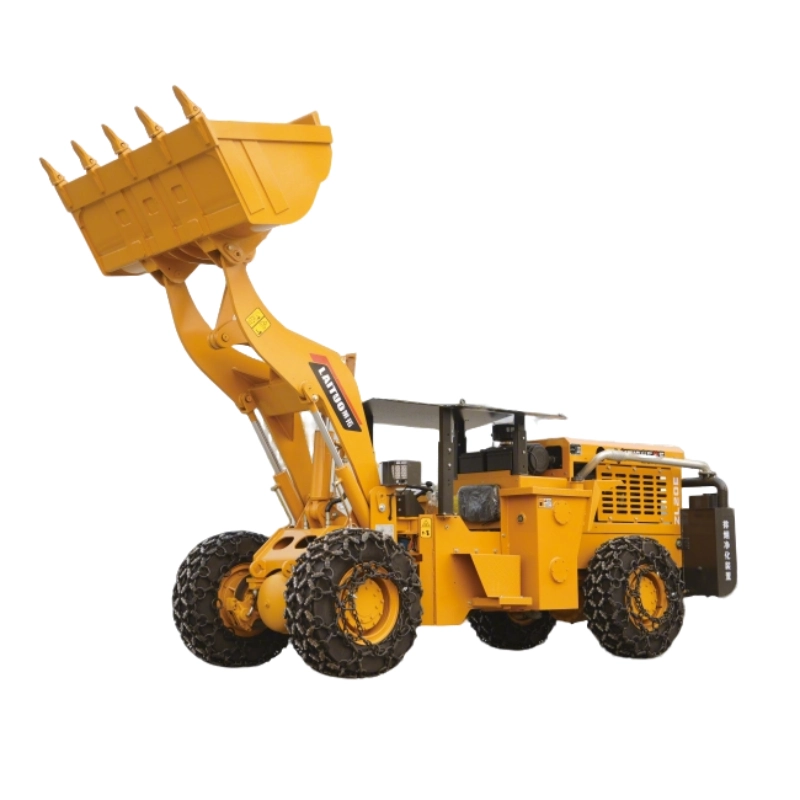
- Articulated Hitch: This is the “waist” of the machine. It allows the front and rear frames to pivot, providing a tight turning radius. High-strength alloy pins and spherical bearings are used to withstand the massive torsional forces during mucking.
- The Powertrain: Usually consists of a high-torque engine (or electric motor), a torque converter, and a power-shift transmission. This setup ensures that maximum torque is available at low speeds for bucket penetration.
- Hydraulic System: This is the “muscular system.” It includes variable displacement pumps that prioritize flow to the steering or the bucket depending on the operator’s input.
- Armored Chassis: Mining loaders use reinforced steel plating significantly thicker than construction-grade equipment to protect internal components from rock falls and wall impacts.
- Heavy-Duty Tires: These are often filled with foam or fitted with tire chains to prevent punctures from sharp, blasted rock.
Classifications by Application and Size
Mining loaders are categorized primarily by their tramming capacity (the weight they can safely carry while moving).
Narrow Vein Loaders
Designed for “vein mining” where the ore body is thin. These machines are exceptionally slim—sometimes less than 1.2 meters wide. They allow mines to minimize “dilution” (the amount of waste rock mined alongside the ore) by keeping the tunnels as small as possible.
Standard Underground LHDs
These range from 3-ton to 25-ton capacities. A 10-ton loader is the “workhorse” of many medium-sized underground operations. They often feature ROPS (Roll-Over Protective Structure) and FOPS (Falling Object Protective Structure) certified cabs.
Flame-Proof Loaders
In coal mining, the presence of methane gas and coal dust creates an explosion risk. Flame-proof (or explosion-proof) loaders feature sealed electrical systems, intake flame arrestors, and water-cooled exhaust manifolds to ensure the machine never becomes an ignition source.
Safety and Compliance Standards
In the industrial sector, a mining loader is more than a tool; it is a regulated environment. Modern loaders must adhere to strict international standards to ensure operator survival and environmental protection:
- ISO 3449 / ISO 3471: These govern the structural integrity of the cabin against falling objects and rollovers.
- Engine Emission Standards: In the US (EPA Tier 4) and Europe (Stage V), diesel loaders must use Diesel Particulate Filters (DPF) and Selective Catalytic Reduction (SCR) to reduce Underground Mine Air Quality (UMAQ) hazards.
- Fire Suppression Systems: Because a fire underground is catastrophic, most mining loaders are equipped with automatic Ansul or water-mist suppression systems that trigger upon thermal detection in the engine bay.
Integrating Loaders into Modern Mining Workflows
The selection of a mining loader is dictated by the mine’s layout. If the ventilation system is at its limit, an electric LHD is often the only viable choice, despite the higher initial infrastructure cost. Conversely, for “greenfield” projects where infrastructure is minimal, rugged diesel loaders provide the necessary autonomy.
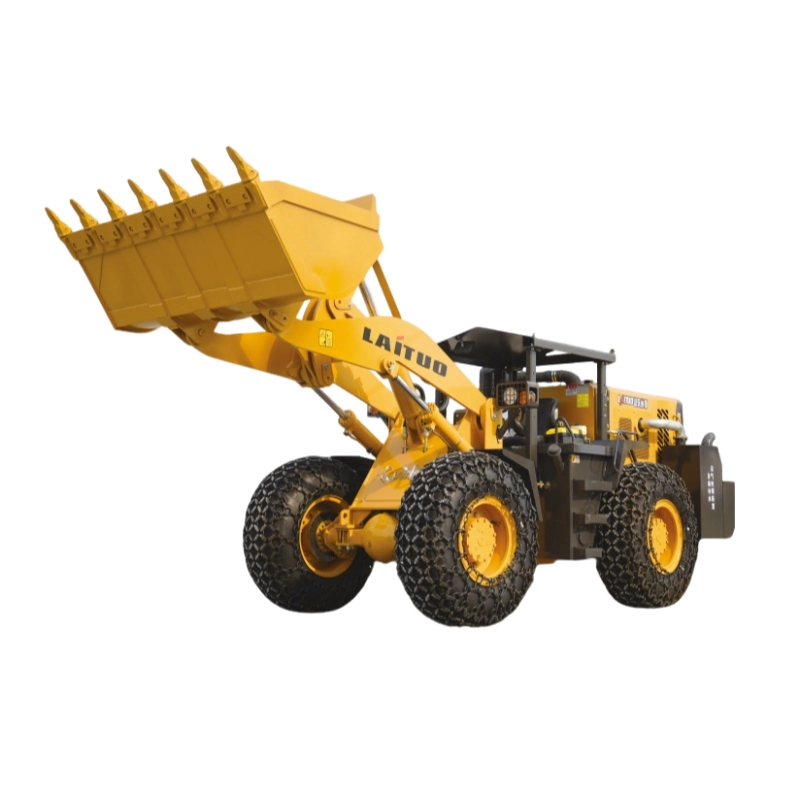
Recent advancements have introduced Tele-remote and Autonomous Operation. Operators can now control loaders from a surface office using cameras and sensors. This removes the human from the high-risk “face” of the mine, where rockfalls are most likely, and allows for continuous operation during shift changes or blasting clearances.
FAQ
What is the difference between an LHD and a front-end loader?
A front-end loader is typically used in surface construction and requires wide spaces to turn. An LHD (Load-Haul-Dump) is specifically designed for underground mining with a low profile, articulated steering for tight corners, and the ability to haul material over longer distances as part of its primary cycle.
How much can a mining loader carry?
Tramming capacities vary significantly based on the model. Small narrow-vein loaders may carry 1.5 to 3 tons, while large-scale underground loaders can handle up to 25 tons of material in a single bucket.
Why are many mining loaders articulated?
Articulated steering allows the machine to pivot in the middle. This provides a much tighter turning radius than traditional wheel steering, which is essential for navigating the 90-degree intersections found in underground tunnel “grid” patterns.
Are electric mining loaders better than diesel?
“Better” depends on the mine’s ventilation. Electric loaders produce zero exhaust fumes and less heat, significantly reducing the cost of cooling and ventilating deep mines. However, diesel loaders offer more flexibility and do not require the installation of charging stations or trailing cables.
What is “Breakout Force” in a mining loader?
Breakout force is the maximum upward force the loader can exert with the bucket’s leading edge. It is a critical metric because it determines the machine’s ability to penetrate and lift heavy, compacted blasted rock from a muck pile.
Reference Sources:
- ISO 19296: Mining — Mobile machines working underground — Machine safety.
- MSHA (Mine Safety and Health Administration): Safety standards for underground mining equipment.
- SME (Society for Mining, Metallurgy & Exploration): Mining Engineering Handbook – Section on Underground Loading and Haulage.
- IEEE Standards Association: Recommended Practice for Battery-Powered Equipment in Underground Mines.