Selecting the right heavy equipment is a decision that dictates the operational efficiency and profitability of any construction or mining site. While both wheel loaders and excavators are staples in earthmoving, they serve fundamentally different mechanical purposes. Choosing between them requires a deep understanding of your site’s terrain, the volume of material to be moved, and the specific tasks required, such as digging versus transporting.
The primary distinction lies in their range of motion and primary function. An excavator is designed for precision, depth, and 360-degree rotation from a stationary position. In contrast, a wheel loader is a high-speed material mover optimized for high-volume loading and short-distance transport. At Mineloaders, we focus on engineering wheel loaders that maximize cycle times and durability in the most demanding environments, ensuring that your material handling workflow remains uninterrupted.
What Are the Mechanical Differences Between Wheel Loaders and Excavators?
The fundamental difference between these two machines is how they interact with the ground. An excavator typically operates on tracks (though wheeled versions exist) and utilizes a boom, stick, and bucket to reach below ground level. This makes it the superior choice for trenching, foundation work, and deep excavation. The 360-degree rotation of the house allows it to dump material into a truck without moving its undercarriage, which preserves the ground surface and reduces mechanical wear.
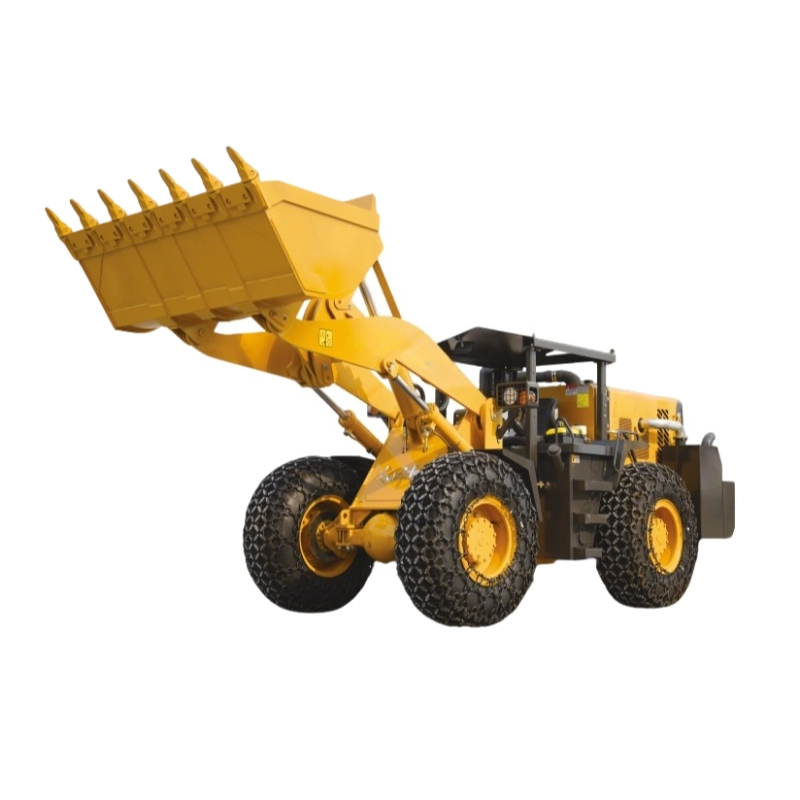
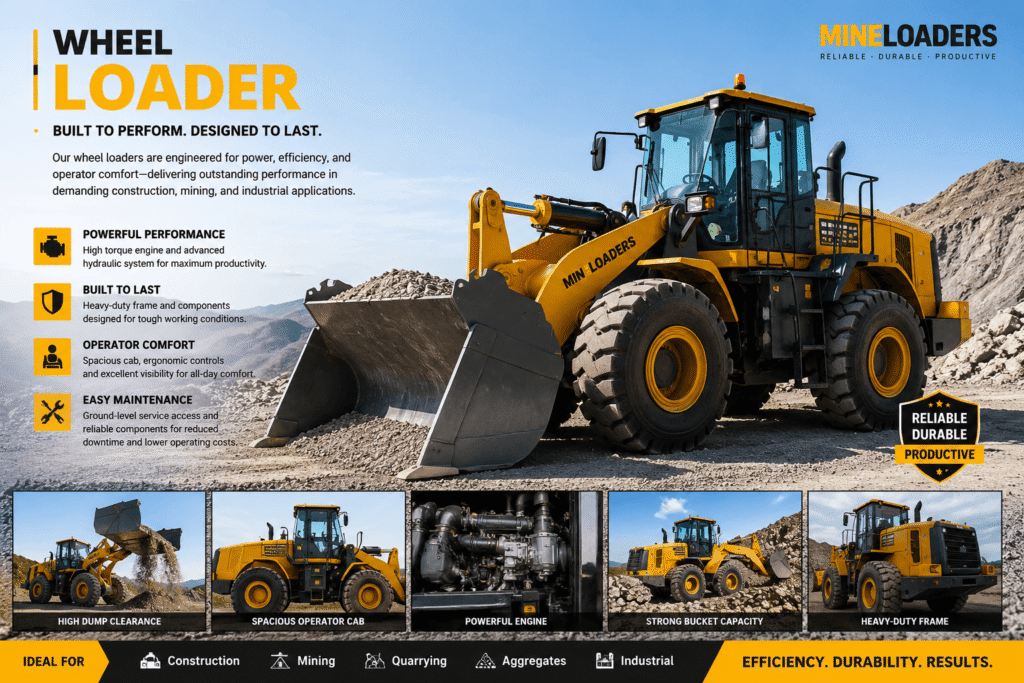
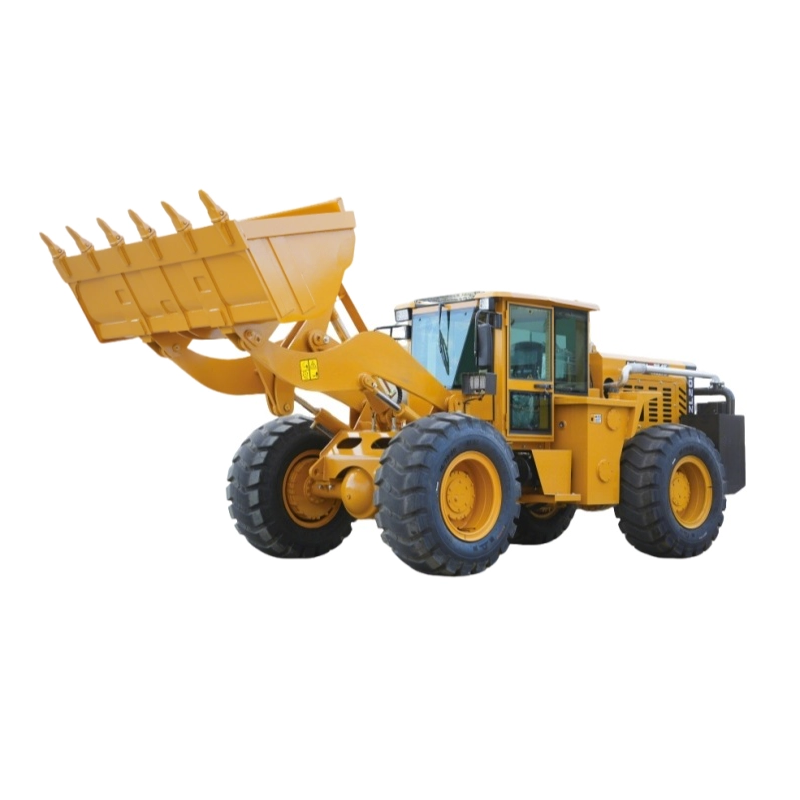
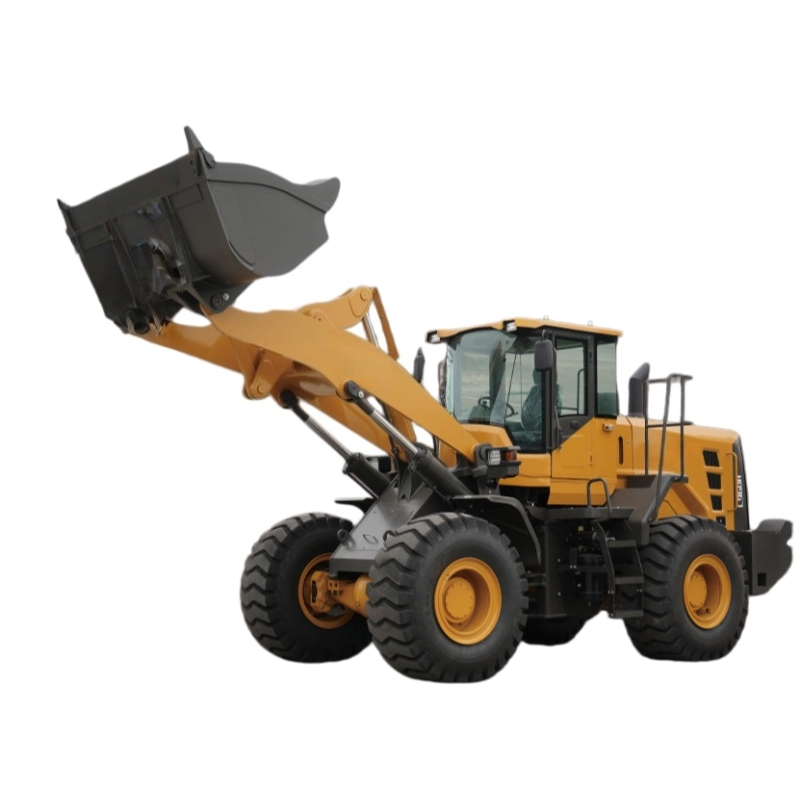
Wheel loaders operate on four large tires and move material using a front-mounted bucket. They are designed to drive into a pile of material, lift it, and transport it to a nearby hopper or truck. Unlike the stationary nature of an excavator, a wheel loader thrives on mobility. We design our wheel loaders with articulated steering, allowing them to navigate tight mining corridors while maintaining the breakout force necessary to handle heavy ores and aggregates.
While an excavator “reaches,” a wheel loader “pushes.” This distinction is critical for project managers calculating the cost per ton of material moved. If your primary goal is to shift 500 tons of loose gravel across a flat yard, a wheel loader will outperform an excavator every time. However, if you need to dig a twelve-foot trench for a pipeline, a wheel loader is practically useless.
Performance Comparison: Mobility vs. Precision
When evaluating these machines, mobility and precision are the two most significant trade-offs. The wheel loader is the “sprinter” of the construction site. It can travel at relatively high speeds between different sections of a job site. This versatility allows it to perform various tasks, such as clearing debris, stockpiling material, and loading trucks, all in a single shift.
Excavators, particularly tracked models, are much slower. Their mobility is geared toward navigating uneven or soft terrain where tires might sink or lose traction. Once in position, however, their precision is unmatched. An excavator operator can shave inches off a trench wall or place a pipe with extreme accuracy—tasks that the larger, more blunt bucket of a wheel loader cannot achieve.
| Feature | Wheel Loader | Excavator |
| Primary Movement | Forward and backward driving | 360-degree cab rotation |
| Digging Capability | Surface and pile-level loading | Deep below-ground digging |
| Mobility | High speed, highly mobile | Low speed, stationary operation |
| Terrain Suitability | Finished surfaces, firm ground | Mud, slopes, and soft soil |
| Primary Advantage | High volume material transport | Precision digging and trenching |
Why Does Application Environment Determine the Machine Choice?
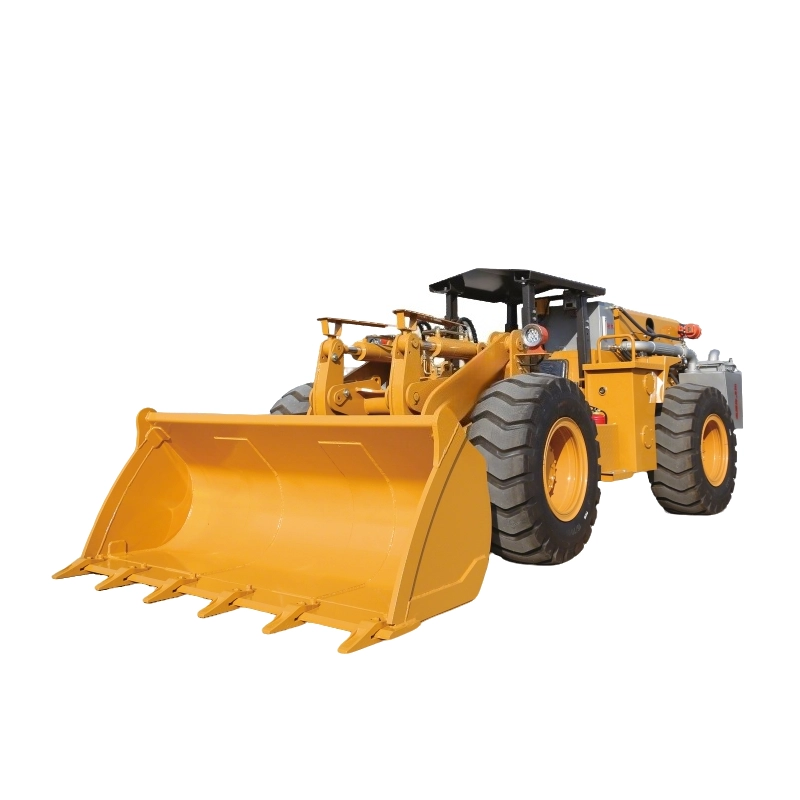
The “where” is just as important as the “what.” In the mining and quarrying industry, the environment is often abrasive and confined. We have observed that in underground mining operations, the wheel loader’s ability to “load-haul-dump” (LHD) is the backbone of production. These machines must be rugged enough to withstand falling debris and corrosive water while maintaining the agility to turn in narrow drifts.
On a standard urban construction site, the excavator often takes precedence due to space constraints and the need for vertical digging. Excavators can work close to existing structures or walls because they do not need to “drive into” the work area to function. They simply reach over obstacles.
Conversely, for large-scale agricultural projects or snow removal, the wheel loader is the undisputed king. Its ability to carry heavy loads over distance makes it far more efficient for clearing large areas. We emphasize the integration of quick-coupler systems in our wheel loaders to allow operators to switch from a bucket to forks or a snow blade in minutes, further increasing the machine’s utility across different environments.
How Do Attachment Versatility and Tooling Impact ROI?
Modern hydraulic systems have turned both excavators and wheel loaders into multi-tool carriers. However, the types of attachments available for each reflect their core DNA. Excavator attachments are typically focused on “processing” or “demolishing”—think hydraulic breakers, augers, shears, and grapples. These tools allow the excavator to act as a stationary workstation for specialized tasks.
Wheel loader attachments are generally focused on “handling” and “moving.” Beyond the standard bucket, you can find pallet forks, bale spears, and specialized rock buckets designed for high-impact loading. At Mineloaders, we provide various bucket configurations to match the density of the material being moved, ensuring the machine operates within its optimal center of gravity to prevent tipping and reduce tire wear.
- Excavator Attachments:
- Hydraulic Hammers (for breaking concrete/rock)
- Augers (for drilling holes)
- Mulchers (for land clearing)
- Grapples (for sorting scrap or logs)
- Wheel Loader Attachments:
- General Purpose Buckets (for dirt and gravel)
- Pallet Forks (for warehouse/site logistics)
- Side-Dump Buckets (for tight tunnel loading)
- Grapple Buckets (for waste handling)
Investing in the right attachments can significantly improve your Return on Investment (ROI). Instead of purchasing two different machines, a well-equipped wheel loader might handle 80% of your site’s needs, provided you don’t require deep excavation.
Choosing the Right Machine for Your Project?
The decision-making process should follow a logical workflow based on the specific requirements of your project. As a manufacturer and consultant, we recommend asking the following three questions before committing to a rental or purchase.
First, does the material need to be moved a distance of more than 50 feet? If yes, the wheel loader is the correct choice due to its travel speed and fuel efficiency over distance. If the material only needs to be moved from the ground to a truck parked immediately adjacent, an excavator is likely more efficient.
Second, what is the ground condition? On paved roads or firm gravel, a wheel loader provides the best balance of speed and power. On steep inclines, mud, or unstable embankments, the low ground pressure of an excavator’s tracks provides the necessary safety and stability.
Third, what is the primary task? If the task is digging down, choose an excavator. If the task is moving forward and clearing, choose a wheel loader. We often see fleet managers combine both: the excavator digs the material and places it in a pile, and our wheel loaders move that pile to the processing plant or transport trucks. This synergy maximizes the strengths of both machine types.
FAQ
Q1: Can a wheel loader be used for digging trenches?
A1: While a wheel loader can scrape the surface and create shallow depressions by tilting the bucket, it is not designed for trenching. It cannot dig below its own wheel level with any efficiency or precision. For any trenching deeper than a few inches, an excavator is required.
Q2: Which machine has a higher operating cost?
A2: Generally, excavators have higher maintenance costs associated with their undercarriage (tracks, rollers, and idlers), especially when working in abrasive soil. Wheel loaders have lower maintenance costs for their drivetrain, though tire replacement can be a significant expense if operated on sharp, rocky terrain without protection.
Q3: Is a wheel loader or an excavator faster at loading trucks?
A3: This depends on the setup. If the truck is positioned right next to the material pile, an excavator’s 360-degree swing cycle can be very fast. However, in a “Y-loading” pattern where the machine must move between the pile and the truck, a wheel loader is significantly faster due to its higher travel speed and larger bucket capacity.
Q4: Which machine is safer for beginners to operate?
A4: Both require significant training. However, wheel loaders operate much like a heavy truck with articulated steering, which may feel more intuitive to some. Excavators require coordinated use of two joysticks to manage the boom, stick, and bucket simultaneously, which often involves a steeper learning curve for precision work.
Q5: Are there hybrid machines that do both?
A5: Yes, backhoe loaders are the most common hybrid. They feature a loader bucket on the front and an excavator arm on the back. While versatile for small jobs, they lack the high-capacity power of a dedicated wheel loader or the reach and depth of a dedicated excavator.
Reference Sources
Earth-moving machinery — Basic types — Identification
https://www.iso.org/standard/65751.html
SGS Industrial Manufacturing and Machinery Services
https://www.sgs.com/en/industrial-manufacturing
Heavy Equipment Safety and Operation Standards
https://www.osha.gov/powered-industrial-trucks