Small Loader for Landscaping: Engineering High-ROI Performance for Professional Contractors
A small loader for landscaping is a compact, articulating power unit designed to bridge the gap between manual labor and heavy civil machinery. For professional landscape contractors, these machines are strategic investments that solve two primary industry challenges: labor shortages and site access restrictions. By delivering high hydraulic output on a low-PSI chassis, these compact machines allow for mechanized grading, planting, and material handling without the destructive footprint of traditional skid steers.
The Physics of Profit: Articulation vs. Skidding
In professional landscape work, the “repair cost”—the labor and material required to fix a client’s property after the job is done—can consume up to 15% of project margins.
- Zero-Scrub Steering: Unlike skid steers that rely on tire friction to pivot, an articulated small loader uses a central pivot point. This ensures that the tires roll through turns rather than tearing the turf, effectively eliminating post-job sod repair.
- Oscillating Chassis Stability: Our loaders feature an oscillating joint that keeps all four wheels in contact with uneven terrain. This increases traction on slopes and reduces the “bucking” motion common in short-wheelbase mini loaders, ensuring safer transport of sensitive nursery stock.
- Surface Integrity: With a typical ground pressure of less than 10 PSI (depending on tire configuration), these machines can operate on delicate pavers and established lawns where a standard loader would cause structural cracking or deep ruts.
Critical Engineering Specs: More Than Just Horsepower
Professional procurement requires a deep dive into hydraulic efficiency and mechanical leverage. At MiniLoaders.com, we focus on the metrics that define daily uptime.
Hydraulic Horsepower (GPM x PSI / 1714)
The actual work capacity of a small loader for landscaping is determined by its hydraulic efficiency.
- Standard Flow: Ideal for buckets and forks.
- High-Flow Options: Critical for high-torque tools like stump grinders and trenchers.
- Cooling Capacity: Professional landscape work often involves continuous hydraulic demand; our systems include oversized oil coolers to prevent thermal degradation during 8-hour summer shifts.
Tip Load-to-Weight Ratio
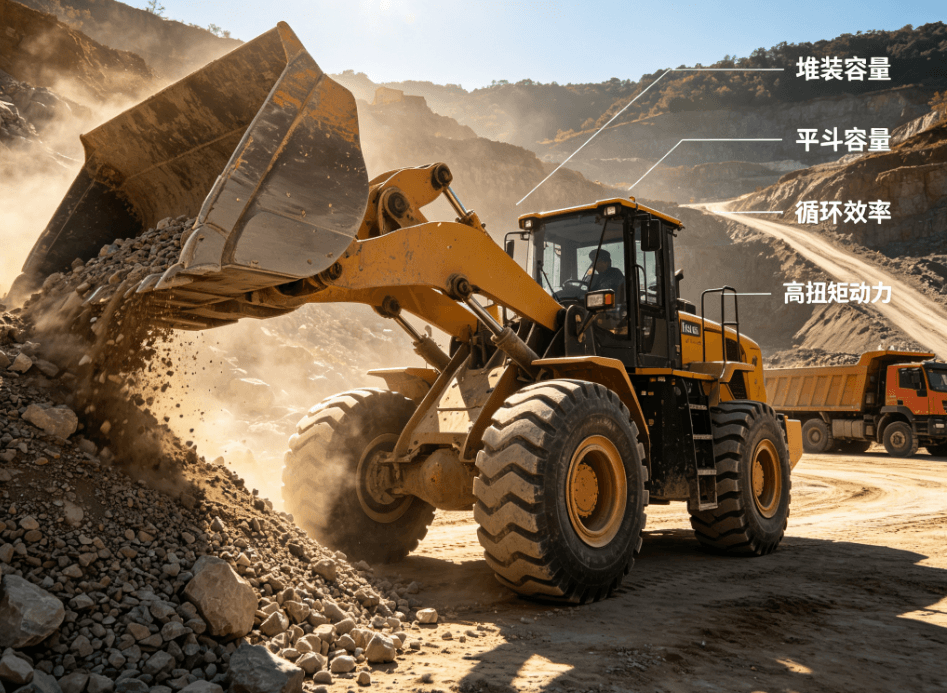
For contractors who move pallets of pavers or sod, the tipping load is the most critical safety metric. A high-quality small loader should offer a tipping load roughly equal to its own operating weight. This allows for a machine light enough to be transported on a standard 7,000 lb GVWR trailer, yet strong enough to unload a 2,000 lb pallet of stone.
The 36-Inch Benchmark
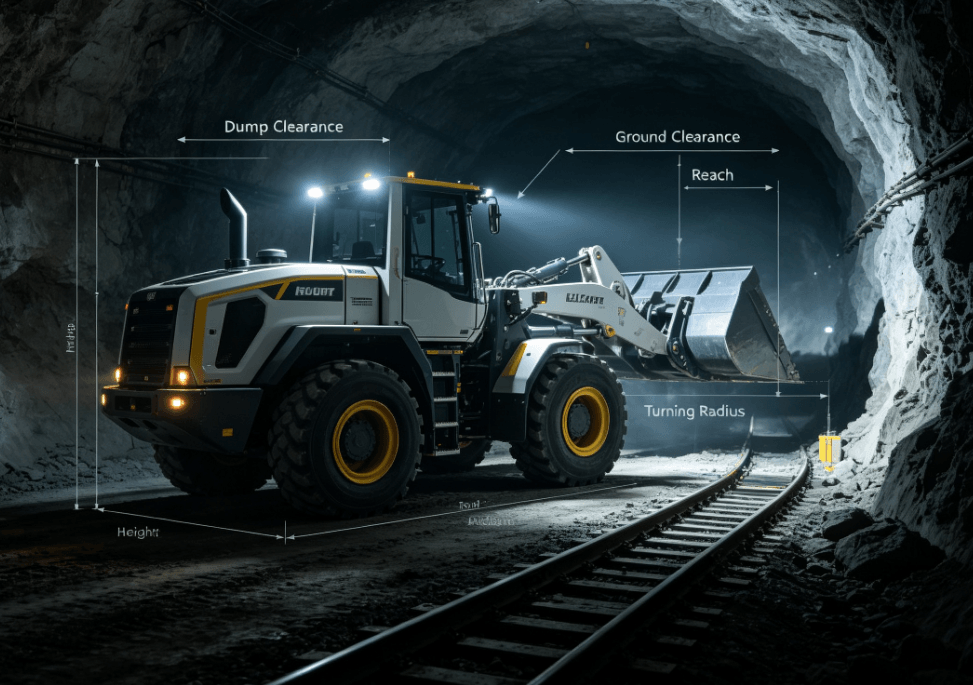
Access is the “make or break” factor in residential landscaping. We engineer our compact machines to maintain a maximum width of 34–42 inches. This allows operators to navigate through side-yard gates, between HVAC units, and under low-hanging pergolas—areas where manual wheelbarrows were previously the only option.
Comparative Performance: Small Loader vs. Mini Skid Steer
| Performance Metric | Articulated Small Loader | Stand-on Mini Skid Steer |
| Operator Fatigue | Low (Suspension seat/Seated) | High (Standing/Vibration) |
| Drive Speed | High (Up to 12-14 mph) | Low (3-5 mph) |
| Turf Damage | Near Zero (Rolling turns) | Significant (Skidding turns) |
| Visibility | 360° (Elevated position) | Obstruction from machine body |
| Tire/Track Life | High (Minimal friction) | Lower (Frequent replacement) |
For professional guidelines on safe equipment operation in residential zones, consult the Occupational Safety and Health Administration (OSHA) standards for small earthmoving equipment.
Solving the Logistics Gap: Transport and Compliance
A significant advantage of the small loader for landscaping is the ease of deployment.
- Trailer Compatibility: Most of our compact articulating loaders weigh between 2,500 and 4,500 lbs, allowing for easy towing with a standard Class IV hitch and a 1/2-ton or 3/4-ton pickup.
- CDL Requirements: Because the Gross Combined Weight Rating (GCWR) typically stays under 26,001 lbs, most landscape crews do not require a Commercial Driver’s License (CDL) for transport, drastically expanding your pool of eligible drivers.
- Fuel Efficiency: Modern Tier 4 Final diesel engines or high-output electric variants provide 6-8 hours of operation on a single tank/charge, significantly reducing daily operational overhead.
FAQ:
How does slope stability compare to a stand-on machine?
Articulated loaders offer a lower center of gravity because the engine and operator are positioned lower in the frame. When equipped with dual wheels or wide-profile tires, they provide superior lateral stability on grades up to 15-20 degrees.
Can I use my existing skid steer attachments?
Yes, most of our loaders utilize a Universal Mini-Quik Attach plate. This allows you to cross-utilize buckets, forks, and augers from other mini-loader brands, protecting your previous tool investments.
What is the maintenance interval for hydraulic systems?
For professional landscape work in high-dust environments, we recommend inspecting hydraulic filters every 100 hours and a full fluid analysis every 500 hours to ensure the longevity of the hydrostatic drive motors. For detailed maintenance schedules, visit our Technical Support Portal.