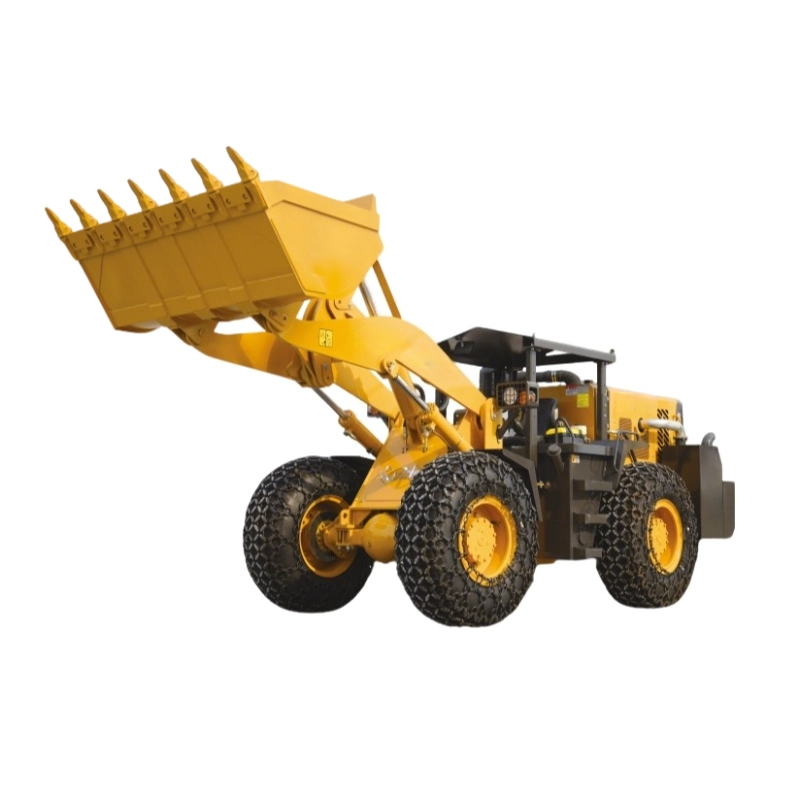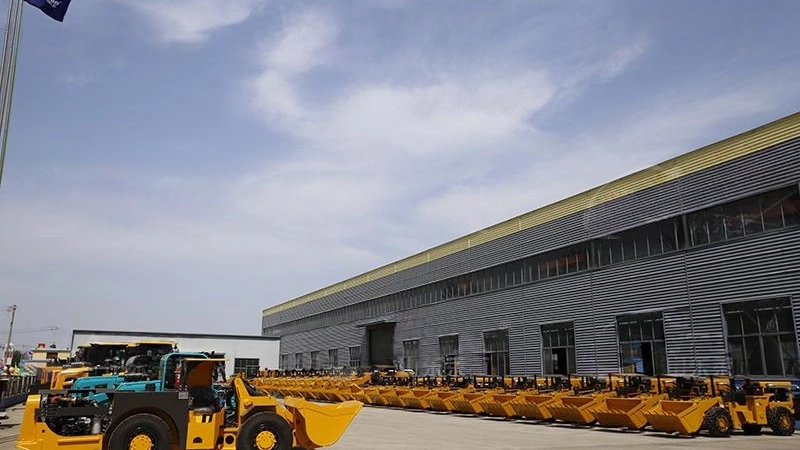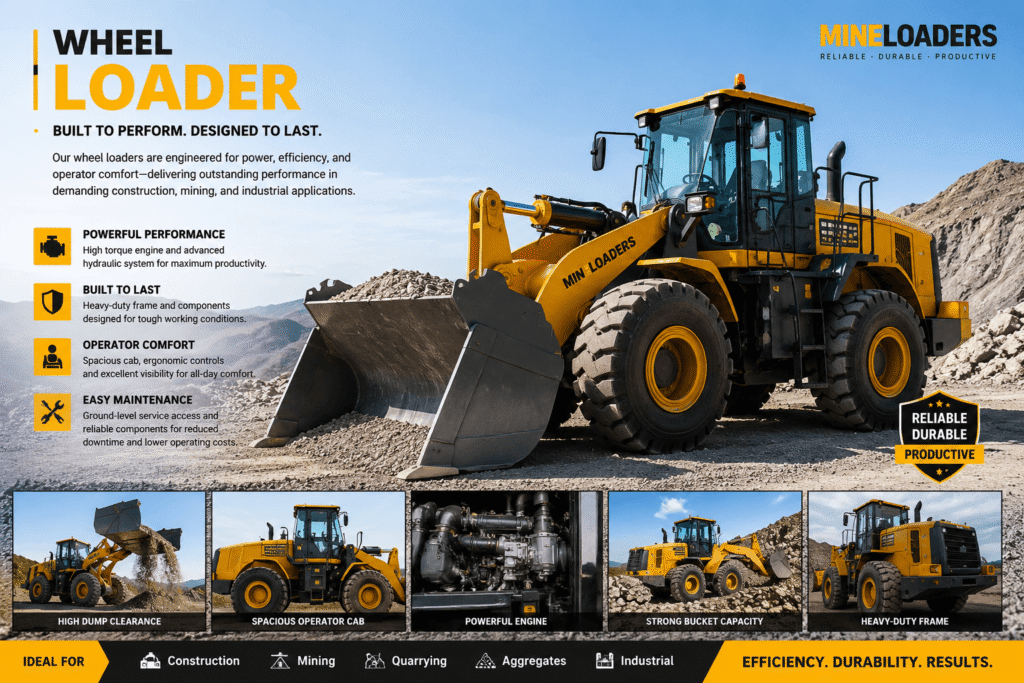
The LT633 is a 3 ton mining loader with a published 1.8 m³ bucket, 92 kW engine and 9,800 kg operating weight. Its 3,300 mm overall height makes access and truck-loading geometry important early checks. Start with the material and receiving vehicle, then decide whether this particular configuration fits the job.
A three-tonne payload rating does not mean every full bucket weighs three tonnes. It also does not make the LT633 interchangeable with a low-profile underground LHD. The model’s dimensions and working equipment need to match the actual loading area.
What do the LT633 specifications mean for selection?
The LT633 product page provides these reference values. Treat them as one published configuration, with any proposed engine, bucket or linkage change identified in the quotation.
| Specification | Published LT633 value | Selection relevance |
| Rated payload | 3 tonnes | Material carried within the approved configuration |
| Bucket volume | 1.8 m³ | Volume available for a particular material |
| Engine | WP6G125E22, 92 kW | Powertrain identification |
| Operating weight | 9,800 kg | Transport and operating ground assessment |
| Overall dimensions | 7,150 × 2,400 × 3,300 mm | Initial access screening |
| Ground clearance | 370 mm | Clearance over uneven ground |
| Tires | 17.5-25 | Starting point for tire compatibility |
| Listed unloading height | 3,300 / 3,600 mm | Configuration requires clarification |
Two entries deserve clarification before ordering. The unloading-height specification gives 3,300 / 3,600 mm without explaining the corresponding arrangements. Ask for the drawing and bucket configuration behind the selected value.
The listed 30° climbing figure is another screening value, not a continuous loaded-ramp or descent limit. Route acceptance depends on traction, stability, braking and the operating conditions. The quotation should address the proposed duty rather than repeat the catalogue angle.
Engine identity matters when comparing offers. A substitute with similar rated power can require different service parts and have different torque, cooling or emissions characteristics. Record the actual engine model instead of accepting “equivalent engine” as a complete description.
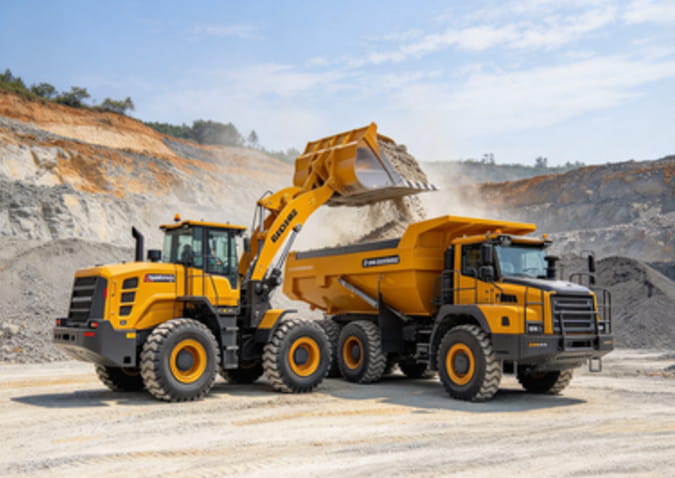
LT633 dimensions for truck loading and restricted access
A loader can pass through an entrance and still lack room to load a truck. Check the turning and reversing area, bucket movement and truck position together. The narrowest point may be beside the receiving body rather than at the gate.
For the unloading interface, match the bucket’s discharge position with the truck’s upper edge and inner loading area. Useful clearance depends on dumping angle and reach. A nominal unloading height does not show where the material will land.
A layout review should include:
- Operating height with the supplied cab and other equipment.
- Bucket and rear-frame sweep during articulation.
- Space for the truck to approach, stop and leave.
- Overhead obstructions throughout lifting and dumping.
- Ground condition at the pile and truck-loading position.
- Access for routine servicing without blocking the production route.
Keep transport arrangements separate from operating dimensions. Removing components for shipment may help delivery, but it does not establish an acceptable working configuration. Obtain the shipping plan and operating drawing for the same quoted machine.
Visibility also changes as the truck and bucket move. WorkSafe Western Australia’s traffic-management bulletin discusses blind spots, vehicle interaction and equipment condition. Those topics help review the layout; applicable mine requirements still govern the operation.
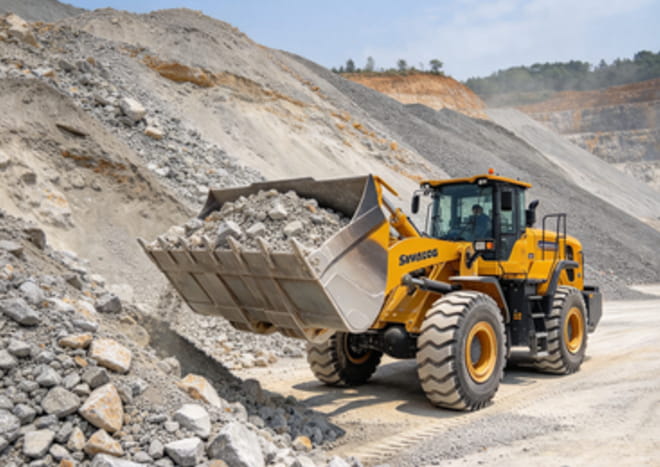
Applications in stockyards and open-pit material handling
The LT633 listing includes stone yards, open-pit mines, coal handling and industrial yards among its applications. Within those settings, bulk density and fragmentation determine how much material the bucket can usefully carry. Abrasion and moisture influence bucket protection and discharge behavior.
For an illustrative density check, 1.8 m³ at 1.6 t/m³ represents 2.88 tonnes at a full-volume assumption. At 1.9 t/m³, it represents 3.42 tonnes. The latter exceeds the published payload, so a visually full bucket cannot be the loading target.
Use representative material measurements rather than an assumed density for “rock” or “ore.” Moisture and fragmentation can change the result. Weighing trial loads helps establish a practical loading method within the approved machine limits.
Bucket reinforcement also has a cost in attachment mass. More wear plate does not automatically leave more capacity for material. Compare the complete bucket arrangement, especially when a supplier proposes a different size or protection package.
Truck matching needs the same discipline. For example, two full three-tonne passes would exceed a hypothetical five-tonne truck’s payload. A controlled final partial pass may be necessary, and actual bucket mass should determine that decision.
Travel distance changes the duty as well. Repeated carrying across a yard creates different tire and traffic demands from short stockpile-to-truck movements. Estimate production from the complete observed cycle, including positioning and waiting.
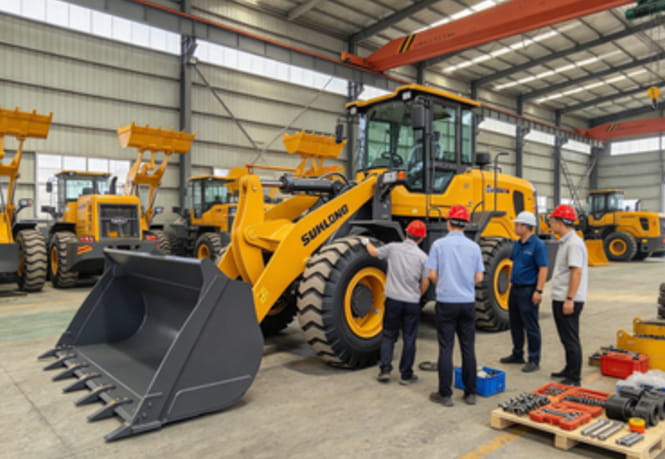
How to specify the LT633 purchase and acceptance checks
Send a short application brief with material data, truck dimensions, shift hours and a layout of the loading area. Identify the restriction that must be solved, such as discharge reach or turning space. That gives the supplier something more useful than a request for a generic three-tonne loader.
Keep the commercial schedule specific:
1. Name the base machine, engine, bucket and tire arrangement.
2. Separate optional equipment from the included configuration.
3. Confirm the dimensional drawing and unloading-height reference.
4. Itemize initial wear parts, transport preparation and commissioning support.
5. Record delivery terms, warranty scope and the agreed inspection procedure.
At acceptance, reconcile identification plates, documents and supplied equipment against that schedule. Inspect the bucket and retention arrangement, then perform agreed functional checks under an appropriate supervised procedure. Record deviations and corrective actions before closing the inspection.
A brief demonstration can verify functions, but it cannot establish long-term output under a different mine cycle. Any productivity expectation should state material, load, route and delay assumptions. This makes the quoted machine and the expected task easier to compare.
If a critical interface does not fit, review the mining loader range before changing the requirement. For landed-cost items, use the mining loader price guide alongside the confirmed configuration.
FAQ
Does the standard bucket always carry three tonnes?
No. Bucket mass depends on bulk density and filling. Dense material can reach the payload limit before the bucket reaches its full volume.
Which unloading height belongs in the purchase order?
Use the height confirmed for the selected bucket and linkage, with its measurement reference. The two published values need configuration-specific clarification.
Can the LT633 be ordered for a low underground roadway?
Its published height is 3,300 mm. Underground use requires a separate assessment of physical fit, ventilation, braking and the mine’s equipment requirements.