A search for mining loader price China usually starts with a simple question: how much will the machine cost?
In practice, a Chinese supplier’s quotation is only useful when the buyer knows exactly what is included. Bucket size, rated load, engine, attachments, inspection, spare parts and shipping terms can all change the final amount.
This is especially important when comparing machines that look similar on paper. A 3-ton loader and a 5-ton loader, for example, are not simply different price points. Their engine output, bucket capacity, dimensions, operating weight and transport requirements can be different as well.
For procurement teams preparing a budget or RFQ, the better approach is to compare the same working configuration and delivery conditions, rather than looking for one standard China mining loader price.
What is included in a China mining loader price?
The starting quotation normally reflects the machine configuration. The final procurement cost can include several additional items.
Machine size and rated load
Capacity is one of the first things that changes the quotation.
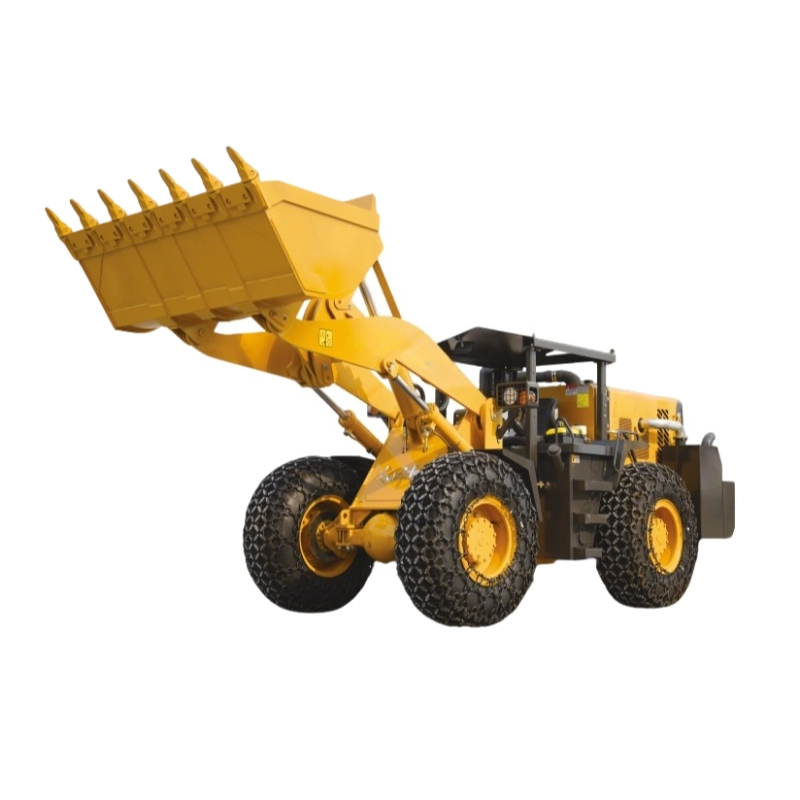
Take the LT633 mining loader as an example. The listed model has a 3-ton rated load, a 1.8 m³ bucket and a 92 kW turbocharged engine. Its published operating weight is 9,800 kg. Those specifications give a buyer a useful reference point when requesting a quotation, but they do not establish a universal market price for every 3-ton mining loader.
A buyer looking for more capacity may instead consider the LT640 mining loader. The listed configuration has a 4-ton rated load, a 2 m³ bucket and a 129 kW engine, with a published machine weight of 11,200 kg. That additional capacity also means a different machine configuration and transport profile.
This is why comparing “3-ton loader price” with “4-ton loader price” without looking at the complete specification can give a misleading picture.
Bucket and working equipment
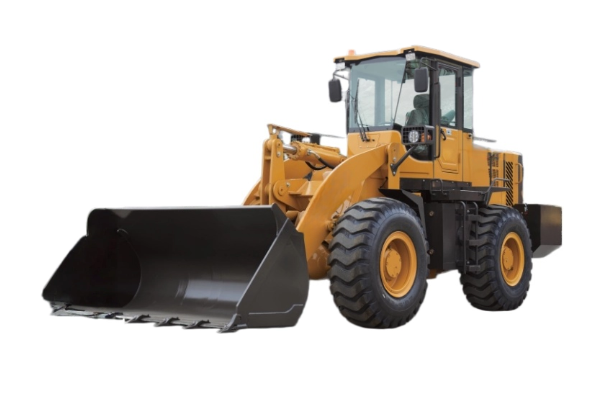
The bucket is another part of the quotation worth checking carefully.
A standard bucket may be suitable for one material while a reinforced or wear-resistant configuration makes more sense for abrasive rock, coal or other demanding applications. Attachments can also change the machine’s intended use.
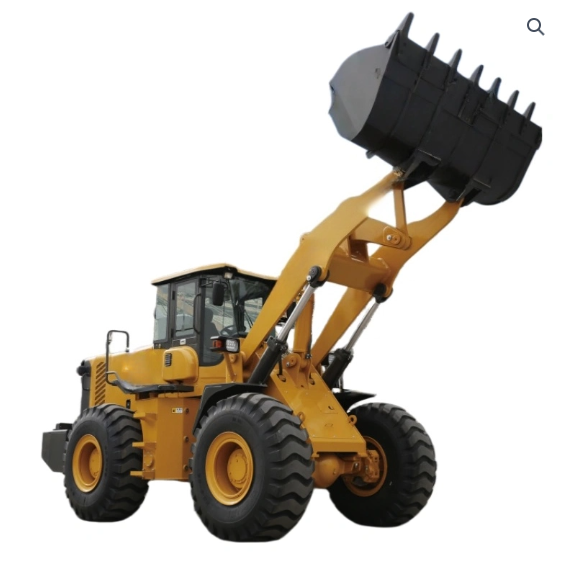
For example, the LT656 mining loader is listed with a 5–5.5 ton rated load and a 3 m³ bucket. Its product information also lists different working devices, including buckets, forks and stone clamps.
If a buyer asks several suppliers for an LT656-equivalent machine but does not specify the bucket or working equipment, the resulting quotations may not be directly comparable.
For an RFQ, it is better to state the required bucket capacity and material conditions instead of simply asking for the “best price.”
Engine and powertrain
Engine output, transmission and drivetrain configuration can also move the quotation.
The difference becomes more noticeable when the loader is expected to work on gradients, carry heavier loads or operate for long shifts. A higher-rated machine may require a larger engine and heavier components, while a smaller machine may be more economical where the production requirement is modest.
For buyers, the useful comparison is therefore not just engine horsepower. Look at the relationship between:
- Rated load
- Bucket capacity
- Engine power
- Machine weight
- Maximum gradeability
- Working cycle
- Expected operating hours
This gives procurement teams a better basis for deciding whether the additional purchase cost is justified by the application.
Underground requirements can change the quotation
Not every machine listed as a mining loader is intended for the same environment.
Surface mining, open-pit loading and underground operations can require very different configurations. Buyers working in restricted underground areas should confirm dimensions, ventilation requirements and the required equipment configuration before comparing prices.
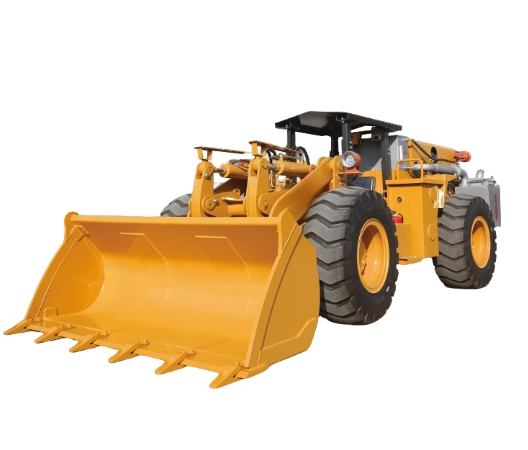
For particularly confined applications, the ZL20E Double Arm Explosion Proof Loader is a useful example of why application requirements matter. Its listed configuration has a 2.5-ton rated load, a 0.8–1.0 m³ bucket and a low-profile height of 1,800 mm, with wide and narrow versions shown on the product page. The product is also described as a coal-mine safety certified machine.
A machine designed around a low and narrow roadway requirement should not be compared purely by rated load against a conventional loader.
For underground diesel equipment, emissions and ventilation requirements may also affect the selected configuration. NIOSH research on underground mines addresses diesel particulate matter and gases associated with diesel-powered equipment, so these requirements should be considered before a final specification is agreed.
Shipping is part of the real buying cost
The machine quotation is not necessarily the amount the buyer will ultimately spend.
International procurement may also involve:
- Export handling
- Ocean freight
- Insurance
- Port charges
- Customs clearance
- Import duties and taxes
- Inland transportation
- Unloading at the destination
Machine dimensions and weight can make this particularly relevant for larger loaders.
For example, the published dimensions of the LT656 are 8,400 × 3,200 × 3,550 mm and its listed machine weight is 17,200 kg. A machine with this type of transport profile needs to be evaluated differently from a smaller loader when estimating landed cost.
This is one reason a quotation should clearly state the Incoterm. An FOB quotation and a CIF quotation do not represent the same cost responsibility.
Inspection and spare parts should be quoted separately
Buyers importing mining equipment from China may also request factory inspection, third-party inspection, additional testing or technical documentation.
These requirements do not necessarily need to be built into the machine price. In fact, keeping them as separate RFQ lines often makes supplier comparison easier.
The same applies to spare parts.
Rather than asking a supplier to include an unspecified “spare parts package,” ask for a recommended starter list with individual prices and lead times. This lets the purchasing team decide whether to buy the complete package, selected wear parts or only critical components.
How to compare mining loader quotations
A useful quotation comparison can be kept quite simple.
| Cost item | What to compare |
|---|---|
| Base machine | Model, rated load, bucket and engine |
| Configuration | Attachments, wear parts and optional equipment |
| Inspection | Factory or third-party inspection and testing |
| Spare parts | Starter kit, wear parts and lead times |
| Delivery | Incoterm, port, freight and inland transport |
| Support | Warranty, training and agreed service scope |
The important point is consistency.
If Supplier A quotes an LT640 with a standard bucket on an FOB basis while Supplier B quotes a similar machine with additional equipment and CIF delivery, the lower headline number does not necessarily represent the lower procurement cost.
A better RFQ for mining loader price China
A short but specific RFQ usually produces more useful quotations than a request for a generic price.
Include:
- Intended application
- Material being handled
- Required rated load
- Bucket capacity
- Operating hours
- Site dimensions where relevant
- Required attachments
- Destination port or delivery location
- Preferred Incoterm
- Inspection requirements
- Spare-parts requirements
- Warranty expectations
It is also useful to ask suppliers to separate the machine price, optional equipment, spare parts, inspection and delivery costs.
That way, a procurement team can adjust the specification without having to request a completely new quotation each time.
Why there is no single China mining loader price
There is no reliable single price that applies to every mining loader sourced from China.
A 3-ton model such as the LT633, a 4-ton LT640 and a 5–5.5-ton LT656 represent different machine configurations, while a low-profile or explosion-proof machine can involve a different set of requirements altogether.
For this reason, buyers should treat online prices, catalogue prices or initial supplier quotations as starting points rather than final procurement figures.
If you are comparing available models, the Mining Loader product range provides a convenient starting point for reviewing the current model range. From there, an application-specific RFQ can narrow the choice to machines that match the required capacity, dimensions and working conditions.
The final quotation should confirm the exact model, configuration, attachments, delivery terms, documentation, warranty, lead time and any site-specific requirements before an order is placed.