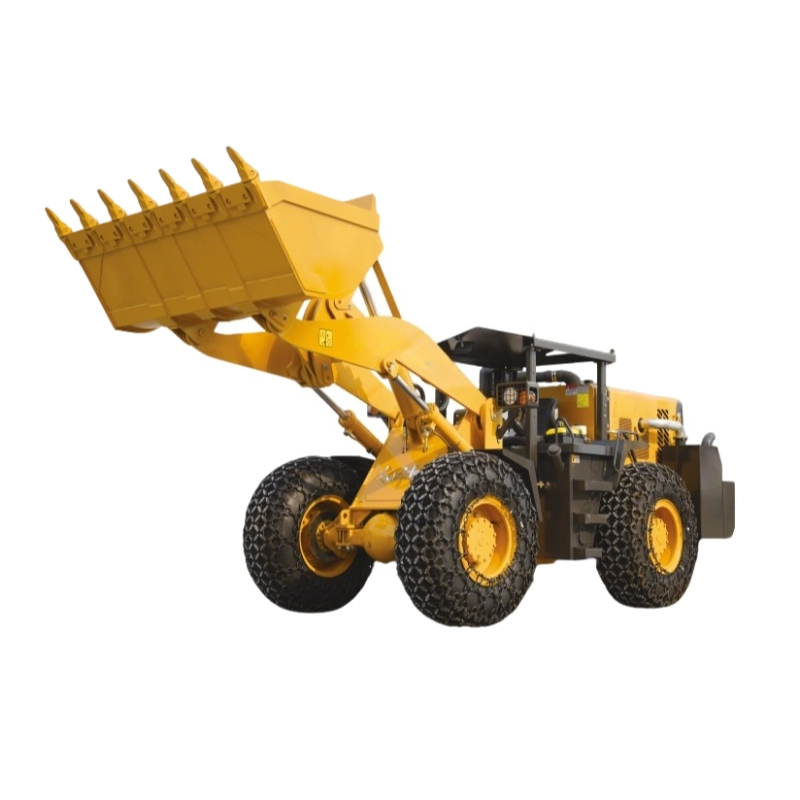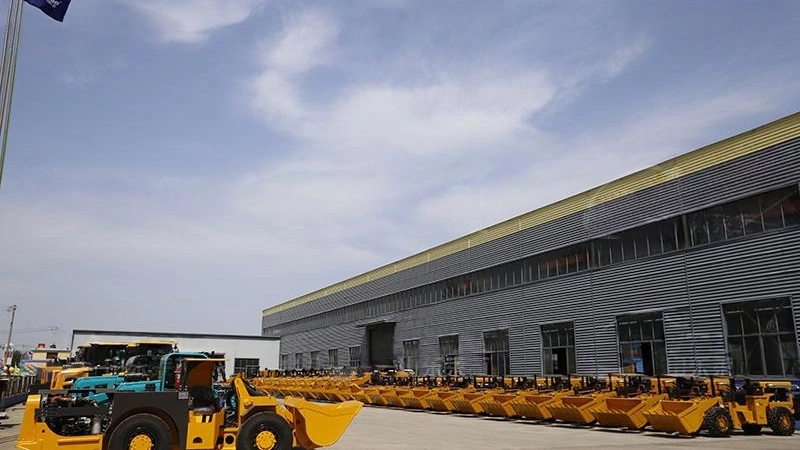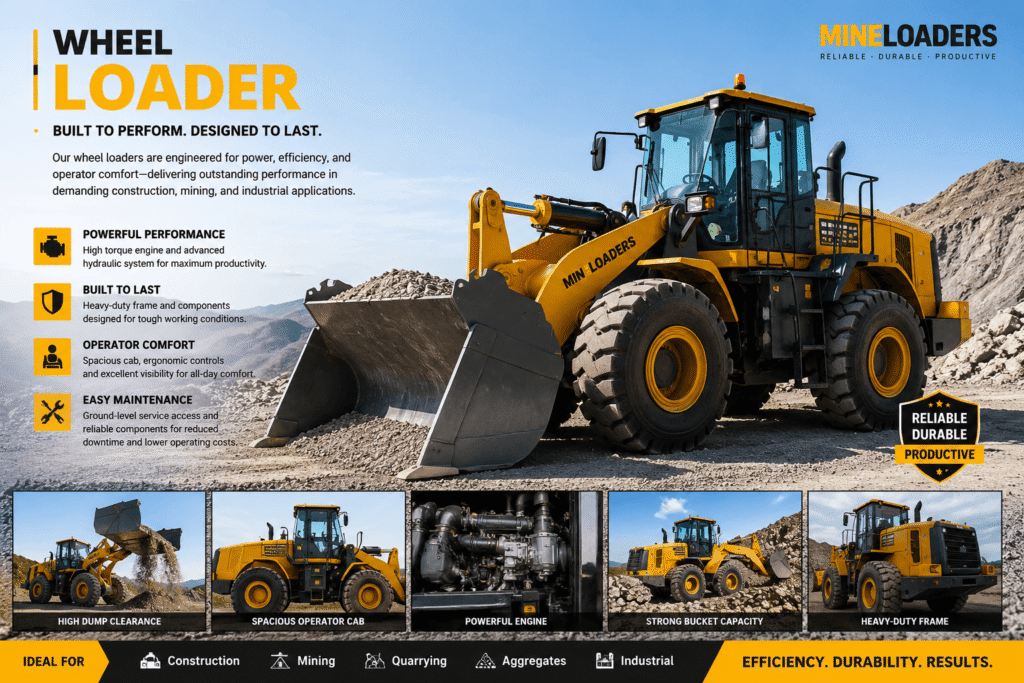
Buying a mining loader for sale involves more than comparing bucket size or engine power. The right machine depends on the material being handled, working conditions, required capacity, available space, maintenance resources and the equipment working alongside it.
For mining companies, contractors and equipment distributors, it is useful to define these requirements before requesting quotations. This gives suppliers clearer information and makes different proposals easier to compare.
1. Start With the Mining Application
Before comparing mining loaders, consider how the machine will be used during a typical shift.
Key factors include:
- Material type, such as ore, coal, gravel or rock
- Expected loading frequency
- Loading into trucks, hoppers or stockpiles
- Travel distance between loading and dumping points
- Road conditions and gradients
- Available space for turning and maintenance
- Open-pit or other operating conditions
A loader used mainly for bulk-material handling may have different requirements from one working in a more confined loading area.
The mining loader range provides a starting point for comparing available models and their listed specifications.
2. Match Loader Capacity to the Material and Work Cycle
Loader capacity should be considered together with material density, bucket size and the expected production cycle.
A larger bucket may increase the amount of material moved per cycle, but machine size also needs to fit the loading area, haul equipment and site layout.
For example, the LT633 mining loader is listed with a 3-ton rated load capacity and a 1.8 m³ bucket. Its product information also lists a 92 kW engine and 9,800 kg operating weight.
For a higher-capacity option, the LT640 mining loader is listed with a 4-ton rated load capacity and a 2 m³ bucket, with a listed engine power of 129 kW.
These figures can be useful for initial model comparison. The final selection should be based on the actual material, production target and site conditions.
When requesting a quotation, provide the supplier with:
- Material density
- Typical and maximum load
- Target production rate
- Loading height
- Truck or hopper dimensions
- Expected operating cycle
This gives the supplier more information for evaluating the proposed configuration.
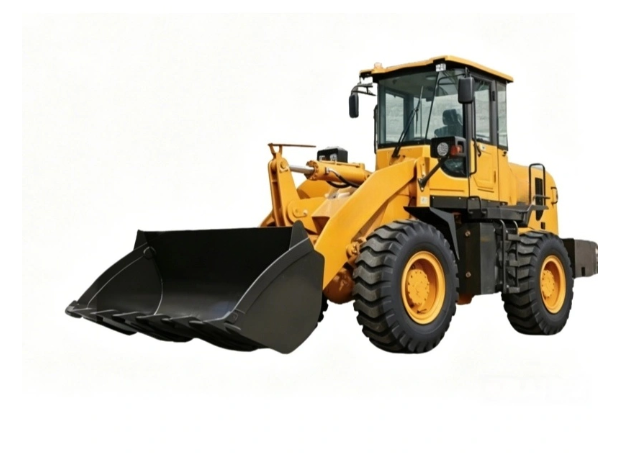
3. Consider the Working Environment
The operating environment can influence which loader configuration is practical for a project.
| Site factor | Why it matters |
|---|---|
| Road width | Affects machine travel and turning space |
| Ground condition | May influence tires, traction and operating conditions |
| Ramp gradient | Helps determine whether the proposed machine fits the route |
| Loading height | Needs to match the receiving truck, hopper or stockpile |
| Turning area | Can influence the suitable machine size |
| Dust and temperature | May affect operating and maintenance requirements |
| Maintenance space | Determines how routine service can be carried out |
For example, the LT633 mining loader product information lists a 370 mm minimum ground clearance and a 30° maximum climbing ability. These figures can be used as initial reference points, while actual route suitability should be checked against the mine’s conditions.
4. Compare Power, Bucket Size and Machine Weight Together
Engine power is useful when comparing machines, but it should not be considered on its own.
A more complete comparison can include:
- Rated engine power
- Rated load capacity
- Bucket capacity
- Operating weight
- Digging force
- Traction
- Turning radius
- Maximum travel speed
- Fuel capacity
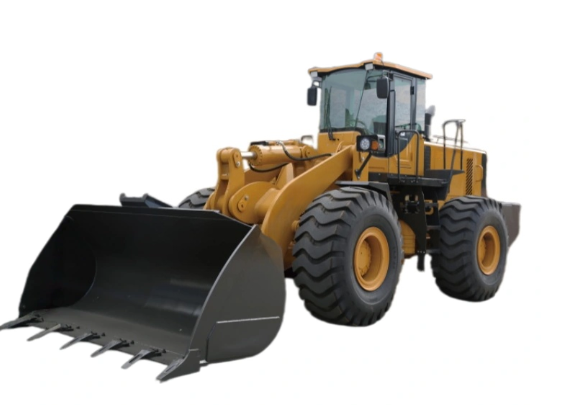
For example, the LT656 mining loader is listed with a 5–5.5 ton rated load capacity, a 3 m³ bucket and a 162 kW engine.
The LT660 mining loader is listed with a 5–6 ton rated load capacity and a 3.5–4 m³ bucket, with a listed engine power of 178 kW.
These examples show why buyers may find it more useful to compare the complete machine configuration rather than focusing on one specification.
5. Check Maintenance and Spare Parts Before Purchase
The purchase price is only one part of the equipment decision.
Before requesting a quotation, ask the supplier about:
- Routine maintenance requirements
- Recommended consumables
- Common wear parts
- Spare-parts availability
- Technical support
- Warranty terms
- Service documentation
- Estimated parts lead times
It is also useful to request a recommended spare-parts list with the quotation. This can help procurement teams estimate the initial parts package and plan routine maintenance.
6. Consider Operator Visibility and Site Safety
Mining loaders often operate around other mobile equipment, personnel and haulage routes. Visibility, braking, warning devices and operator controls should therefore be considered during the site review.
MSHA’s Powered Haulage Equipment Safety Guidance discusses hazards associated with powered haulage equipment and provides practices for miners, mine operators and contractors. The guidance is advisory rather than a standard or regulation, so project teams should also check the requirements applicable to their own mine and jurisdiction. MSHA Powered Haulage Equipment Safety Guidance
For underground operations using diesel-powered equipment, emissions and ventilation may also need to be considered. NIOSH’s guidance on diesel aerosols and gases in underground mines discusses diesel-related pollutants and the role of mine ventilation, equipment maintenance and other controls in reducing worker exposure. NIOSH Diesel Aerosols and Gases in Underground Mines
Specific safety and environmental requirements should be confirmed with the mine’s engineering and safety teams.
7. Prepare a Detailed RFQ
A well-prepared RFQ can help suppliers provide proposals that are easier to compare.
Include information such as:
Application
- Open-pit or underground operation
- Material being handled
- Operating hours
- Target production rate
Site
- Road width
- Ramp gradient
- Loading height
- Turning area
- Working temperature and environmental conditions
Machine
- Required load capacity
- Bucket size
- Engine or power requirements
- Braking and safety requirements
- Optional attachments
After-sales support
- Warranty
- Spare-parts support
- Technical documentation
- Delivery schedule
- Commissioning requirements
Ask each supplier to state the assumptions behind its recommended model. This makes it easier to compare proposals on a similar basis.
Mining Loader Models to Compare
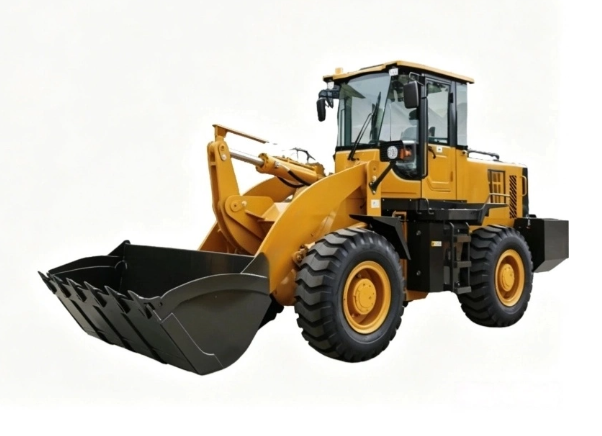
The mining loader range includes models with different listed load capacities and bucket configurations.
For example:
- LT633 — 3-ton rated load capacity, 1.8 m³ bucket
- LT636 — 3-ton rated load capacity, 1.8 m³ bucket
- LT640 — 4-ton rated load capacity, 2 m³ bucket
- LT656 — 5–5.5-ton rated load capacity, 3 m³ bucket
- LT660 — 5–6-ton rated load capacity, 3.5–4 m³ bucket
The LT636 mining loader is also listed with a 3-ton rated load capacity and a 1.8 m³ bucket. Buyers can compare these models through the mining loader product range before requesting a quotation.
The listed specifications are intended for initial comparison. Final configuration, performance expectations and site suitability should be confirmed with the supplier based on the intended application.
FAQ
What should I look for when buying a mining loader?
Start with the application rather than the machine price. Review material type, required capacity, bucket size, working space, haul route, maintenance resources and site requirements before comparing models.
Is a larger mining loader always better?
Not necessarily. A larger loader may provide greater rated capacity, but it may also require more working space, transport capacity and maintenance resources. The appropriate size depends on the complete operating environment.
What information should I send when requesting a quotation?
Provide the material type, required capacity, working hours, site dimensions, ramp conditions, loading height and any relevant safety or environmental requirements. More detailed site information can help suppliers prepare a more suitable proposal.
How can I compare different mining loader suppliers?
Ask each supplier to provide model specifications, configuration details, warranty terms, spare-parts support and delivery information. It is also useful to ask what site conditions and operating assumptions were used when recommending the machine.
Do I need a site assessment before purchasing?
A site assessment or sufficiently detailed site drawings can help verify road width, turning space, loading height, ramp conditions and service access. Where the application has unusual operating constraints, these details should be discussed with the supplier before finalizing the configuration.
Request a Mining Loader Quote
If you already know your required capacity and application, review the available mining loaders and shortlist the models that appear to match your requirements.
For example, buyers comparing around 3-ton capacity can review the LT633 and LT636 models, while those looking at higher listed capacities can compare the LT640, LT656 and LT660 options.
If you are still comparing configurations, send the supplier information about your material, required capacity, working conditions and basic site layout. This gives the supplier a basis for recommending a suitable model and preparing a quotation.
Note: Product specifications, configuration, price, delivery schedule and site suitability should be confirmed with the supplier before purchase. Published specifications provide a starting point for comparison and should not replace a project-specific engineering or safety assessment.