The profitability of a mining operation often rests on a single metric: cost-per-ton. In large-scale excavation, the haulage cycle represents the largest portion of operational expenses. Efficiency in this sector is not merely about speed, but about the synergy between mechanical availability, payload precision, and fuel economy.
Optimizing the Payload-to-Weight Ratio
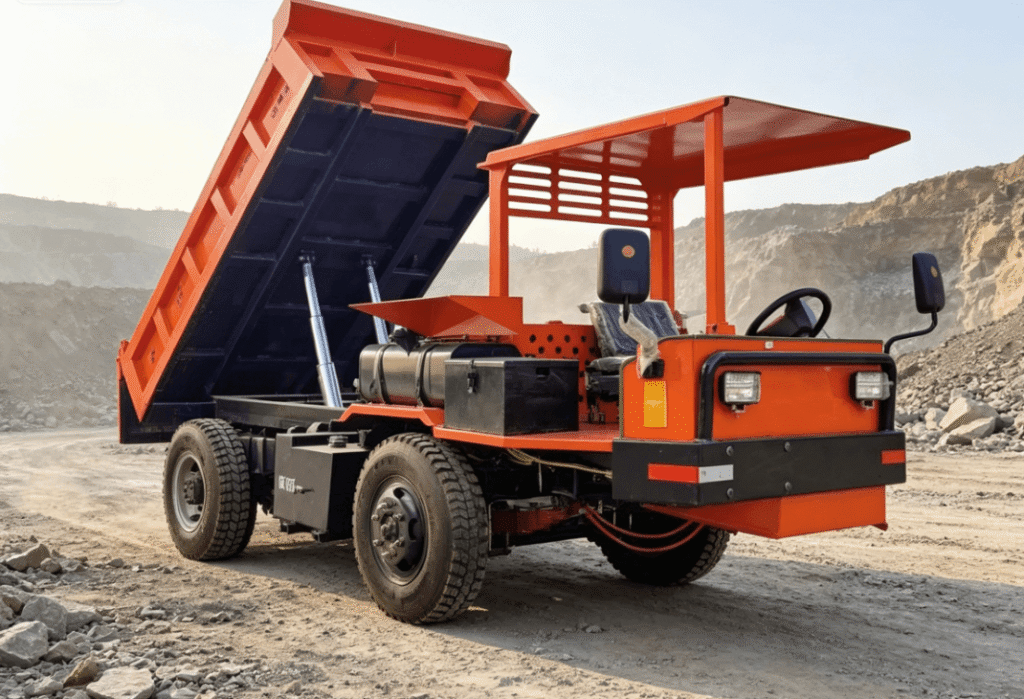
The primary way a mining truck increases efficiency is through its power-to-weight ratio. Modern engineers focus on reducing the “dead weight” of the chassis while maximizing the volumetric capacity of the dump body.
Using high-strength, wear-resistant steel alloys allows manufacturers to build lighter frames that do not compromise structural integrity. When a truck weighs less, it consumes less fuel during the “empty return” portion of the cycle. This weight savings is then converted into additional payload capacity.
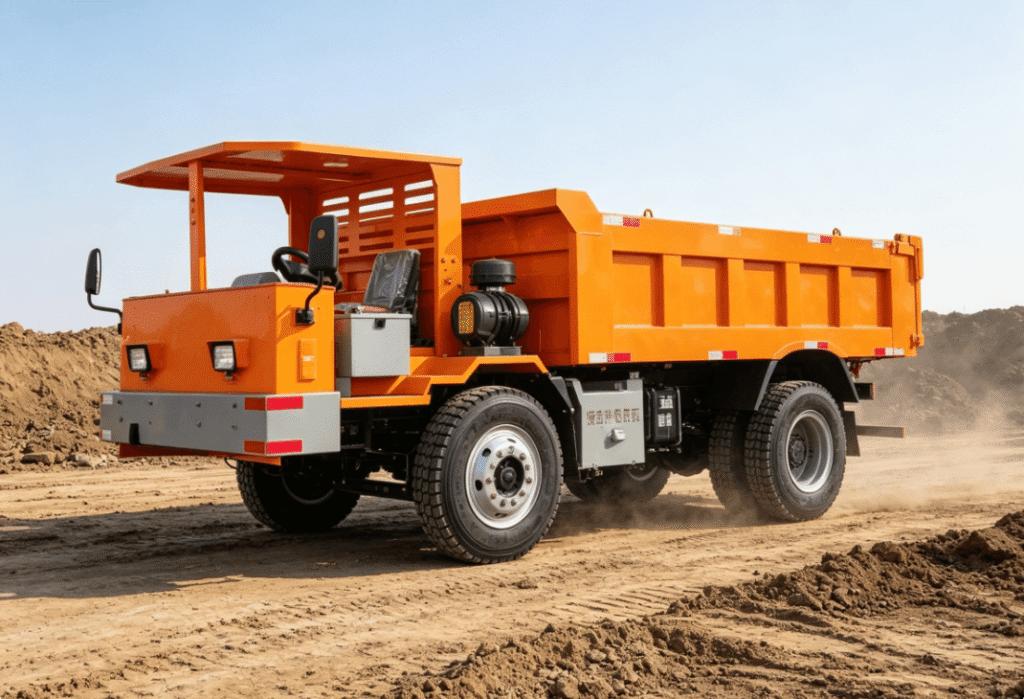
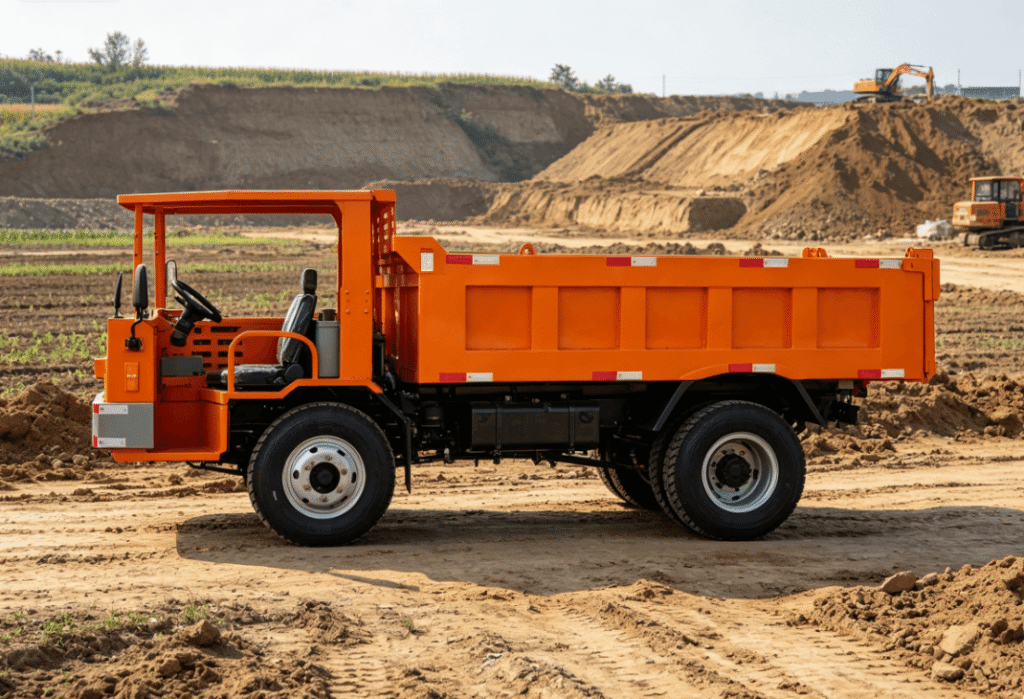
In underground environments, such as those served by Mineloaders’ specialized truck range, efficiency is further dictated by the machine’s footprint. Compact designs allow for higher tonnage in narrower drifts, reducing the need for expensive over-excavation of tunnels.
Streamlining the Haulage Cycle
Efficiency is fundamentally a measurement of time. The haulage cycle is divided into four distinct phases: spotting/loading, hauling, dumping, and returning.
- Loading Synergy: High-efficiency trucks are designed to match the bucket capacity of the primary loader. A “three-pass load” is often considered the industry gold standard.
- Gradeability: Advanced transmission systems and torque converters ensure the truck maintains optimal speed on steep inclines.
- Braking and Retarding: Efficient downhill hauling relies on superior retarding systems. This allows for higher safe speeds during descent without overheating mechanical brakes.
- Dump Speed: Fast hydraulic cycle times for the hoist cylinders reduce the seconds spent at the primary crusher or waste bin.
Technical Factors Influencing Haulage Efficiency
| Efficiency Factor | Impact on Operations | Technical Requirement |
| Payload Management | Prevents underloading and dangerous overloading. | On-board strut pressure sensors and external lights. |
| Engine Calibration | Reduces fuel consumption per ton moved. | Tier 4 / Stage V electronic fuel injection systems. |
| Tire Longevity | Minimizes downtime due to heat separation. | Real-time Ton-Kilometer-Per-Hour (TKPH) monitoring. |
| Availability | Ensures the truck is working, not in the shop. | Modular component design for rapid replacement. |
The Role of Telematics and Real-Time Data
Modern mining trucks act as mobile data centers. Fleet Management Systems (FMS) track every movement via GPS and internal sensors. This data allows site managers to identify “bottlenecks” in real-time.
If a truck is idling for more than three minutes at the loader, the system flags a mismatch in fleet scaling. By adjusting the number of trucks in a circuit based on real-time haul distances, operators can eliminate “queue time.” This ensures that both the loader and the truck are utilized at their maximum capacity.
Furthermore, predictive diagnostics monitor engine oil pressure, coolant temperatures, and hydraulic filtration levels. By catching a potential failure before it occurs, mines avoid the catastrophic costs of “field failures,” where a stalled truck can block a main haul road for hours.
Ergonomics and Operator Performance
Human factors are often overlooked in technical efficiency discussions. However, an fatigued operator is an inefficient operator.
Modern truck cabs utilize hydro-pneumatic suspension systems to isolate the driver from “whole-body vibration.” High-visibility glass and camera systems (including 360-degree bird’s-eye views) reduce the time required for complex spotting maneuvers. When an operator feels safe and comfortable, they can maintain consistent cycle times throughout a 12-hour shift.
Environmental Efficiency and Ventilation
In underground mining, efficiency is also tied to the cost of air. Diesel engines produce heat and DPM (Diesel Particulate Matter).
Efficient mining trucks use advanced scrubbing systems and high-efficiency engines to reduce the “ventilation demand.” By lowering the required Cubic Feet per Minute (CFM) of air per horsepower, mines can reduce electricity costs associated with massive surface fans. This is a critical component of the “Total Cost of Ownership” for underground haulage fleets.
Selecting the Right Equipment for Efficiency
Efficiency is application-specific. A truck designed for a flat, dry surface mine will fail in a steep, wet underground ramp.
When evaluating equipment, such as the underground mining trucks found here, it is vital to match the machine’s tramming capacity to the specific density of the ore being moved. Using a truck with a body optimized for gold ore to move lighter coal will result in “volume-out” before the truck reaches its rated tonnage, leading to wasted mechanical potential.
FAQ
What is the most important metric for mining truck efficiency?
The most critical metric is “Cost per Ton-Shift.” This accounts for fuel, labor, maintenance, and the actual volume of material moved. Focusing solely on fuel consumption or top speed often masks underlying inefficiencies.
How does “matching” loaders and trucks increase efficiency?
Mismatching leads to inefficiency. If a loader takes 5.5 passes to fill a truck, the half-pass is a waste of time. Ideally, a truck should be filled in 3 to 4 full bucket passes to minimize the time the truck spends idling in the loading pocket.
Does autonomous hauling actually improve efficiency?
Yes, but not necessarily through speed. Autonomous trucks increase efficiency through “consistency.” They follow the exact same path, reducing tire wear, and they do not require breaks, allowing for a 10-15% increase in total operating hours per year.
How does tire pressure affect mining truck performance?
Incorrect tire pressure increases rolling resistance. Even a small deviation can increase fuel consumption by 3% and significantly accelerate tire casing fatigue, leading to expensive premature replacements.
Reference Sources
- ISO 10263: Earth-moving machinery — Operator enclosure environment.
- Caterpillar Performance Handbook: The industry standard for haulage cycle calculations and rimpull-gradability curves.
- SME (Society for Mining, Metallurgy & Exploration): Technical papers on “Haul Road Design and Its Impact on Fleet Fuel Efficiency.”
- MSHA (Mine Safety and Health Administration): Guidelines on braking systems and haulage safety standards.
- Manufacturer Technical Specs: Detailed engineering data provided by Mineloaders Mining Equipment regarding underground haulage configurations.