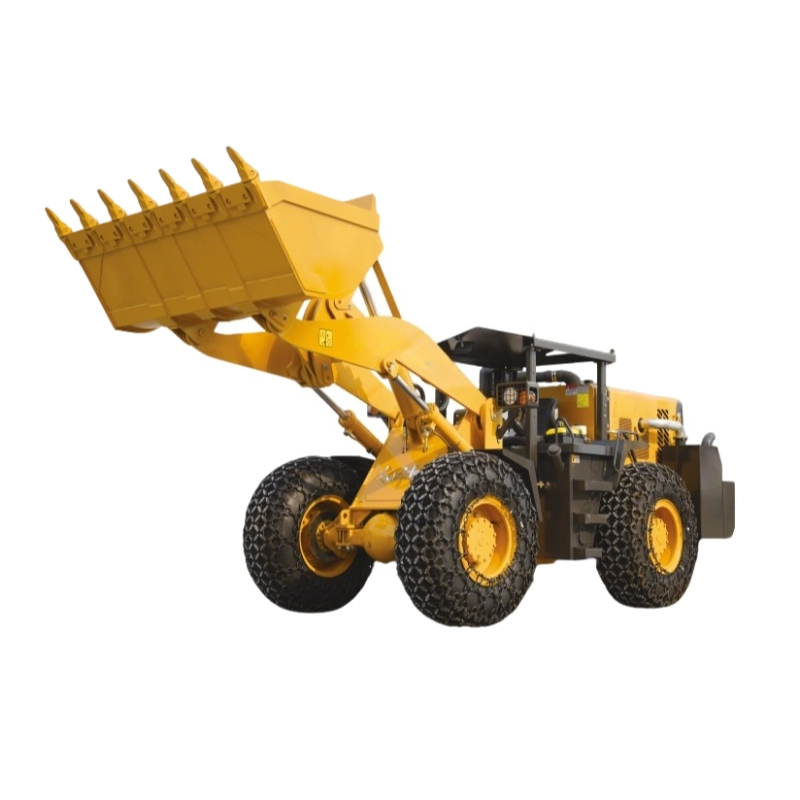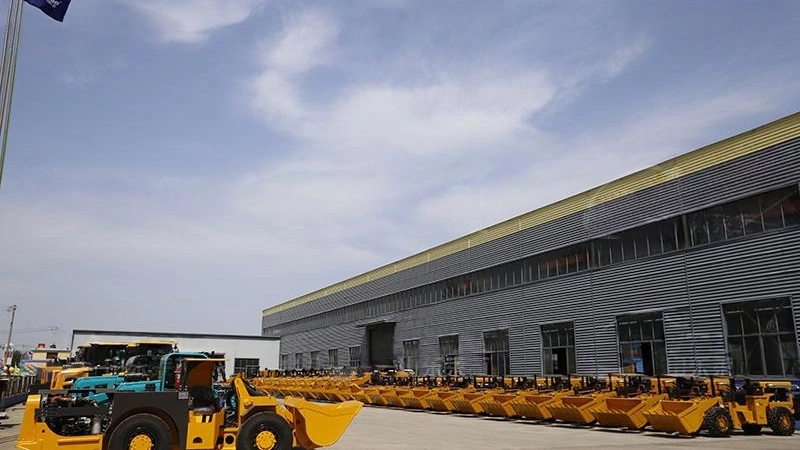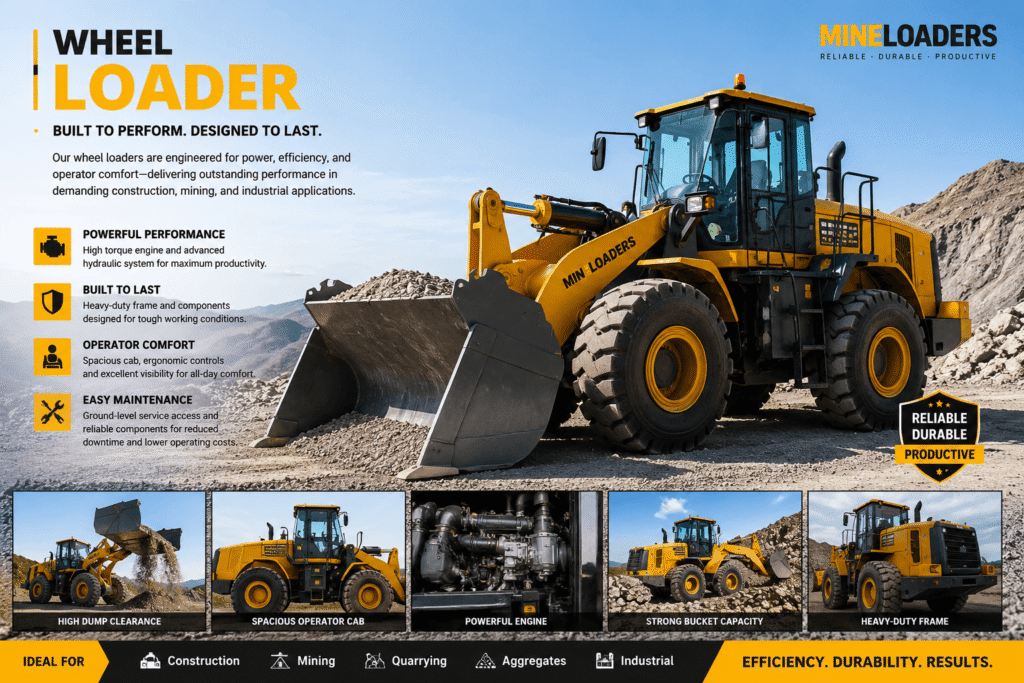
The global mining industry moves billions of tons of material annually. At the heart of this massive logistical undertaking is the mining truck—a specialized vehicle engineered to withstand environments that would destroy standard commercial equipment. Unlike conventional road trucks, mining trucks are high-capacity, heavy-duty machines designed specifically for off-road transport of ore, rock, and overburden in surface and underground environments.
This overview examines the engineering, classification, and technical considerations that define modern mining trucks.
The Engineering Logic of Mining Trucks
A mining truck is defined by its ability to maintain a high Ton-Kilometer Per Hour (TKPH) rating. This metric measures the work capacity of the vehicle, balancing payload weight with the speed and distance of the haul cycle.
From a structural standpoint, these machines are built on high-strength alloy steel frames capable of absorbing the torsional stresses of uneven terrain. Their design is dictated by the specific constraints of the mine site: surface mines allow for massive vertical scale, while underground mines require low-profile, articulated designs to navigate narrow drifts.
Primary Classifications: Surface vs. Underground
The “mining truck” category is split into two distinct engineering worlds based on the extraction method.
1. Surface Haul Trucks (Ultra-Class)
Used in open-pit mines, these are the largest land vehicles on Earth. Mechanical or electrical drive systems power these giants, which can carry payloads exceeding 400 tons.
- Design: Usually a rigid-frame design with massive tires (up to 4 meters in height).
- Drive Systems: Many modern surface trucks use “Diesel-Electric” drives, where a diesel engine powers an alternator, which in turn sends electricity to wheel motors. This provides maximum torque at low speeds.
2. Underground Mining Trucks
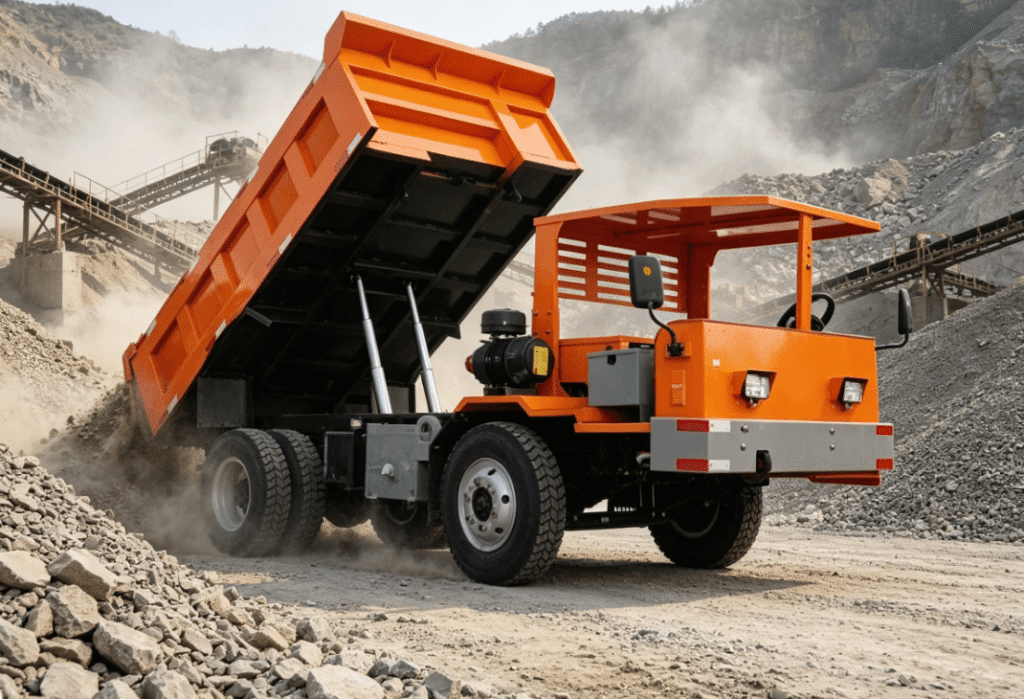
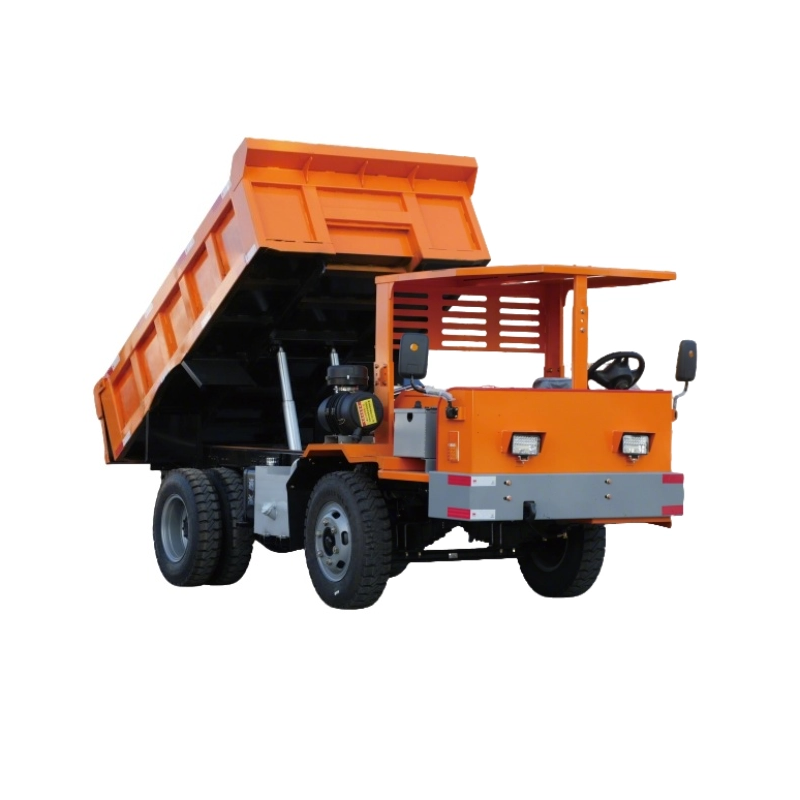
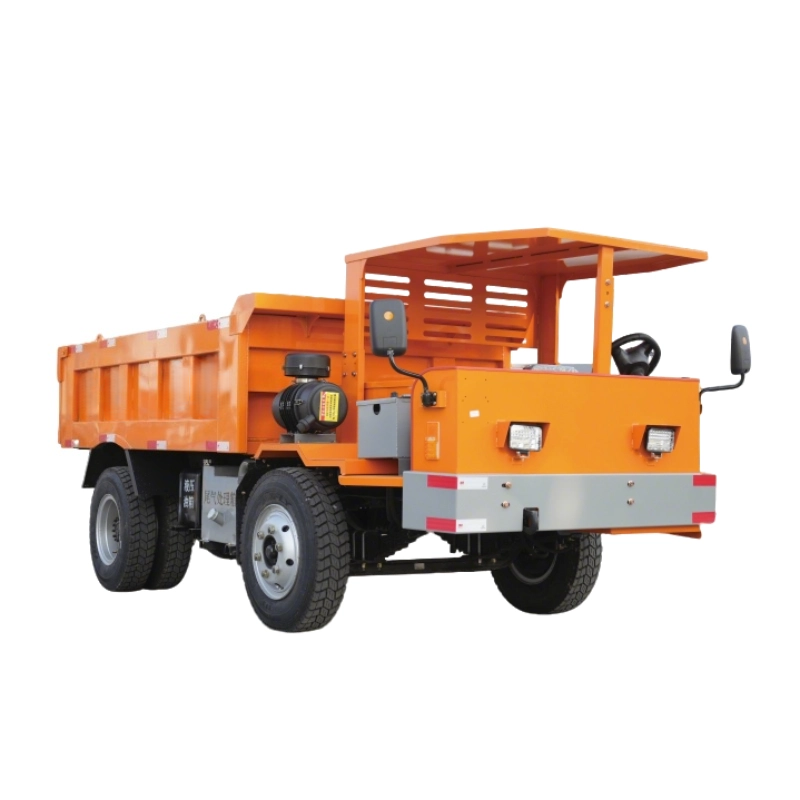
Underground trucks, such as those specialized by Mineloaders, focus on compactness and maneuverability. Because they operate in confined tunnels, they utilize an articulated steering system (the chassis pivots in the middle) to achieve a tight turning radius.
- Profile: Low-profile designs allow them to operate under low ceilings.
- Payload: Typically ranges from 5 tons to 60 tons.
- Emissions: Ventilation is the biggest cost in underground mining, so these trucks feature advanced Tier 3/Tier 4 engines or battery-electric powertrains to minimize toxic exhaust.
Technical Comparison: Surface vs. Underground Articulated Trucks
| Feature | Surface Haul Truck | Underground Articulated Truck |
| Chassis | Rigid Frame | Articulated / Oscillating |
| Steering | Front-axle steering | Hydraulic pivot (central hitch) |
| Braking System | Dry or Wet Disc / Retarder | Oil-cooled Multiple Disc (SAHR) |
| Tire Type | Giant Bias or Radial | Cut-resistant L5/L5S Mining Tires |
| Typical Payload | 100 – 450 Tons | 5 – 60 Tons |
Core Components and Systems
To understand how a mining truck operates, one must look at the subsystems that allow it to function in high-dust, high-vibration, and high-gradient conditions.
The Powertrain and Transmission
In underground applications, a high-torque diesel engine (like those from Cummins or Deutz) is usually mated to a heavy-duty power-shift transmission. The goal is “Gradeability”—the ability of a fully loaded truck to climb ramps with a 10% to 15% incline without overheating.
Hydraulic Systems
Mining trucks rely on high-pressure hydraulics for three main functions:
- Steering: Using massive cylinders to pivot the articulated joint.
- Dumping: Dual-stage telescopic cylinders that can raise a 30-ton load in under 15 seconds.
- Braking: Hydraulic-actuated wet disc brakes are the industry standard for safety, ensuring the truck can hold its position on a steep decline even if the engine fails (Spring Applied, Hydraulic Released or SAHR).
The Dump Body (The “Box”)
The box is not just a container; it is engineered for the material it carries.
- Impact Resistance: For hard rock mining, boxes are lined with wear-resistant plates (e.g., Hardox 450/500).
- Ejector Bodies: In extremely low-clearance tunnels, some underground trucks use an “ejector” blade to push the load out horizontally rather than tipping it up.
Key Factors for Operational Suitability
Selecting a mining truck involves more than just payload capacity. Engineers must consider:
- Tramming Speed: The speed of the truck when loaded and empty. Efficiency is lost if the truck cannot match the pace of the loader (LHD).
- Width and Height Constraints: In underground mining, the “drift” size dictates the machine size. A truck requires a safety clearance (typically 0.5m to 1m) on all sides.
- Specific Gravity of Material: A 20-ton truck designed for coal (low density) will have a much larger volumetric capacity than a 20-ton truck designed for gold-bearing quartz (high density).
- Tire Life: Heat is the enemy of mining tires. Internal temperature monitoring is critical to prevent “separation” in the rubber compounds during long haul cycles.
The Shift Toward Sustainability: Electric Mining Trucks
The industry is currently undergoing a massive shift toward Battery Electric Vehicles (BEVs). In underground environments, the benefits are two-fold:
- Zero Tailpipe Emissions: Dramatically reduces the energy cost required for mine ventilation.
- Heat Reduction: Electric motors generate significantly less ambient heat than diesel combustion engines, improving the working environment for miners.
Companies are now deploying 30-ton and 50-ton electric trucks that utilize regenerative braking to recharge batteries as they travel down-ramp, significantly increasing energy efficiency.
Safety Standards and Compliance
Mining trucks must adhere to strict international safety protocols to protect operators in hazardous conditions:
- ROPS (Roll-Over Protective Structure): Ensures the cab maintains its structural integrity if the vehicle tips.
- FOPS (Falling Object Protective Structure): Essential for underground work to protect the operator from rockfalls (ISO 3449).
- Fire Suppression: Automatic dry-powder or foam systems that activate if sensors detect engine bay fires.
FAQ
What is the difference between a dump truck and a mining truck?
A standard dump truck is designed for highway use and follows legal width/weight limits. A mining truck is an “off-highway” vehicle with significantly higher payloads, specialized heavy-duty frames, and larger tires that are not legal or physically capable of driving on public roads.
How long does a mining truck last?
Life expectancy is measured in operating hours. A well-maintained underground mining truck can last between 15,000 and 30,000 hours before requiring a major powertrain overhaul. Surface haulers can often exceed 60,000 to 100,000 hours with mid-life rebuilds.
What does “Articulated” mean in mining?
Articulation refers to a chassis design where the front and rear sections are connected by a pivot joint. This allows the truck to “bend” in the middle, providing a much tighter turning radius than a fixed-axle truck, which is vital for navigating narrow tunnels.
Why are underground mining trucks so low to the ground?
They are designed as “low-profile” vehicles to maximize the overhead clearance in tunnels. This allows mines to keep tunnel heights smaller, which reduces the cost of excavation and ground support.
What is the TKPH rating?
TKPH stands for Ton-Kilometer Per Hour. It is a rating for mining tires that represents the amount of work a tire can do without overheating. Exceeding this rating leads to rapid tire failure and increased operational costs.
Reference Sources
- ISO 3449 & ISO 3471: International standards for Falling Object (FOPS) and Roll-Over (ROPS) protective structures.
- MSHA (Mine Safety and Health Administration): Guidelines on underground haulage and equipment safety.
- The Society for Mining, Metallurgy & Exploration (SME): Technical papers on underground haulage optimization.
- Caterpillar & Komatsu Technical Specifications: Industry benchmarks for ultra-class haul truck performance.