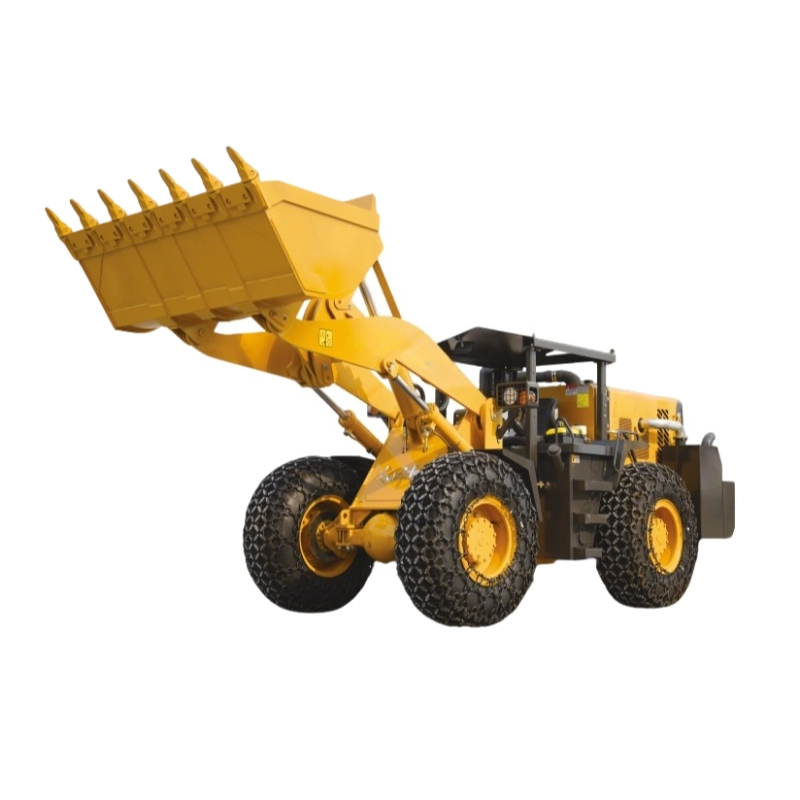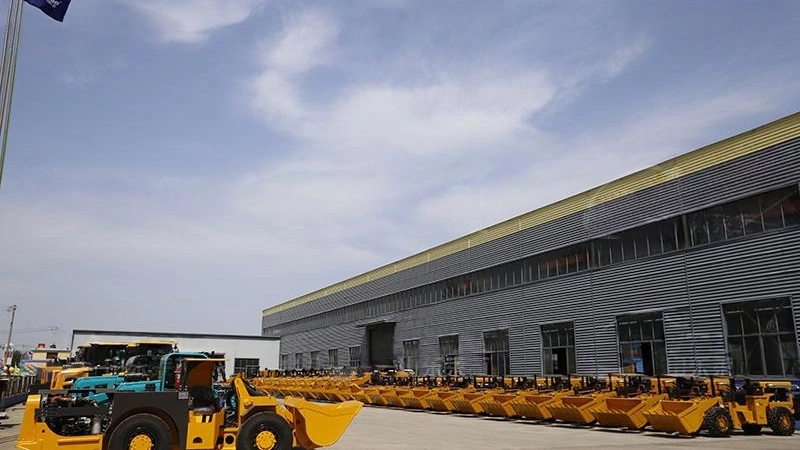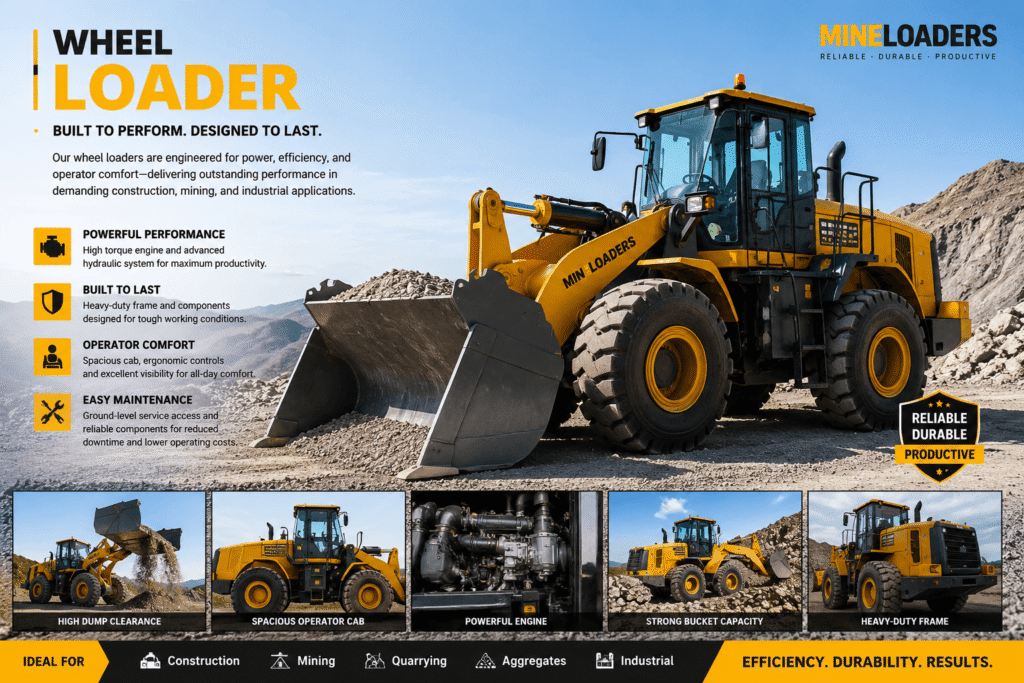
The efficiency of an underground mining operation often hinges on a single category of equipment: the underground LHD (Load, Haul, Dump) machine. Unlike surface loaders that operate with ample overhead clearance and wide turning radii, the LHD is a specialized hybrid designed to navigate the claustrophobic, high-stress environments of subterranean stopes and tunnels.
To the uninitiated, an LHD might look like a flattened wheel loader. To a mining engineer or project manager, it is a sophisticated piece of mobile equipment that combines the loading capability of a tractor-shovel with the transport capacity of a truck.
The Engineering Logic of “Load, Haul, Dump”
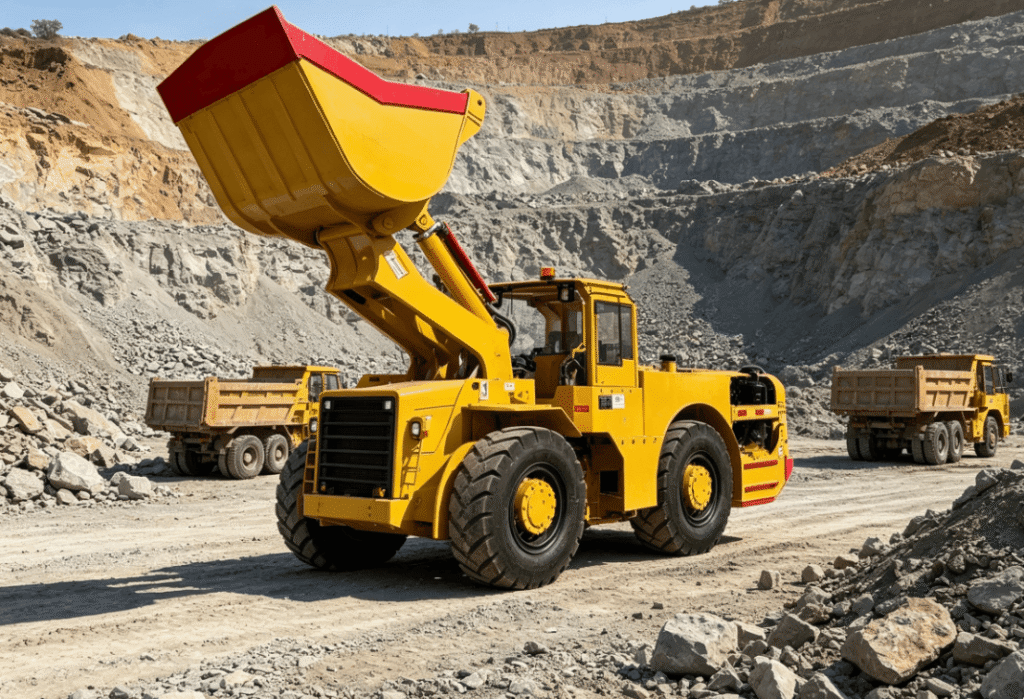
The acronym LHD defines the machine’s three-stage duty cycle. This integrated workflow allows for a streamlined “mucking” process, which is the removal of blasted rock from the face of the mine.
- Loading: The operator drives the machine into a muck pile. Using high-torque hydraulic systems and a specialized bucket, the LHD scoops the fragmented ore or waste rock.
- Hauling: Once the bucket is filled and retracted, the LHD travels through narrow drifts. Because underground mines have limited space for turning, these machines utilize articulated steering, allowing them to bend in the middle to navigate tight 90-degree corners.
- Dumping: The LHD reaches a designated discharge point—typically an ore pass, a grizzly, or a larger underground haul truck—and tips the bucket to release the payload.
This cycle is repeated hundreds of times per shift. Any mechanical failure in the underground LHD effectively halts the production chain for that specific heading.
Core Components and Design Characteristics
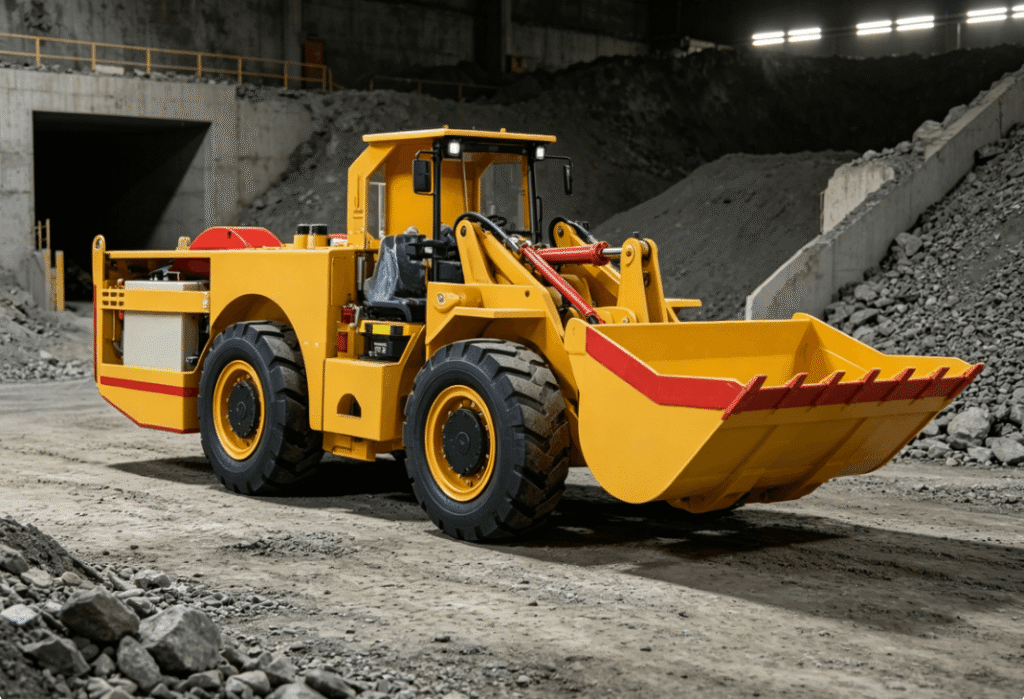
An underground LHD is engineered with a “low profile” philosophy. In many narrow-vein mines, every centimeter of height saved reduces the volume of waste rock that needs to be excavated to create the tunnel.
- Articulated Chassis: The front and rear frames are connected by a central pivot point. This allows the wheels to follow the same track during a turn, which is essential in narrow headings where there is zero margin for error.
- Z-Bar Linkage: Most modern LHDs, such as those within the Mineloaders WJ series, utilize a Z-bar linkage design. This geometry maximizes breakout force, allowing the bucket to penetrate compacted rock piles effectively.
- FOPS/ROPS Cabins: Safety is paramount. Operator cabins must meet Falling Object Protective Structure (FOPS) and Roll-Over Protective Structure (ROPS) certifications. In high-heat or high-dust environments, these cabins are pressurized and climate-controlled.
- Oscillating Axles: To maintain traction on uneven, blasted floors, the rear axle typically oscillates. This ensures all four wheels stay in contact with the ground, providing constant torque.
Powertrain Evolution: Diesel vs. Electric
The choice of powertrain is one of the most significant decisions for a mine’s ventilation and operational cost strategy.
| Feature | Diesel LHD | Electric (Tethered/Battery) LHD |
| Mobility | High (Unrestricted range) | Lower (Limited by cable or charge) |
| Heat Output | High (Significant cooling needed) | Low |
| Emissions | Particulates (Requires DPF/SCR) | Zero at point of use |
| Torque | Curve-based | Instantaneous |
| Maintenance | Higher (Engine/Transmission) | Lower (Fewer moving parts) |
Diesel LHDs remain the industry standard due to their flexibility. Modern units use Tier 3 or Tier 4/Stage V engines to minimize Diesel Particulate Matter (DPM). However, the cost of ventilation to clear exhaust fumes can be the largest overhead in a deep mine.
Electric LHDs are gaining rapid adoption. Tethered units (using a trailing cable) have been around for decades, providing high power with zero emissions. The new generation of Battery Electric Vehicles (BEVs) offers the mobility of diesel with the environmental benefits of electric, though they require sophisticated charging or battery-swapping infrastructure.
Sizing and Capacity Considerations
Underground LHDs are categorized by their tramming capacity (the weight they can safely carry) and bucket volume.
- Narrow Vein LHDs: These are ultra-compact machines, sometimes less than 1.2 meters wide, designed for small-scale operations. Their bucket capacities usually range from 0.6 m³ to 1.5 m³.
- Standard Production LHDs: The workhorses of the industry. These typically offer bucket capacities between 3 m³ and 6 m³. Machines like the WJ-3 model are optimized for medium-sized tunnels where a balance of power and agility is required.
- Large Scale/Mass Mining: In block caving or large-scale room and pillar mines, LHDs can carry upwards of 10 to 25 tonnes, rivaling surface equipment in sheer power.
Critical Safety and Automation Trends
The mining industry is moving toward “Zero Harm,” which has driven significant technological integration into the underground LHD.
1. Line-of-Sight Remote Control:
In dangerous areas where the roof has not yet been reinforced (the “unsupported ground”), operators stand at a safe distance and control the LHD via a radio console.
2. Tele-operation:
Using cameras and high-speed Wi-Fi or LTE networks underground, an operator can sit in a surface office and operate the LHD. This removes the human from the heat, noise, and vibration of the mine.
3. Semi-Autonomous Tramming:
The machine can be “taught” a path. It will load manually (via remote), but then autonomously navigate the haulage route to the dump point using LiDAR and sensors to avoid tunnel walls.
Integration with Mine Infrastructure
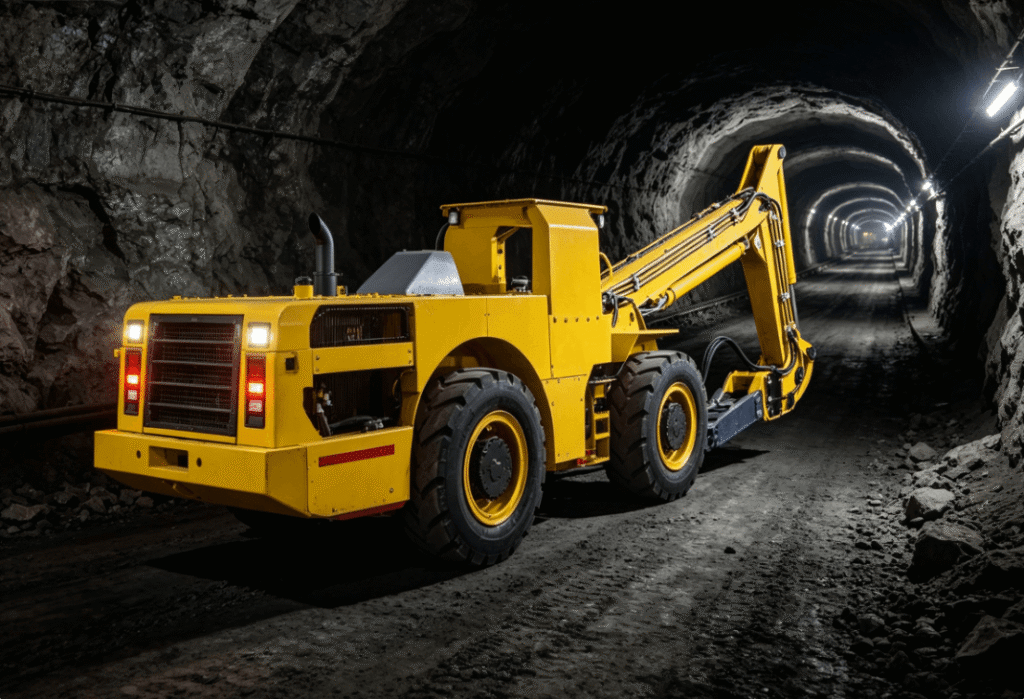
An underground LHD does not work in isolation. Its efficiency is tied to the mine’s overall layout. For instance, if the haul distances exceed 300-500 meters, it becomes more efficient to use the LHD to load a dedicated underground haul truck rather than having the LHD “tram” the entire distance. This is known as “load and carry” vs. “truck loading” workflows.
When evaluating an LHD for a project, engineers look at the Breakout Force (how hard the bucket can pry) and the Tipping Height. The tipping height must be compatible with the receiving vessel, whether it’s a hopper or a truck bed.
Summary of Utility
The underground LHD machine is the primary mover of value in a mine. By combining the functions of three different machines into a low-profile, articulated frame, it enables the extraction of ore from environments that would otherwise be inaccessible. Whether configured as a small diesel unit for exploration or a massive electric unit for production, the LHD remains the definitive tool for modern underground mucking.
FAQ
Q: What is the average lifespan of an underground LHD?
A: In harsh mining conditions, a primary LHD usually sees 5,000 to 10,000 hours of operation before requiring a major mid-life rebuild. With rigorous maintenance, the frame can last significantly longer, but hydraulic and engine components often require replacement due to the high-sulfur and high-humidity environments.
Q: Can a standard surface loader be used underground?
A: Generally, no. Surface loaders are too tall, lack the necessary articulated tight-turning radius, and do not meet the fire suppression or emission standards required for confined underground spaces.
Q: How does an LHD handle steep gradients?
A: Most LHDs are designed to operate on inclines up to 20% (1:5 grade). They utilize heavy-duty planetary axles and liquid-cooled braking systems to manage the heat generated during downhill loaded hauls.
Q: What is the difference between an LHD and a Bogger?
A: There is no difference in equipment; “Bogger” is a common regional slang term (particularly in Australia and parts of Africa) for an LHD machine or the act of mucking out a tunnel.
Reference Sources
- International Strategy for Mining Instrumentation (ISMI): Technical specifications on underground mobile equipment.
- ISO 19296:2018: Mining — Mobile machines working underground — Machine safety.
- CIM (Canadian Institute of Mining, Metallurgy and Petroleum): Best practices for underground haulage and loader optimization.
- Manufacturer Data: Mineloaders Underground LHD Technical Overview for capacity and powertrain standards.