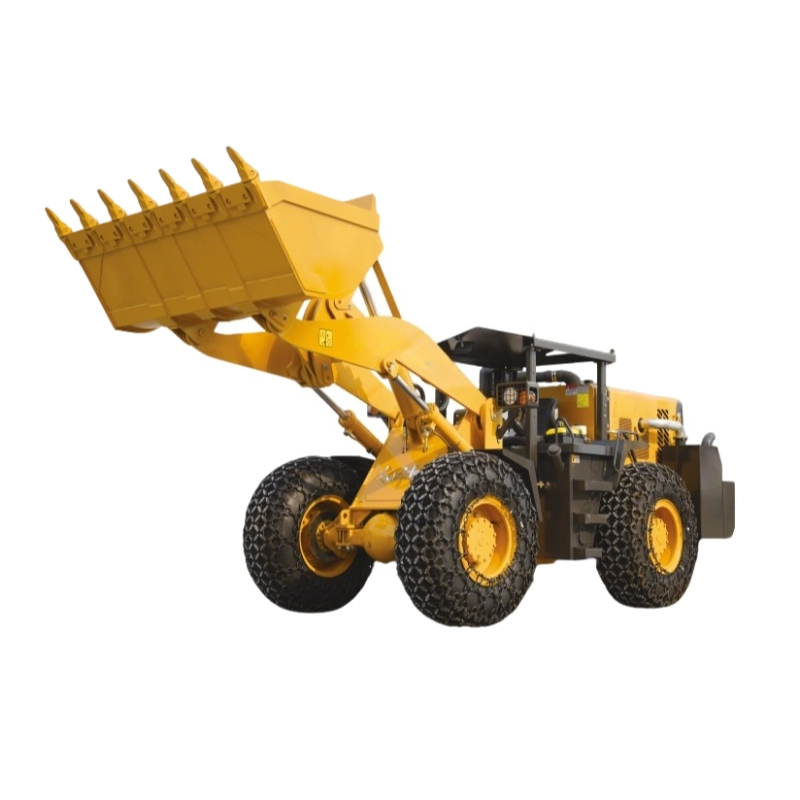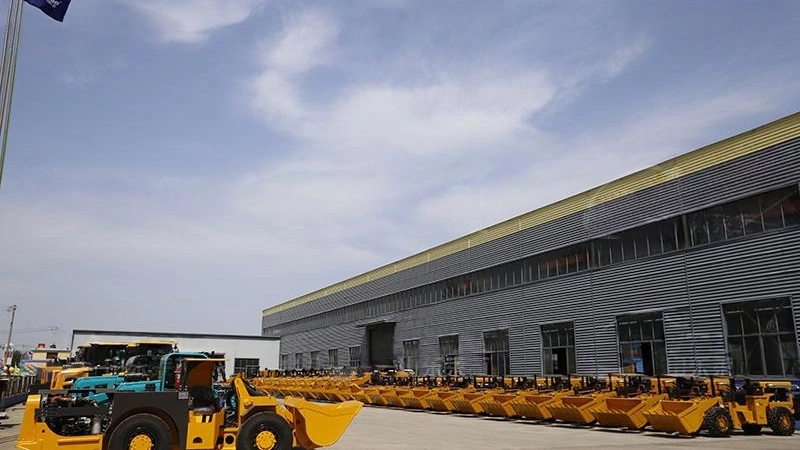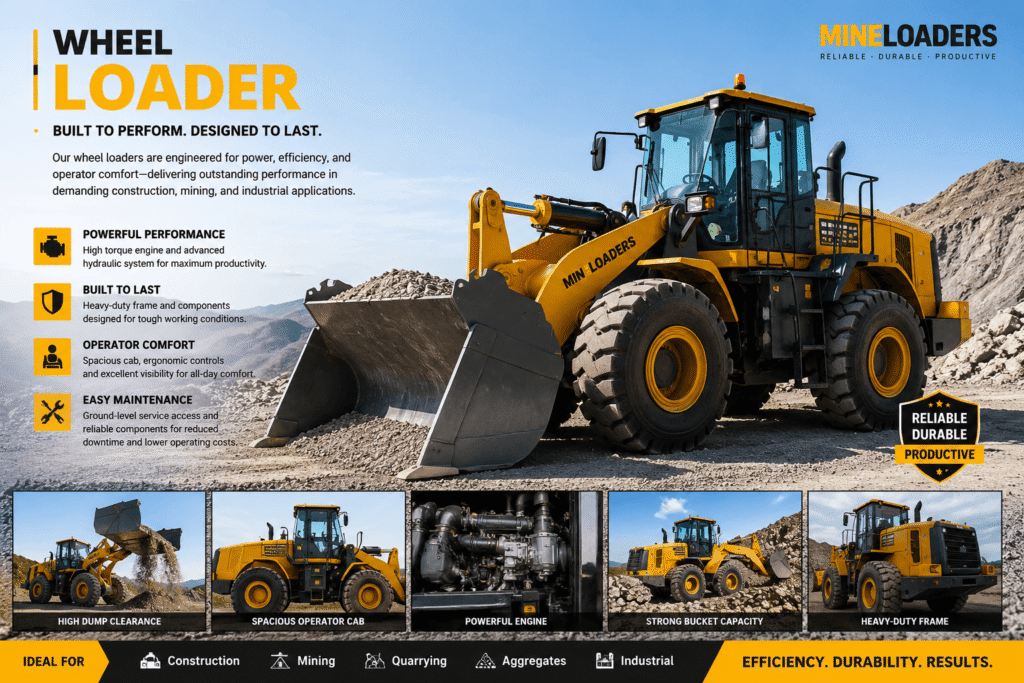
The efficiency of an underground mining operation often hinges on a single category of equipment: the underground mining loader. Frequently referred to as LHD (Load-Haul-Dump) machines, these low-profile workhorses are engineered to perform in some of the most challenging environments on Earth. Unlike surface loaders, underground variants must navigate cramped tunnels, manage extreme heat, and handle abrasive materials—all while maintaining high productivity.
What is an Underground Mining Loader?
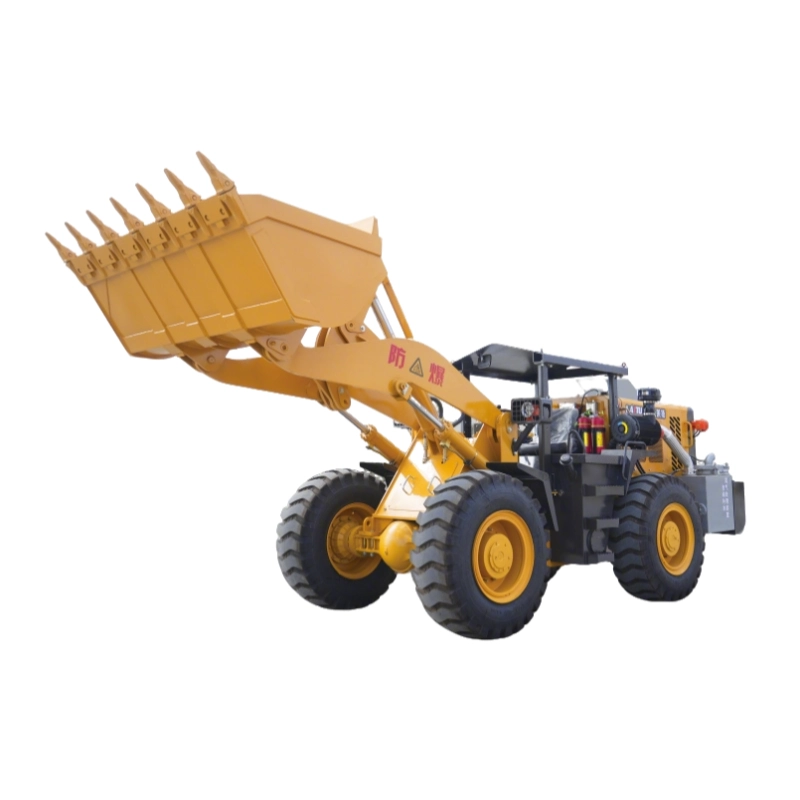
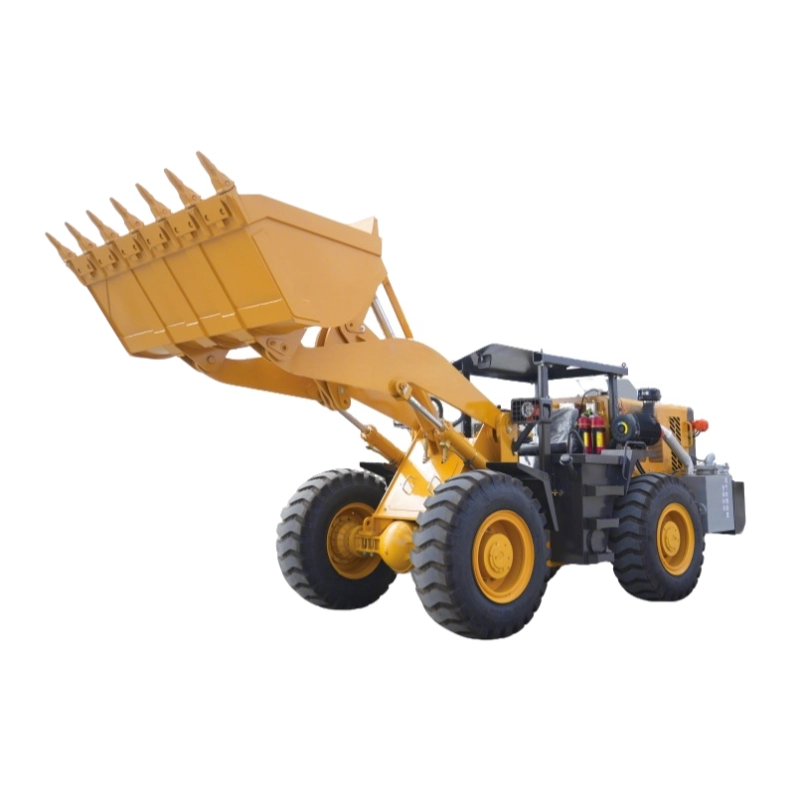
An underground mining loader is a specialized heavy-duty machine designed to excavate, transport, and dump ore or waste rock within the confined spaces of a mine. Its most defining characteristic is its “low profile” design. Because tunnel heights (drifts) are expensive to create, these machines are built horizontally long and vertically short.
The core design utilizes an articulated chassis. This means the machine is “hinged” in the middle, allowing it to navigate tight corners and sharp turns that would be impossible for a rigid-frame vehicle. Modern units, such as those found in the WJ-series, vary significantly in size, ranging from compact 1-ton capacity loaders for narrow-vein mining to massive 20-ton capacity machines for large-scale block caving.
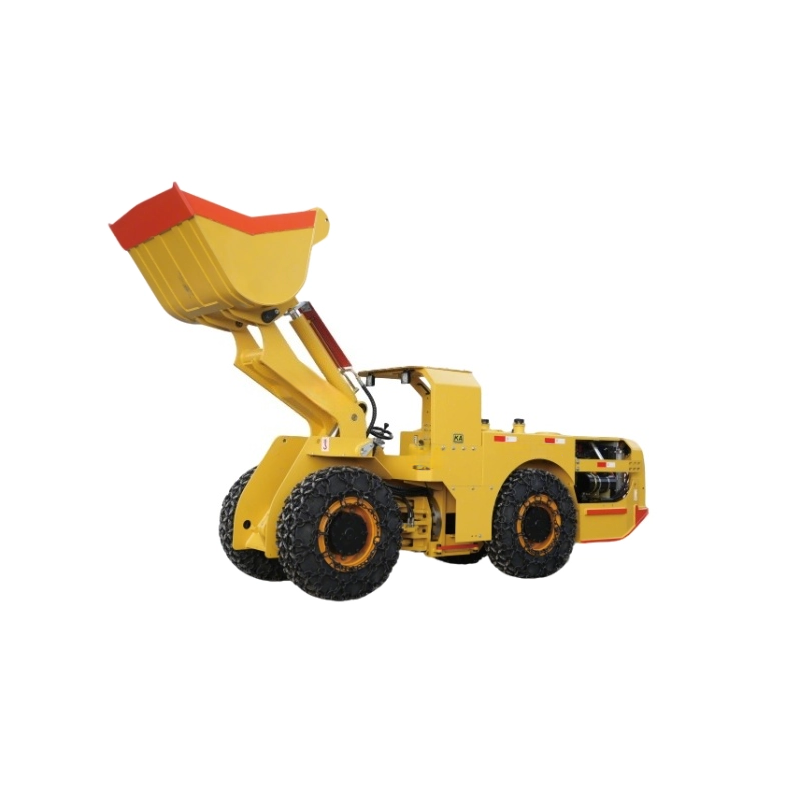
Core Functions of the LHD Cycle
The operational value of an underground loader is defined by the “LHD” acronym. Each stage of this cycle requires specific mechanical capabilities to ensure the mine remains profitable.
1. Loading (Mucking)
Loading occurs at the “muck pile” after a blast. The loader uses its hydraulic breakout force to drive the bucket into the fragmented rock.
- Technical Factor: The efficiency of this stage depends on the Z-bar linkage design, which provides the high breakout force necessary to penetrate heavy, settled ore.
2. Hauling (Tramming)
Once the bucket is filled, the loader “trams” the material to a designated point. Unlike surface loaders that only move short distances, underground loaders are often required to haul material several hundred meters to a grizzly, a pass, or a truck loading bay.
- Technical Factor: Tramming capacity is a critical metric. High-speed gearboxes and robust cooling systems are required to handle the friction generated during long-haul cycles in high-ambient-temperature tunnels.
3. Dumping
The final stage involves discharging the material into an ore pass or a dedicated underground haul truck.
- Technical Factor: The “dump height” must be precisely matched to the receiving equipment. Advanced loaders feature optimized discharge angles to ensure the bucket clears completely, preventing “carry-back” (material stuck in the bucket), which reduces efficiency over time.
Key Technical Advantages of Modern Loaders
The transition from traditional mining to mechanized mining has been driven by the specific engineering advantages that underground loaders offer over manual or less specialized methods.
| Feature | Technical Advantage | Impact on Operations |
| Articulated Steering | Enables a small turning radius in narrow drifts. | Reduces the need for wide, expensive tunnel excavation. |
| Low Center of Gravity | Provides stability on uneven, unpaved underground floors. | Enhances operator safety and prevents machine tip-overs. |
| Hydraulic Pilot Control | Offers precise, fingertip control of the bucket and steering. | Reduces operator fatigue and increases cycle speed. |
| Tier-3/Stage V Engines | High-efficiency combustion with advanced exhaust scrubbing. | Lowers ventilation costs by reducing DPM (Diesel Particulate Matter). |
Maneuverability in Restricted Spaces
In underground development, every cubic meter of rock removed represents a cost. By using LHDs with high maneuverability, mining engineers can design smaller headings. Machines like the WJ-1.5 or WJ-2 are specifically narrow-framed, allowing them to operate in “narrow-vein” deposits where the ore body is thin.
Durability in Corrosive Environments
Underground mines are often damp, salty, or chemically aggressive. Specialized mining loaders utilize high-strength alloy steels (such as Hardox) for buckets and reinforced hydraulic hosing to prevent premature failure. These machines are built to withstand “shock loading”—the massive impact force felt when the bucket hits a solid rock face.
Power Systems: Diesel vs. Electric
A major consideration in underground mining loader selection is the power source. This choice directly impacts the mine’s ventilation requirements—one of the largest operational expenses in underground mining.
- Diesel Loaders: These remain the industry standard due to their mobility. They are not tethered to a power grid, allowing them to move between different levels of a mine easily. Modern diesel units utilize DPF (Diesel Particulate Filters) and DOC (Diesel Oxidation Catalysts) to meet strict MSHA or Euro Stage V emissions standards.
- Electric/Battery Loaders: To eliminate underground emissions entirely, many mines are moving toward electric LHDs. These units produce significantly less heat and zero tailpipe emissions, though they require either a “tether” (trailing cable) or advanced battery-swapping infrastructure.
Safety and Operator Ergonomics
Safety is the highest priority in underground environments. Modern mining loaders have moved away from open “canopies” to fully enclosed, ROPS/FOPS certified cabins.
- ROPS/FOPS: Roll-Over Protective Structure and Falling Object Protective Structure certifications ensure the operator is protected from rockfalls or accidental overturns.
- Sightlines: Designers prioritize the operator’s line of sight. Given that these machines are long and operate in the dark, high-output LED lighting and integrated camera systems are standard for detecting personnel or obstructions.
- Remote Operation: For extremely hazardous areas (such as under “unsupported ground”), many loaders now come equipped with line-of-sight remote control or teleremote capabilities, allowing the operator to control the machine from a safe distance.
Choosing the Right Loader Capacity
Selecting a loader is not just about choosing the biggest bucket. It is about matching the machine to the mine’s infrastructure.
For example, a WJ-1 loader (typically 1.5 – 2.0 ton capacity) is ideal for exploration drives or small-scale gold mines. Conversely, a WJ-6 loader (6-ton capacity) is better suited for high-production base metal mines where tunnel dimensions allow for larger frames. The goal is to maximize the “tons-per-hour” while ensuring the machine has at least 300mm of clearance on either side of the tunnel walls to prevent sidewall damage.
Conclusion
The underground mining loader is more than just a shovel; it is a highly engineered system designed to bridge the gap between extraction and transport. By combining high breakout forces with compact, articulated designs, these machines allow mining companies to access deeper and narrower ore bodies safely and profitably. As the industry moves toward automation and electrification, the LHD will remain the foundational tool of underground material handling.
FAQ
What does LHD stand for in mining?
LHD stands for Load-Haul-Dump. It describes the three-step operational cycle of an underground loader: loading the ore, hauling it through the tunnel, and dumping it into a truck or ore pass.
What is the difference between a surface loader and an underground loader?
Underground loaders are significantly lower in height (low-profile) to fit in tunnels. They also feature articulated steering for tighter turns and specialized exhaust scrubbing systems to manage air quality in confined spaces.
How is the bucket size determined for an underground loader?
Bucket size is determined by the density of the material being moved (e.g., gold ore vs. coal) and the dimensions of the mine’s drifts. The goal is to achieve maximum payload without compromising the machine’s stability or clearance.
Can underground loaders be automated?
Yes. Many modern LHDs feature “Auto-mine” capabilities, where the machine can tram and dump autonomously between the muck pile and the ore pass, with an operator only intervening during the complex loading phase.
Reference Sources
- MSHA (Mine Safety and Health Administration): Standards for underground equipment safety and diesel emissions.
- ISO 19296:2018: Mining — Mobile machines working underground — Machine safety.
- CIM (Canadian Institute of Mining, Metallurgy and Petroleum): Technical papers on LHD efficiency and ventilation.