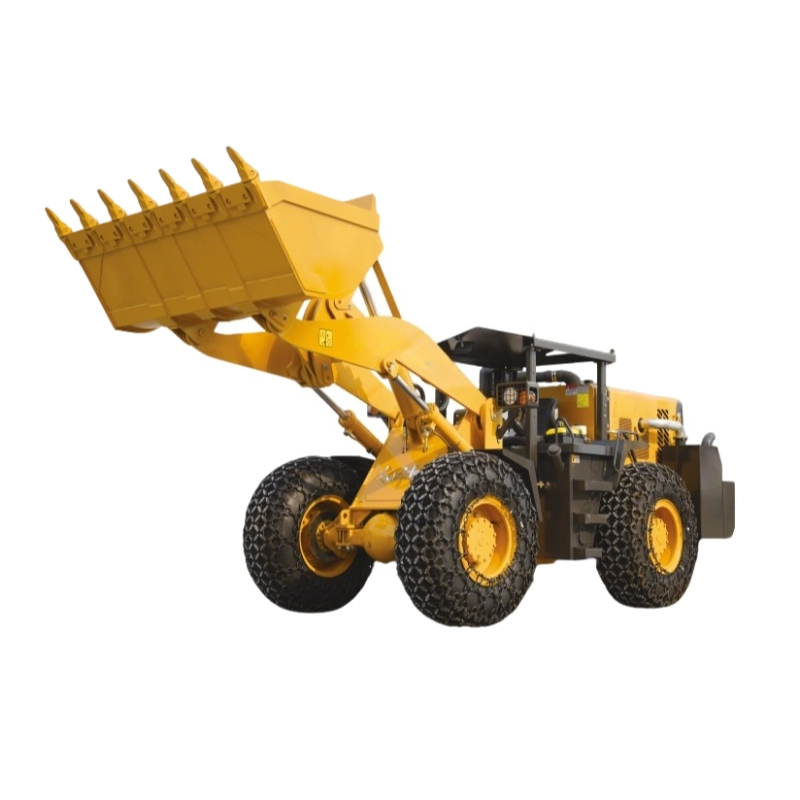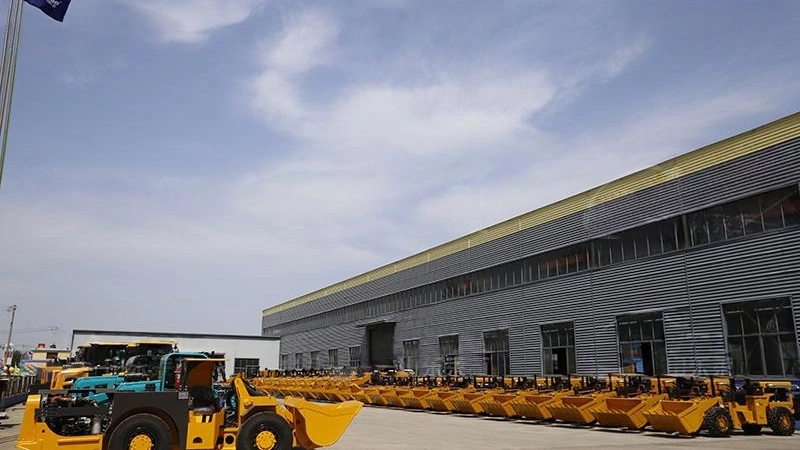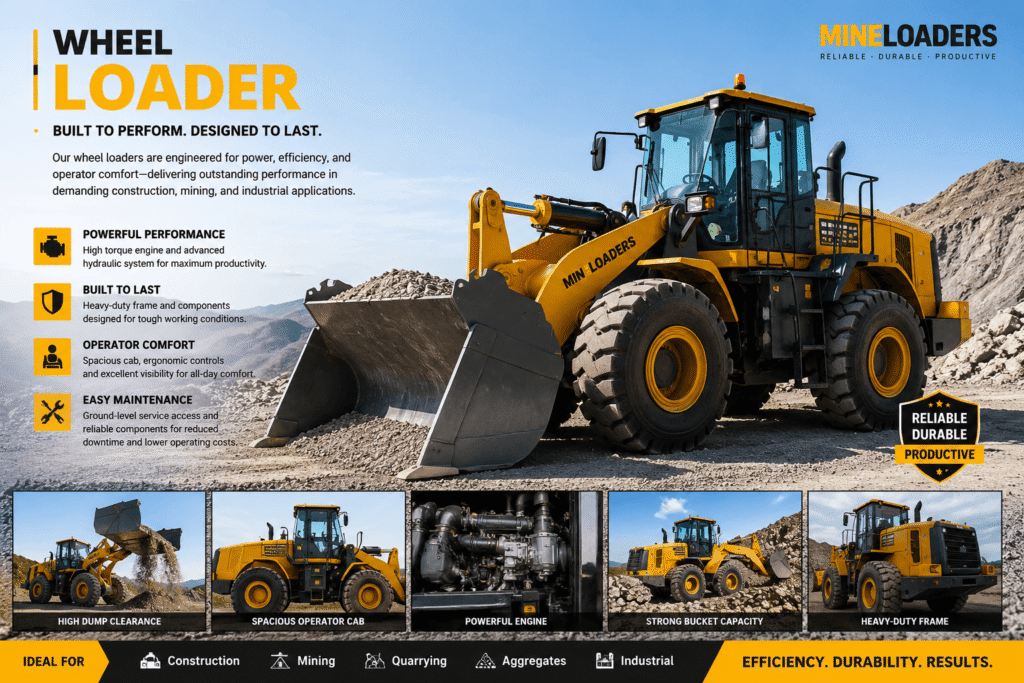
The wheel loader is often described as the “Swiss Army Knife” of the heavy equipment world. Technically defined as a four-wheeled tractor equipped with a front-mounted bucket, its primary function is to move materials over short distances and load them into trucks or hoppers. Unlike tracked loaders, wheel loaders offer superior mobility and speed on paved or compacted surfaces, making them indispensable in fast-paced industrial environments.
From an engineering perspective, the versatility of this machine stems from its articulated steering system and hydraulic lifting capacity. By swapping the standard bucket for specialized attachments like pallet forks, grapples, or snow blowers, the wheel loader transitions from a simple earthmover to a multi-purpose logistical asset.
Understanding which industries rely on these machines requires a look at both high-volume material handling and site-specific operational requirements.
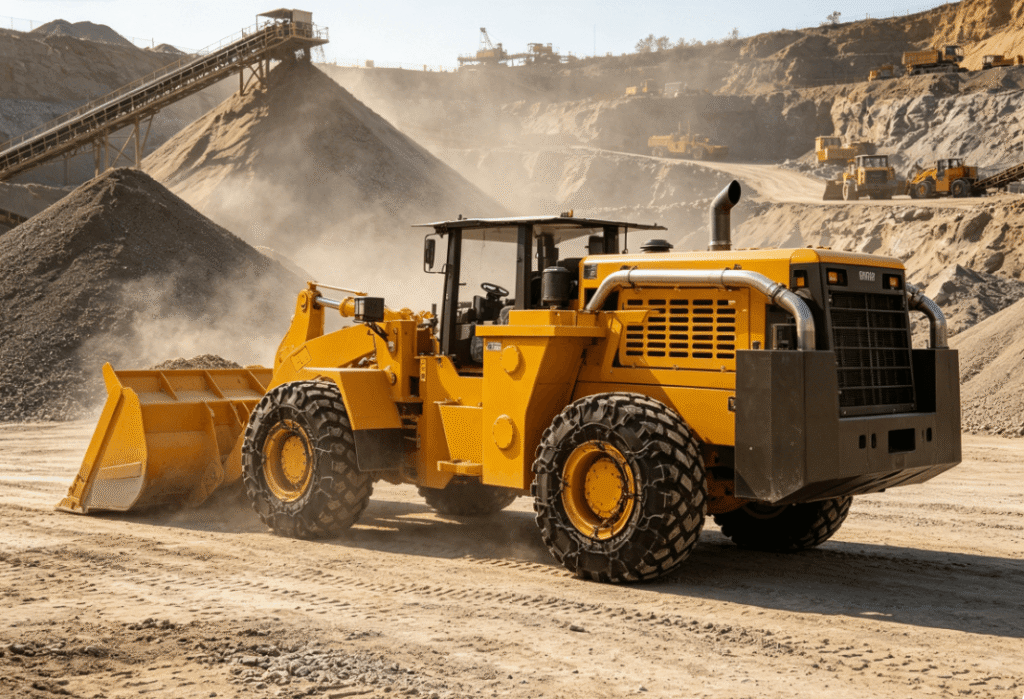
Why Wheel Loaders Dominate Heavy Industry Material Handling
The dominance of the wheel loader is rooted in its operational efficiency. In large-scale production, “cycle time”—the time it takes to load, transport, dump, and return—is a critical KPI. Wheel loaders excel here because of their high travel speeds and the ability to maneuver in tight spaces via their articulated chassis.
Key technical factors that drive industry adoption include:
- Breakout Force: The maximum upward force the machine can exert, essential for digging into compacted soil or shot rock.
- Static Tipping Load: The weight at which the loader’s rear wheels would lift off the ground, determining the safe working load.
- Dumping Clearance: The height at which the bucket can discharge its load, which must match the height of the receiving trucks or crushers.
5 Primary Industries That Use Wheel Loaders
While wheel loaders are visible on almost every large construction site, their footprint extends into several specialized sectors where material throughput is the primary driver of profitability.
1. Civil Construction and Infrastructure
In the construction sector, wheel loaders are the workhorses for site preparation and utility work. They are used to move stockpiles of sand, gravel, and crushed stone. Beyond simple loading, they assist in backfilling trenches and leveling surfaces. Compact wheel loaders are particularly popular in urban infrastructure projects where space is limited but high lift capacity is still required for moving heavy concrete pipes or pallets of bricks.
2. Mining and Quarrying
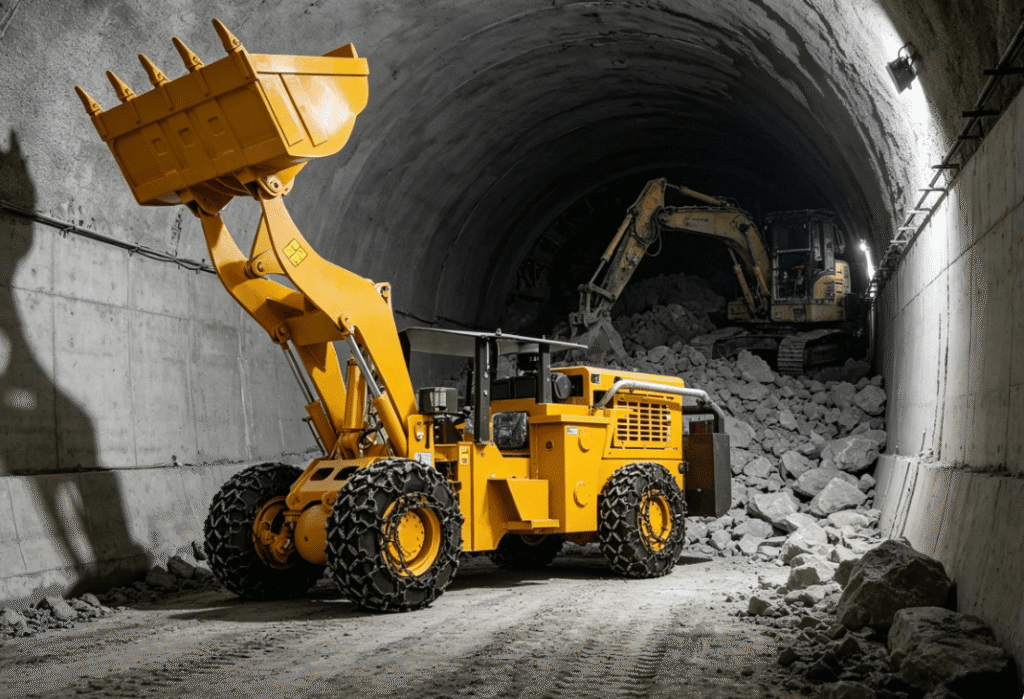
The mining industry utilizes some of the largest wheel loaders in existence. In open-pit mining, these machines perform “face loading,” where they scoop up blasted rock and move it to haul trucks. In quarrying operations, loaders handle heavy aggregates and ensure the continuous feeding of primary crushers. For underground operations, specialized low-profile wheel loaders (LHDs) are designed with fire-suppression systems and reinforced cabins to operate in confined, high-risk environments.
3. Waste Management and Recycling
Modern recycling centers and transfer stations operate on high-volume throughput. Wheel loaders equipped with “high-lift” arms and “waste-handler” buckets are used to push trash into compactors or load recyclables into long-haul trailers. In these environments, machines are often fitted with solid tires to prevent punctures from metal debris and “top-air” intakes to avoid clogging the engine with airborne dust.
4. Agriculture and Livestock Management
Large-scale farming operations use wheel loaders for silage handling, manure management, and bale stacking. In livestock feedlots, the speed of a wheel loader makes it more efficient than a traditional tractor for loading feed mixers. The agricultural sector often favors “high-flow” hydraulic systems that allow for the use of complex attachments like large-scale silage defacers.
5. Forestry and Timber Processing
In the timber industry, the standard bucket is replaced with heavy-duty log grapples. Wheel loaders are used at sawmills and log yards to unload trucks, sort timber by grade, and feed logs into the debarking or milling lines. These machines require high lateral stability to handle long, shifting loads of timber over uneven ground.
Technical Specifications for Industry-Specific Selection
When evaluating a wheel loader for a specific application, engineers and project managers must match the machine’s performance profile to the material density.
| Industry | Typical Material Density | Key Machine Feature Required |
| Mining (Rock) | 1,600 – 2,500 kg/m ³ | Maximum Breakout Force & Reinforced Buckets |
| Agriculture (Grain) | 600 – 900 kg/m ³ | High-Volume Buckets & Speed |
| Construction (Sand) | 1,400 – 1,900 kg/m ³ | General Purpose Bucket & Maneuverability |
| Waste (Solid Waste) | 300 – 600 kg/m ³ | High-Dump Reach & Cooling System Protection |
For instance, a loader used in a quarry requires a heavy counterweight to maintain stability while handling dense rock. Conversely, a loader in a waste facility may prioritize “reach” over raw breakout force to clear the high sideboards of transport trailers.
Improving Site Efficiency with Specialized Attachments
The versatility of the modern wheel loader is significantly enhanced by the use of quick-coupler systems. These allow an operator to switch from a bucket to another tool in under a minute without leaving the cab.
Common industrial attachments include:
- Pallet Forks: Essential for logistics and warehouse-to-site transitions.
- Side-Dump Buckets: Used in tunneling and narrow road construction where there is no room to turn the machine.
- Snow Blowers and Blades: Vital for municipal winter maintenance and clearing large parking facilities.
- Screening Buckets: Used on-site to separate fines from larger debris, reducing transport costs and allowing for material reuse.
The Role of Operational Safety in Heavy Industries
Regardless of the industry, safety remains the highest priority for OEM (Original Equipment Manufacturer) design. Current wheel loaders are built with ROPS (Roll-Over Protective Structure) and FOPS (Falling Object Protective Structure) as standard.
In sectors like mining or hazardous waste handling, there is an increasing move toward “intelligent” loader systems. These include rear-view cameras, radar-based proximity sensors, and onboard weighing systems that prevent overloading. Onboard weighing is particularly valuable in commercial logistics, as it ensures that haul trucks are loaded to their maximum legal capacity without exceeding weight limits, thereby optimizing fuel efficiency and avoiding legal fines.
Future Trends: Electrification and Automation
As industries move toward carbon neutrality, the development of electric wheel loaders is accelerating, particularly for indoor applications or urban zones with strict noise regulations. While diesel remains the standard for high-tonnage mining loaders due to energy density requirements, compact electric loaders are now common in indoor demolition and food processing industries.
Furthermore, autonomous or semi-autonomous operation is becoming a reality in the mining and quarrying sectors. By using GPS and LiDAR, loaders can follow pre-programmed “load-and-carry” routes, reducing operator fatigue and increasing the consistency of cycle times in 24/7 operations.
FAQ
What is the difference between a wheel loader and a track loader?
The primary difference is the undercarriage. Wheel loaders use rubber tires, which offer higher speeds and better maneuverability on hard surfaces. Track loaders (using metal or rubber tracks) provide better flotation and traction on soft, muddy, or extremely steep terrain where tires might spin or sink.
How do I choose the right bucket size for my industry?
Bucket selection is based on the “rated capacity” of the loader and the density of the material being moved. Moving lightweight mulch allows for a much larger bucket than moving dense iron ore. Using a bucket that is too large for heavy material can lead to hydraulic strain and machine instability.
Are wheel loaders suitable for residential construction?
Yes, specifically “Compact Wheel Loaders.” These machines have a smaller footprint and lower operating weights, making them ideal for residential landscaping, driveway clearing, and small-scale site preparation without damaging local road infrastructure.
How long does a typical industrial wheel loader last?
With rigorous maintenance following OEM guidelines, a high-quality wheel loader can last between 10,000 and 15,000 operating hours. In many industries, “mid-life” rebuilds of the engine and hydraulic systems are common practice to extend the machine’s service life.
Reference Sources
- ISO 6165:2022 – Earth-moving machinery — Basic types — Identification and vocabulary.
- SAE J1097 – Hydraulic Excavator Lift Capacity Assessment (Applied standards for loader lifting dynamics).
- AEM (Association of Equipment Manufacturers) – Annual Industry Trends Report on Construction and Mining Equipment.
- Mine Safety and Health Administration (MSHA) – Guidelines for Surface Mobile Equipment Safety.