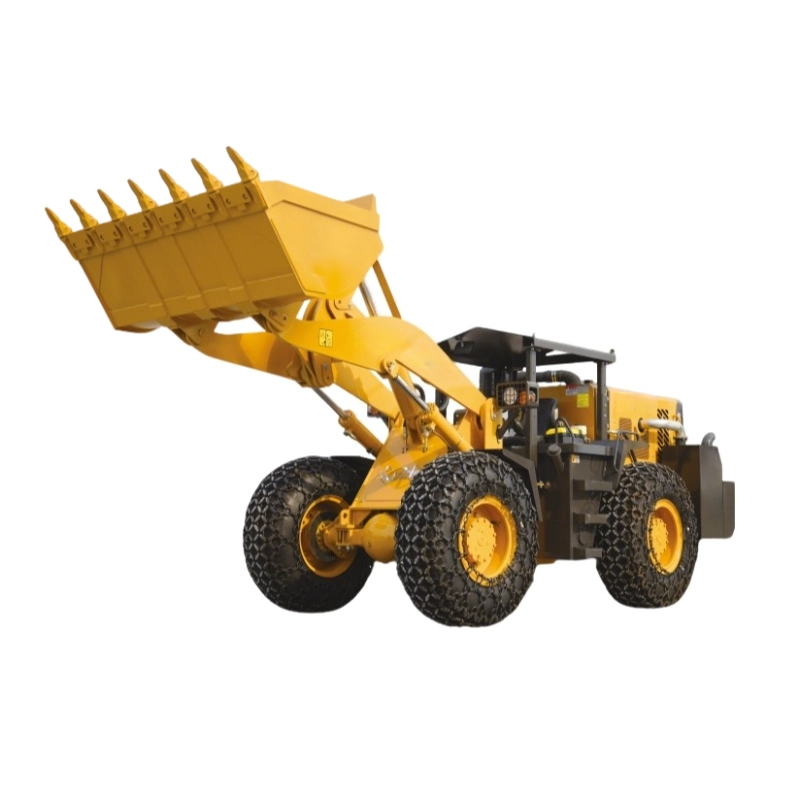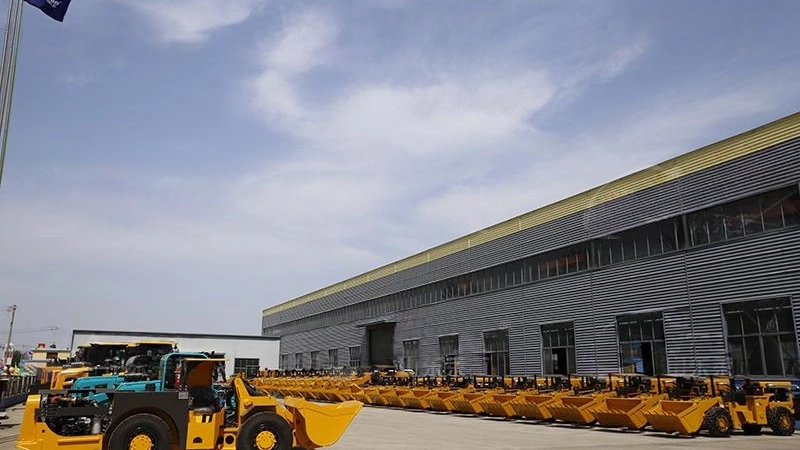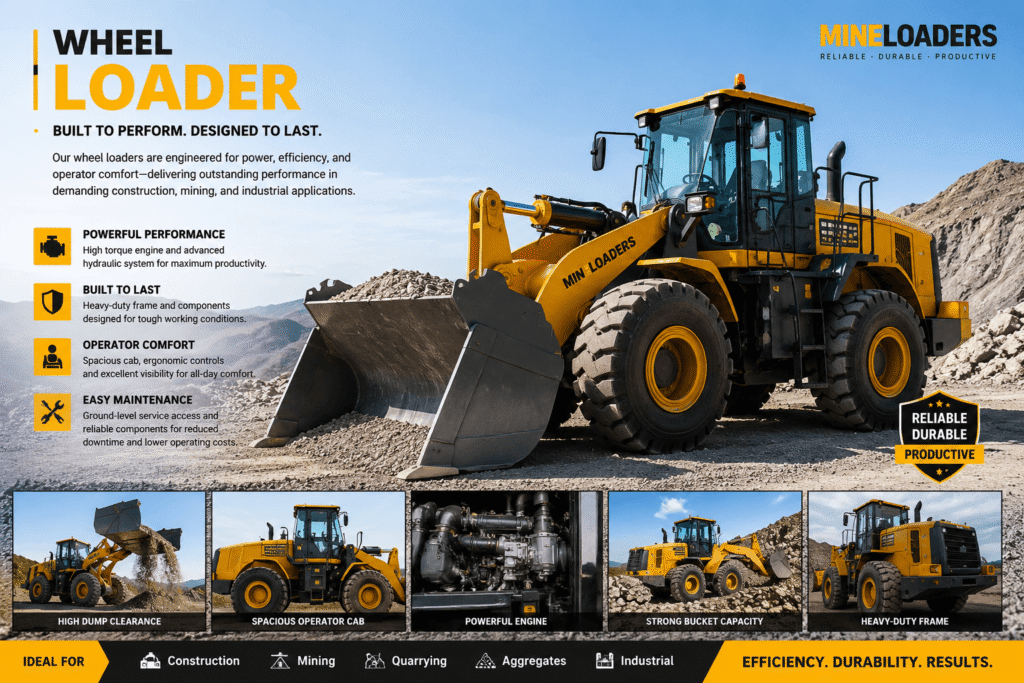
The 3T, 5T and 8T models differ in usable capacity and physical size, not just payload labels. A small mining truck must fit the complete travel and dumping route while matching the loading equipment. Protective-canopy height is especially important because it differs from the lower height entries on the product pages.
Among these listings, the 5T has the same stated protected height as the 3T, but it is wider and longer. The 8T adds capacity with another increase in the envelope. Those differences help identify which route restriction matters most.
What changes between the published 3T, 5T and 8T models?
The following comparison uses the 3T, 5T and 8T product information. T refers here to the listed metric-tonne payload class. Use the offered configuration when checking working clearances.
| Published specification | 3T | 5T | 8T |
| Rated load | 3,000 kg | 5,000 kg | 8,000 kg |
| Hopper capacity | 1.5 m³ | 2.2 m³ | 3.3 m³ |
| Overall length | 4,100 mm | 4,450 mm | 4,800 mm |
| Overall width | 1,500 mm | 1,680 mm | 1,780 mm |
| Lower listed height | 1,450 mm | 1,450 mm | 1,670 mm |
| Height with listed protection | 1,950 mm | 1,950 mm | 2,050 mm |
| Wheelbase | 1,970 mm | 2,200 mm | 2,400 mm |
| Listed standard drive | Rear-wheel drive | Rear-wheel drive | Rear-wheel drive |
All three standard drive entries state rear-wheel drive; four-wheel drive is listed as optional. Any optional drive or brake arrangement needs its own technical confirmation. Do not assume that an option leaves every listed dimension or service requirement unchanged.
The lower height figures are not a reason to omit necessary operator protection. The complete supplied and approved arrangement determines working height. Establish that arrangement before assessing a low roadway.
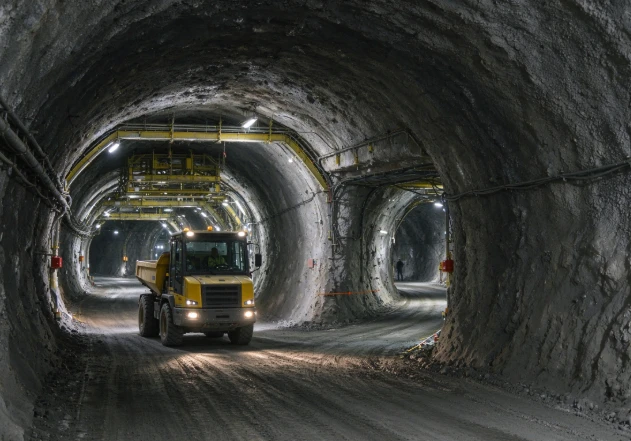
Small-truck applications in narrow underground routes
If height is the main restriction, the 3T and 5T protected-height entries need the same initial screening. If width or turning space is restrictive, their different footprints matter. That is a more useful distinction than assuming the smallest payload always means the lowest vehicle.
The 8T listing is 100 mm wider and 350 mm longer than the 5T. Its stated protected height is also 100 mm greater. Whether those increases are acceptable depends on the complete route and the mine’s required clearances.
Corners need a swept-path assessment, not just a vehicle-width measurement. Wheelbase, steering geometry and overhang influence movement around crosscuts. Loading and discharge positions may be more restrictive than straight travel.
Check three separate envelopes:
- Travel with the required canopy or cage and installed equipment.
- Turning and positioning at corners, loading bays and passing areas.
- Dumping with the body raised and any tailgate movement included.
A route survey should also identify roof services, uneven floors and places where vehicles interact. WorkSafe Western Australia’s traffic-management bulletin addresses visibility, vehicle interfaces and equipment condition. It provides review topics rather than model-specific clearance values.
For short, repeated hauls, positioning and loading delays can take a large share of the cycle. A larger truck may spend longer maneuvering at each end. A smaller truck may need more trips and create more traffic movements.
Small underground truck payload and loader matching
Rated payload is a mass limit, while hopper capacity describes volume. The material determines which constraint is reached first. Lower-density material can fill the body without using the rated tonnage.
For an illustrative density of 1.5 t/m³, a nominal 1.5 m³ hopper volume represents 2.25 tonnes before filling variation. The three-tonne rating would not be fully used under that assumption. This is a volume calculation, not a tested payload result for the 3T truck.
The pages’ hopper dimensions and stated volumes do not always describe equivalent rectangular spaces. Body shape and capacity definitions need clarification. Do not replace the stated usable volume with a simple length-times-width-times-height calculation.
Loader matching should use actual material mass per pass. If a hypothetical loader delivers two tonnes per full bucket, a three-tonne truck cannot accept two full passes. The final pass must be controlled using a suitable payload method.
The interface also needs physical clearance. Check bucket width, discharge reach and the truck-body opening. A convenient number of passes does not prove the loader can position and discharge properly.
Useful loading observations include:
- Actual bucket payload and how much it varies.
- Time spent spotting and repositioning the truck.
- Visibility during loading and departure.
- Spillage or uneven distribution within the body.
- Any partial final pass needed to stay within limits.
The mining dump truck capacity guide covers broader fleet-capacity calculations. Apply those calculations after establishing the named truck’s route fit and realistic working load.
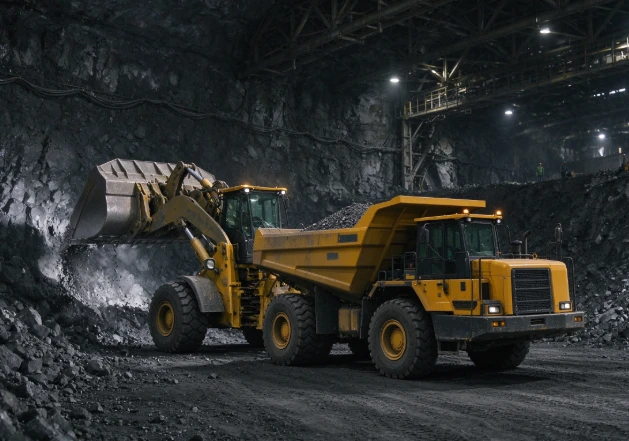
How to compare 3T, 5T and 8T cycle output
Use the same cycle boundaries for each option: loading, loaded travel, dumping and empty return. Record queueing and other delays separately. This keeps a slow truck movement distinct from a shared site bottleneck.
A hypothetical five-tonne working load on a ten-minute cycle gives 30 tonnes per productive hour. An eight-tonne load on a sixteen-minute cycle gives the same theoretical output. Availability and additional interruptions are excluded from both examples.
The larger truck gains useful capacity only if the operation can use it without disproportionate cycle delays. The smaller truck gains maneuverability only if additional trips remain practical. Compare those tradeoffs against the actual production target.
Also check the discharge location before finalizing the shortlist. The raised body may become the controlling height even where travel clearance is adequate. Dumping-ground condition and receiver arrangement belong in that assessment.
Review other options in the mining truck range if none of the three configurations resolves the key constraint. A useful shortlist explains the usable payload, route fit and loading arrangement together. It should make remaining uncertainties specific enough to resolve with a drawing or documented configuration.
FAQ
Is the 3T always the lowest working truck?
Not in this comparison. The 3T and 5T listings both state 1,950 mm with the listed protection. Confirm the supplied configuration before assessing clearance.
Do these standard models have four-wheel drive?
The reviewed standard entries state rear-wheel drive, with 4WD optional. Identify the offered drivetrain rather than assuming it from the payload class.
Will the 8T necessarily move more tonnes per shift?
No. Actual loads, cycle time, delays and availability determine output. A larger nominal payload may not overcome a restricted loading or dumping arrangement.